
Emergency Air Duct Cleaning Near Me: What Oceanside Homeowners Should Do First
When Oceanside homeowners search “emergency air duct cleaning near me,” what they usually need first isn’t cleaning at all. It’s a specific sequence of steps to stop the problem from spreading through the house. The single most important move in any duct emergency is turning the HVAC system off, not on. If you’re dealing with smoke, water, sewage, or rodents in your ductwork and you’d rather not handle the initial assessment yourself, call (855) 382-4811 and talk through what you’re seeing.
The Four Real Duct Emergencies (And Why They’re Different)
Most “emergency” duct calls we get in Oceanside fall into one of four categories. Each has a distinct protocol because the contaminant behaves differently. Treating a smoke event like a dust problem, or a sewage backup like a routine cleaning, makes everything worse. Here’s what actually counts as an emergency and what doesn’t.
Post-fire smoke contamination. Soot and combustion byproducts from even a small kitchen fire are chemically aggressive. They bond to duct walls, blower fans, and coil surfaces. Running the system before remediation distributes fine particulate to every room with a register. We’ve walked into homes in Fire Mountain where a two-minute stovetop fire ended up requiring full duct replacement because the fan ran for six hours afterward.
Sewage backup near the air handler. If a drain line backs up or a toilet overflows into the mechanical closet, airborne bacteria and pathogens can enter the return side of the system. This is a containment situation first, cleaning second. You need negative air pressure established before anyone disturbs the material.
Rodent infestation with droppings in ductwork. Rodent feces in ducts isn’t just dust. Disturbing dried droppings aerosolizes hantavirus-carrying particulates. Proper removal requires HEPA-filtered negative air machines, not a brush and a shop vac.
Post-flood microbial risk. Oceanside’s marine layer means moisture lingers. If floodwater or a slab leak reached insulated ducts, mold growth starts within 48 to 72 hours. Wet fiberglass duct insulation almost always gets replaced rather than dried, and anyone who tells you otherwise is cutting corners.
What to Do in the First 30 Minutes
Before you call anyone, there are four actions that preserve your options and reduce the final remediation cost. These steps matter as much as anything a technician does later.
- Shut the system off at the thermostat and the breaker. Thermostat “off” stops the blower under normal conditions, but the breaker eliminates any chance of a short cycling or a smart-thermostat override kicking the fan on. Find the HVAC breaker in your panel and flip it.
- Remove and bag the current air filter. If you have a 1-inch filter at the return or a 4-inch media cabinet, pull it out and seal it in a garbage bag. That filter now contains a concentrated sample of whatever was in the air. Your insurance adjuster will want it, and a remediation tech can use it to identify contaminant type.
- Close supply registers in unaffected rooms. This isn’t about saving those rooms, it’s about limiting any further spread when the system does eventually get powered back on during assessment. Keep the one or two worst-affected rooms’ registers open so the tech can inspect them first.
- Document everything with your phone. Film a slow walkthrough of every register, the air handler, the mechanical closet, and any visible water or odor source. Narrate what happened and when. Insurance claims for duct remediation fail most often on documentation, not on the validity of the damage.
One note on Oceanside specifically: if you’re near the coast in South Oceanside or over by Buccaneer Beach, salt air accelerates corrosion on exposed ductwork and electrical connections at the air handler. Don’t wait to make the call. A 24-hour delay in a moist, salty environment is genuinely different from a 24-hour delay inland.
Why “Cleaning” Almost Always Includes Repair
This is where most Oceanside homeowners get surprised. You can’t clean your way out of a contaminated duct system when the ductwork itself is compromised. If rodents chewed through a flex duct to get inside, cleaning the duct doesn’t seal the entry point. They’ll be back within a week. If smoke saturated fiberglass insulation inside a trunk line, no amount of brushing removes combustion byproducts from porous insulation. The section gets replaced.
In our experience, roughly three out of four emergency duct calls end up needing some form of repair, not just cleaning. That’s why we built Air Duct Repair in Oceanside as an in-house service. When the Rotobrush contact-cleaning system reveals a collapsed section of flex duct or a separated joint hidden in the attic, our crew fixes it the same visit. We don’t hand you a photo and tell you to find a handyman.
Here’s the sequence on a typical emergency job in Oceanside: assessment first, containment second, cleaning third, repair fourth, verification last. The assessment tells us whether the duct sections are even worth cleaning or whether they’re replacement candidates from the start. Abatement Technologies equipment handles the containment and remediation-grade work when the situation calls for it. The Nikro HEPA negative-air machines run during cleaning and repair to keep dislodged particulates from re-entering the living space.
And if you’ve invested in whole-home filtration, like an Aprilaire media cabinet or a Honeywell electronic air cleaner, we work around it rather than bypassing it. The emergency protocol includes inspecting those components for contamination, because they’re sitting right in the airstream you’re trying to make safe again.
What happens when you call
- 1
A real person answersNo phone trees – you reach a local pro.
- 2
You get an upfront price rangeHonest numbers before anyone is dispatched.
- 3
A background-checked tech heads outLicensed & insured, dispatched right away.
- 4
You approve before work beginsNothing starts until you say go.
Same-Day vs. 48-Hour: Knowing the Difference
Not everything that feels urgent is a true same-day emergency. Here’s how to tell the difference when you’re deciding whether to call right away or schedule a normal visit.
Legitimate same-day emergencies in Oceanside: smoke or soot entry from a fire, sewage or gray water near the air handler, visible rodent droppings inside supply registers, and standing water in ductwork or the drain pan that reached insulation. These scenarios actively worsen by the hour.
Situations that can wait 48 to 72 hours: a musty smell you’ve noticed for weeks, dust accumulation around registers (which is actually normal operation for leaky ducts, and often fixed by sealing, not cleaning), seasonal allergy concerns, or a post-construction dust complaint. These are real problems, but they are not escalating. Schedule them properly with a full-system cleaning rather than a rushed visit.
The tell for Oceanside homeowners is this: if the contaminant source is still active and still spreading, it’s an emergency. If the source is gone and you’re dealing with residual effects, it’s an urgent-but-scheduleable Air Duct Cleaning in Oceanside call.
Insurance: What Your Claim Actually Needs
Duct remediation after a fire, flood, or sewage event is often a covered loss under homeowners policies, but only if the documentation supports it. Here’s what adjusters in California actually look for.
Photographs with timestamps of the original damage, showing the affected registers, the air handler location, and any visible contaminant. The bagged air filter removed during the first 30 minutes. A written technician assessment that identifies the contaminant type (soot, microbial growth, rodent waste) rather than just saying “ducts need cleaning.” And ideally, before-and-after air sampling or particulate readings that demonstrate the difference the work made.
Some policies want a licensed HVAC contractor’s repair estimate for any duct sections that need replacement. If the remediation company can’t repair, the homeowner is stuck coordinating between a cleaner and a separate contractor, and the claim process drags. That’s a practical reason we handle Dryer Vent Cleaning in Oceanside and full duct repairs internally.
We pulled a job last month over in Peacock Hills where a homeowner had been told by a portable-equipment “duct cleaner” that their smoke-damaged system just needed a good scrub. The company wasn’t equipped to replace anything. Three weeks later, the insurance adjuster rejected the cleaning invoice because no repair scope or particulate verification was attached, and the homeowner paid twice. If the first company had the equipment to do the full job, that claim would have closed in two weeks.
What a Proper Emergency Assessment Actually Includes
When you call Duct Cleaning Oceanside for an emergency visit, here’s what the first hour looks like.
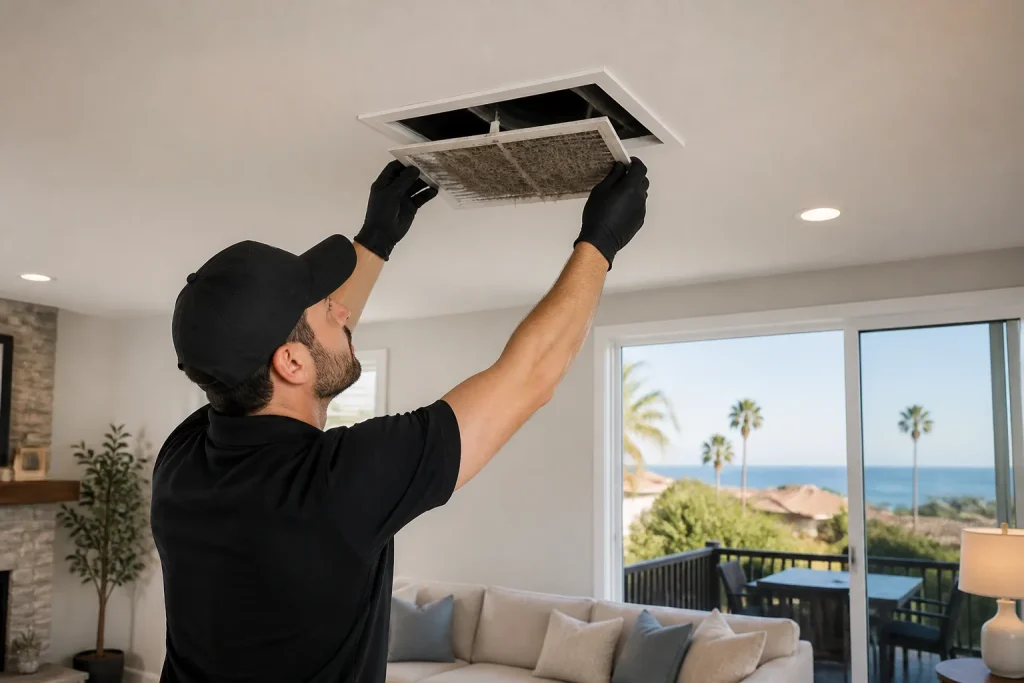
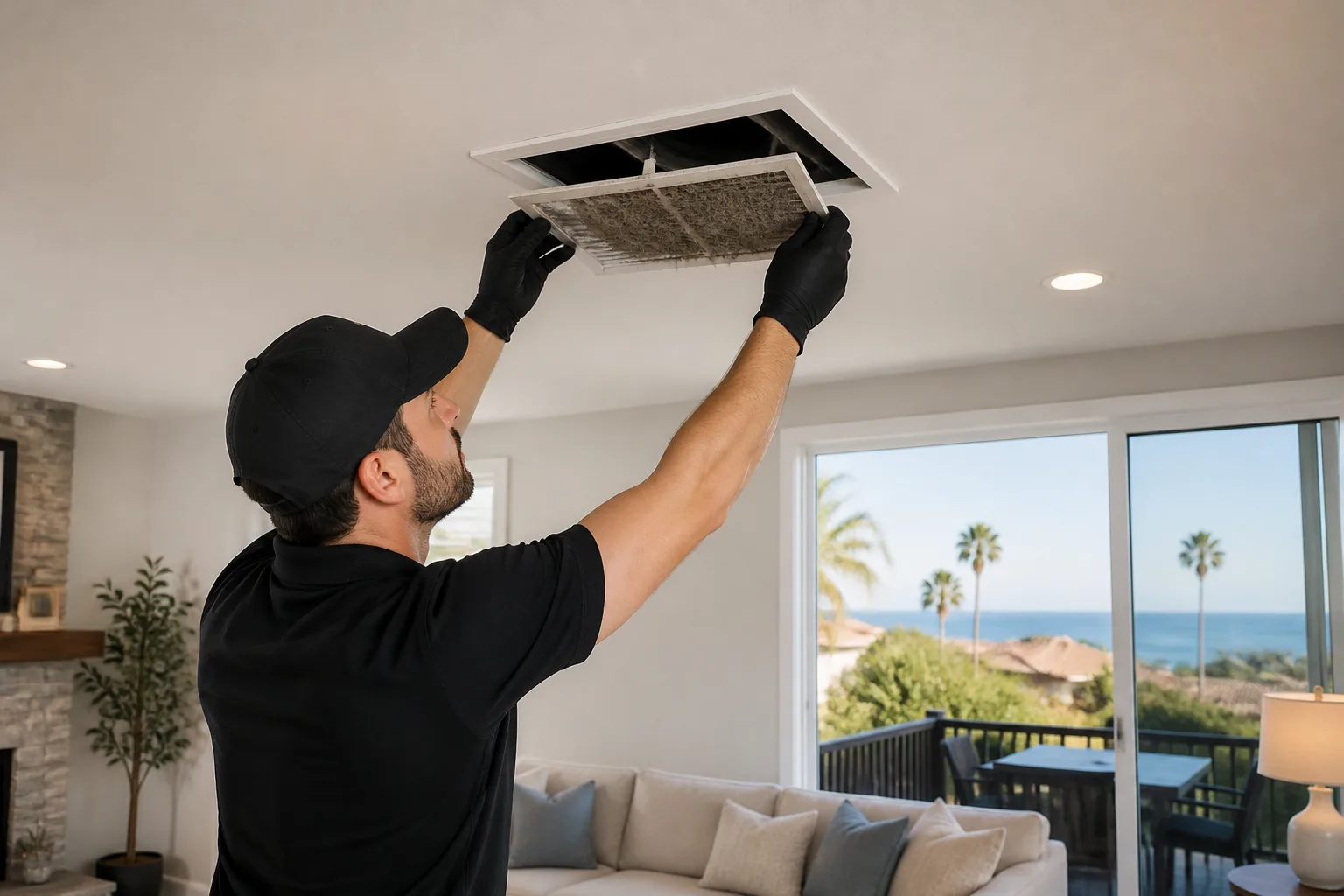
We inspect the air handler and blower cabinet first, because that’s where contaminants concentrate and where damage tells you what traveled through the system. Then we access the main trunk line and take photos of the duct interior at multiple points. We check the plenum for gaps or separated seams, because in Oceanside attics, thermal expansion and salt air cause joints to fail faster than inland. We identify whether the existing filtration caught any of the contaminant, and we map which branch runs are affected versus clean.
Only after that assessment do we make a recommendation. Sometimes that recommendation is cleaning with the Rotobrush system and HEPA negative air. Sometimes it’s selective duct replacement with cleaning of the remaining sections. Sometimes, for vermin problems, it’s both plus sealing of every penetration point so the problem doesn’t recur. Your Oceanside home’s specific situation dictates the sequence, and anyone who quotes a flat “emergency duct cleaning” price before seeing the system is guessing.
The Bottom Line
If you’re in Oceanside and you’ve got smoke, water, sewage, or rodents in your ductwork, shut the system off at the breaker, bag the filter, close the registers you can, and document everything. Then call a company that can assess, contain, clean, repair, and verify, all under one roof. If you need help right now, Duct Cleaning Oceanside home service area covers the city and surrounding coastal communities. We offer free estimates, and we’ll walk you through the first steps over the phone before we even schedule the visit. Call (855) 382-4811.
Frequently Asked Questions
Shut the HVAC system off at both the thermostat and the circuit breaker, then remove and bag the air filter. Your first job is containment, not ventilation, because running the blower distributes soot and combustion byproducts throughout every room in your Oceanside home. Call a professional before turning anything back on.
Microbial growth in wet duct insulation typically begins within 48 to 72 hours, and Oceanside’s coastal humidity can shorten that window in the summer months. Interior fiberglass duct insulation that has been saturated should be replaced, not dried in place, because the moisture and contaminant load penetrate the material beyond surface cleaning.
Some homeowners policies in California cover rodent damage and resulting remediation, but coverage varies by carrier and cause. Document everything thoroughly: photographs of droppings at registers, the bagged filter, and a written technician assessment identifying the contaminant. An insurance claim for duct remediation stands or falls on proof of what was present and what was done about it.
You should not attempt to clean contaminated ducts yourself, especially after a fire, flood, sewage backup, or rodent infestation. Dried rodent droppings can aerosolize disease-carrying particulates when disturbed, and soot requires specialized agitation and HEPA-filtration equipment to remove properly. A legitimate emergency requires containment controls that homeowner-grade equipment cannot provide.
Written by the team at Duct Cleaning Oceanside, serving Oceanside since 2011.
Need Air Duct Cleaning Help?
Call Duct Cleaning Oceanside - licensed & insured, with free written estimates in Oceanside.
(855) 382-4811