
Last updated November 2, 2026
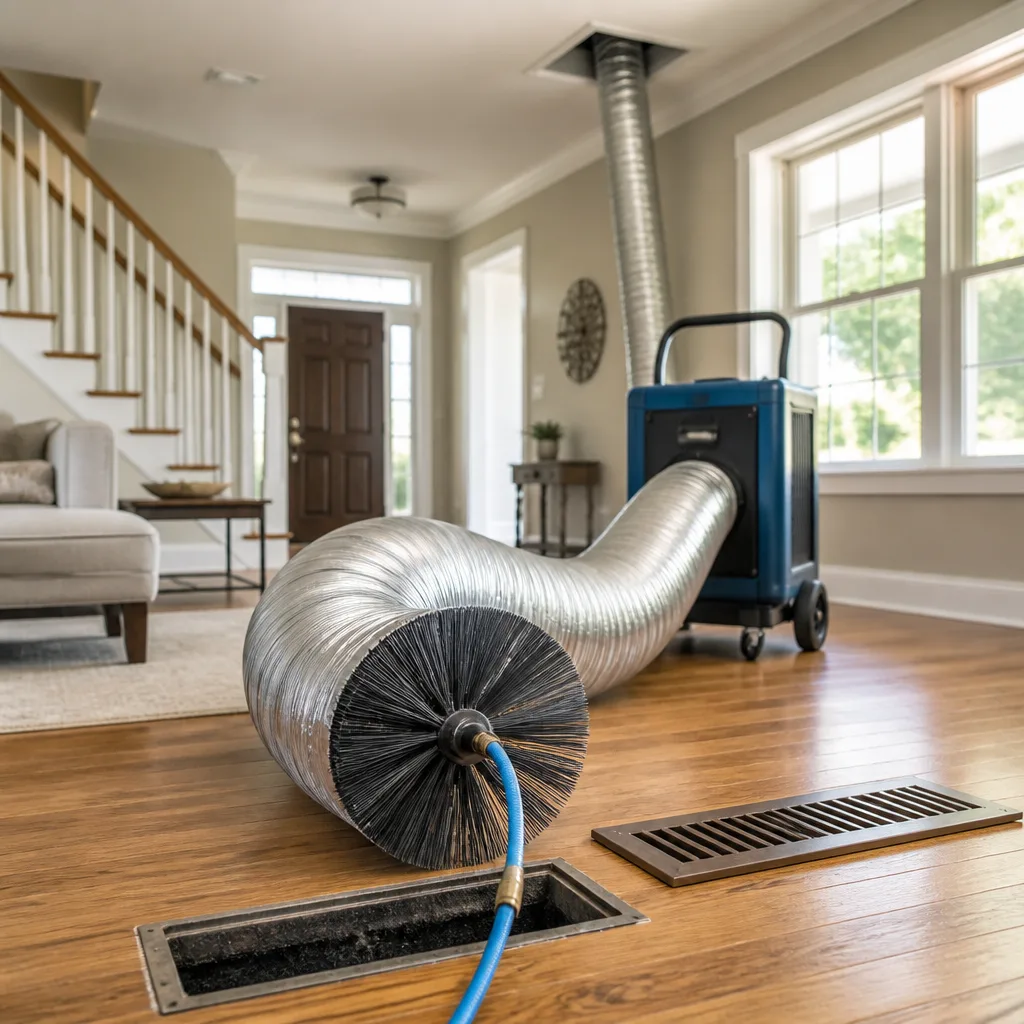 Whole-home duct cleaning
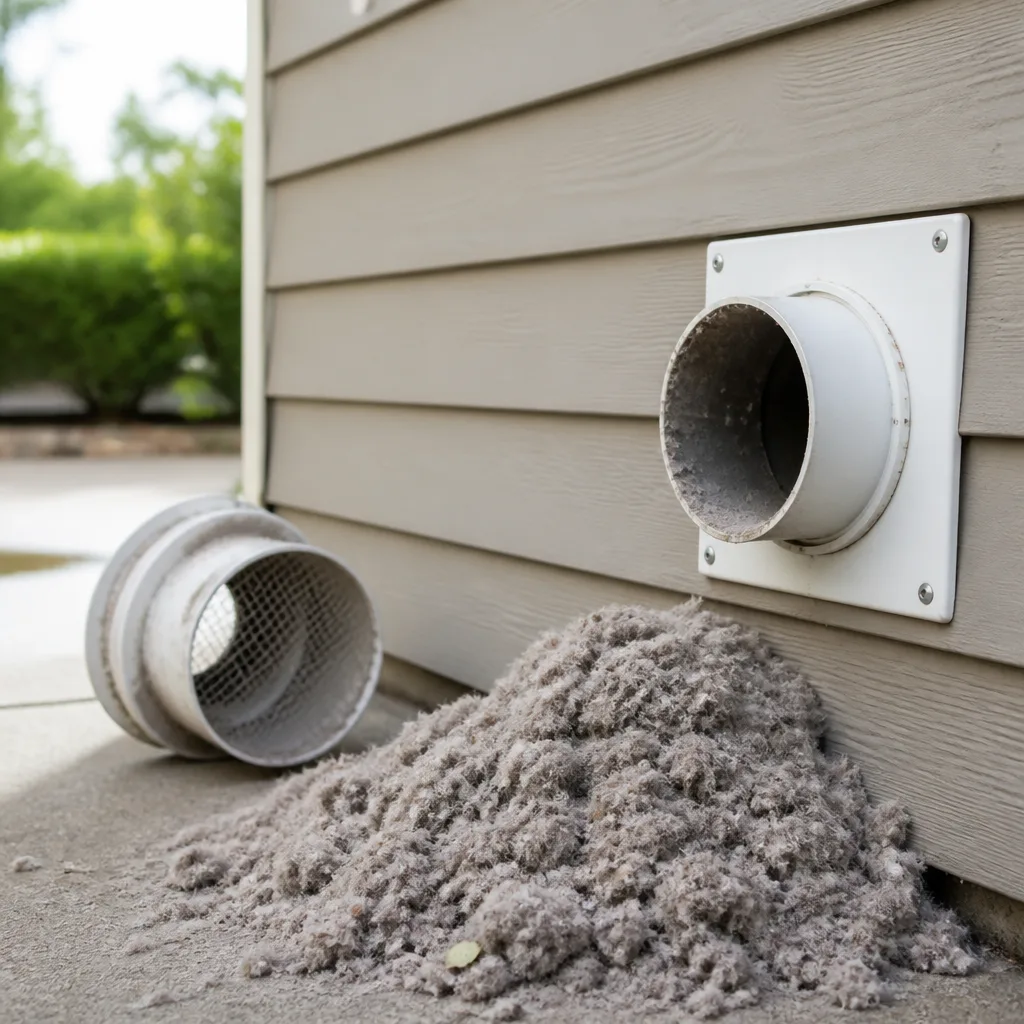 Dryer vent cleaning
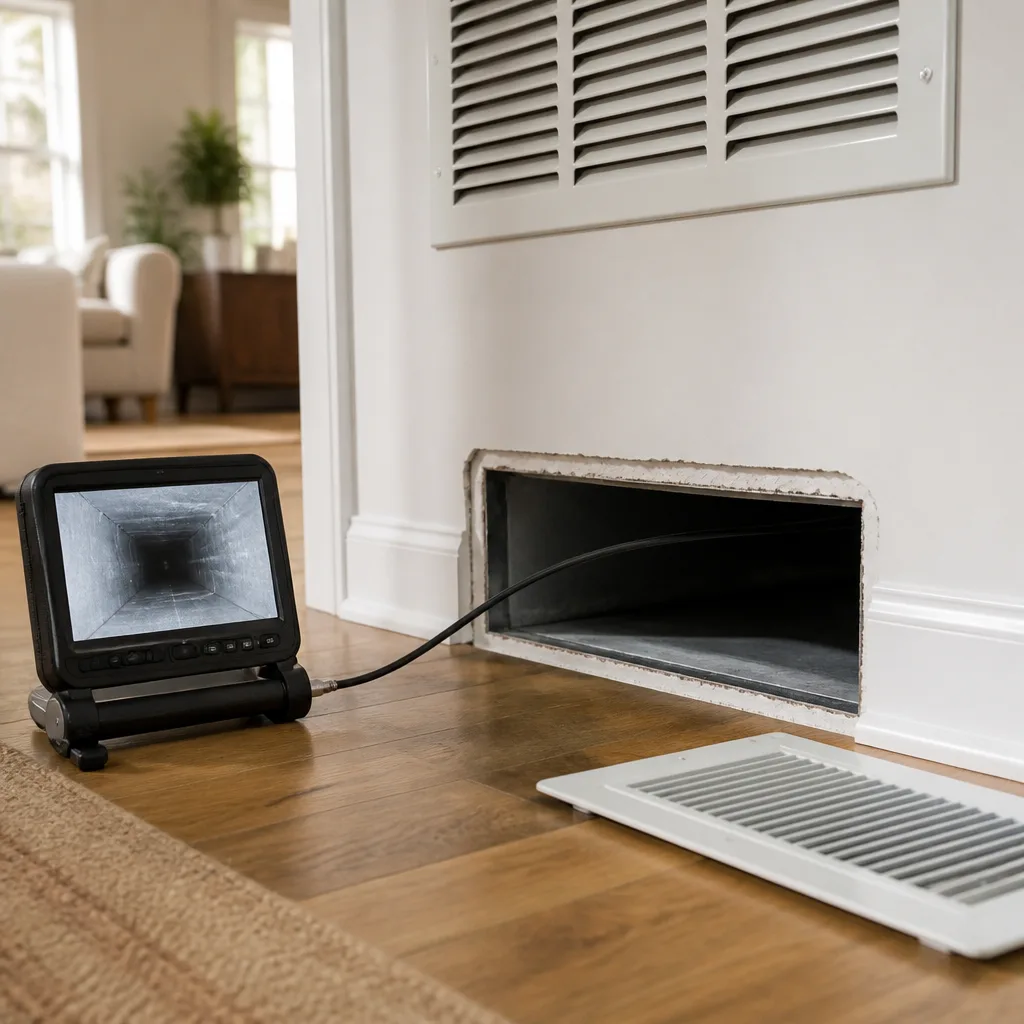 Camera inspection
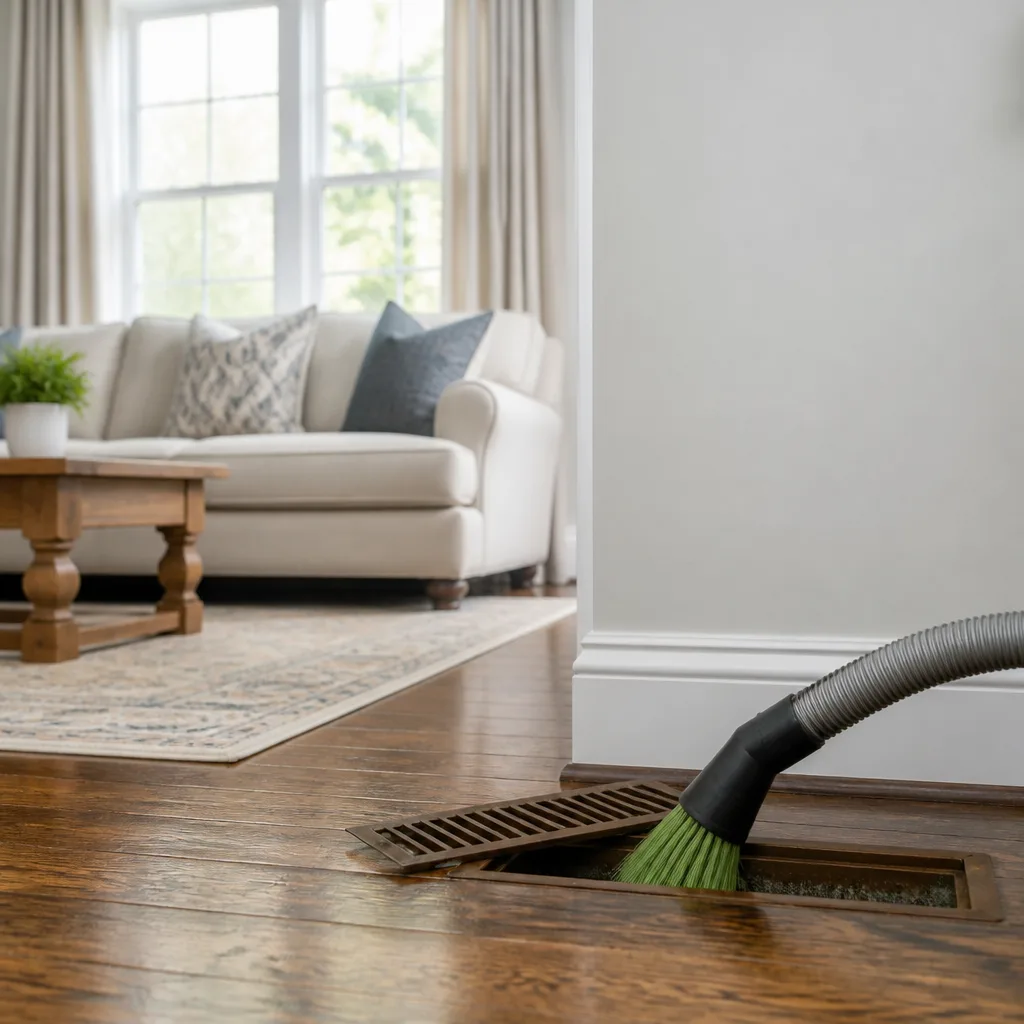 Sanitizing & deodorizing
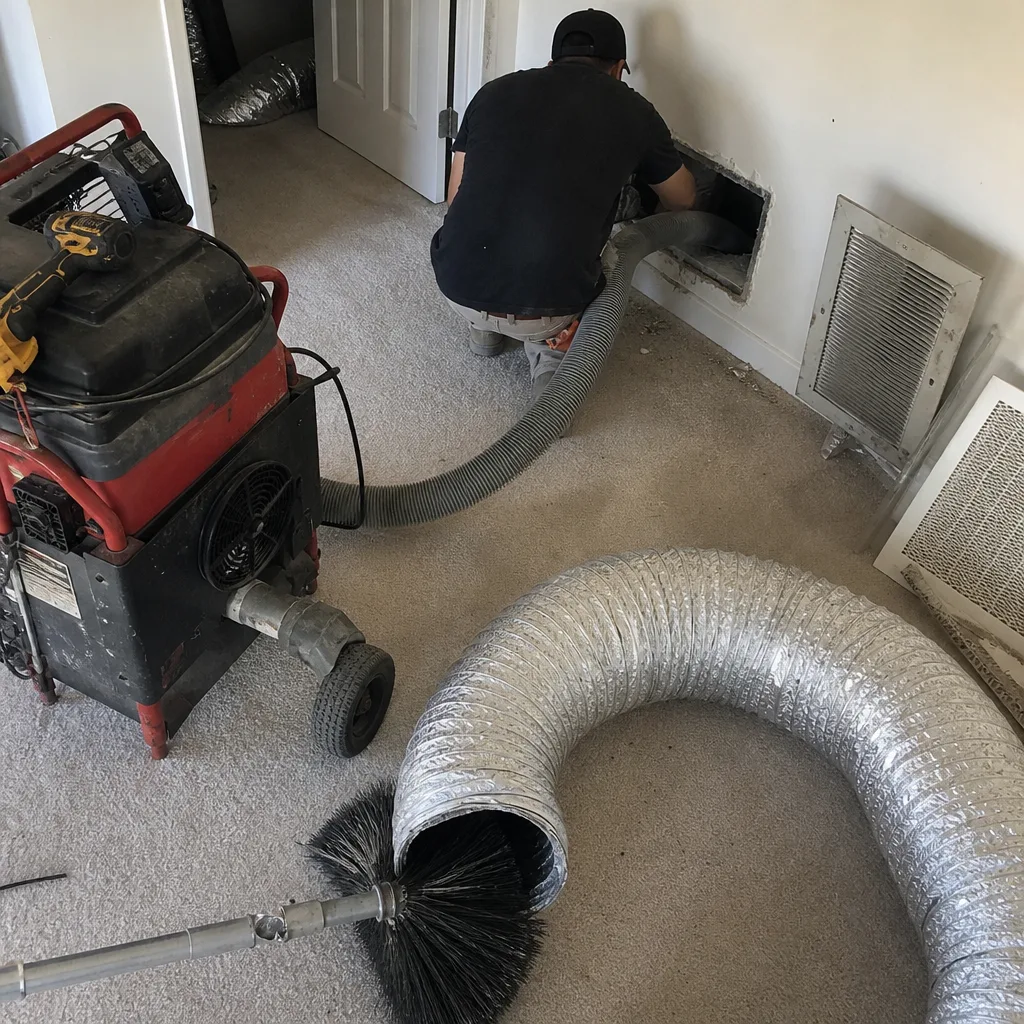
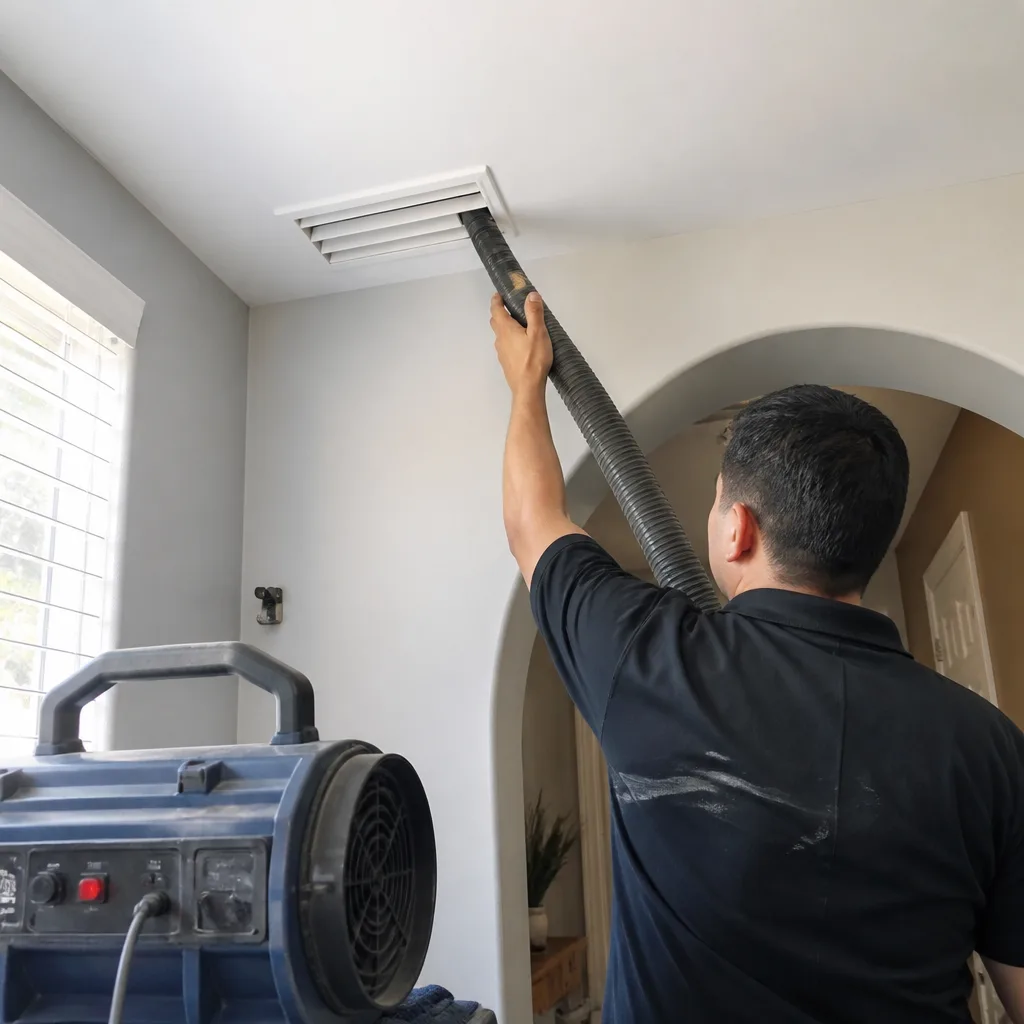
Whole-system duct and dryer vent check with before-and-after photos - you see exactly what came out of your vents
That "$99 whole-house special" is a bait ad - the real number appears once they are in your hallway, or the "clean" is a shop-vac at the register. We photograph the inside of your ducts before and after instead.
Air Duct Cleaning Emergency Preparedness Guide for Oceanside Homes
When the Alisal Fire pushed smoke over Oceanside in 2021, we saw something that changed how we think about duct systems. Homes that had their HVAC fan running during the smoke event showed particulate loads 4 to 7 times higher than homes where the system was shut down. Same neighborhood, same smoke. One decision in the first hour made the difference. This guide is about that decision, and the others that follow when a coastal home in Oceanside gets hit by smoke, flood water, or a sewage backup. You’ll learn what to do in the first hour, the first 24 hours, and the days after, before you restart your system or call anyone.
Styles & brands we work with
- Whole-home duct cleaning
- Dryer vent cleaning
- Camera inspection
- Sanitizing & deodorizing
Quick Answer
If wildfire smoke, flooding, or a sewage event reaches your Oceanside home, shut the HVAC system off completely and keep it off until the system is inspected and, if needed, cleaned or repaired. Run nothing, not even the fan, and document everything with photos and a timeline before any cleanup begins. For smoke events, a professional inspection is usually enough before restarting. For flood or sewage events, you’re almost certainly looking at cleaning plus repair or replacement, not just cleaning alone.
Table of Contents
- Wildfire Smoke Protocol: The First Hour and First 12 Hours
- Post-Flood Duct Contamination: The 48-72 Hour Window
- Sewage Event Response: Remediation vs. Cleaning
- Documentation: What to Capture Before Any Work Begins
- Vetting an Emergency Contractor Under Time Pressure
- Restarting Your System: The Inspection Sequence
- Dryer Vents in Emergency Situations: A Separate Risk
- Common Mistakes to Avoid
- When to Call a Professional
- Frequently Asked Questions
- The Bottom Line
Wildfire Smoke Protocol: The First Hour and First 12 Hours
Oceanside sits in a wind corridor. When fires burn inland, the marine layer and the Santa Ana winds do a strange dance, and the smoke can roll in fast. The single most important step is counterintuitive: shut your HVAC system off. Not just the cooling. Not just the heat. The whole system, including the fan. The fan in “on” mode pulls outdoor air into the return, and if that air is carrying smoke particulate, you’re actively pumping it through your ductwork and into every room. We’ve seen this in Oceanside homes after the Alisal Fire, and the pattern matched what indoor air researchers reported: systems left running during smoke events distributed fine particulate throughout the house, and into the duct walls where it settles and stays.
Here’s what to do in order:
- Shut the system off at the thermostat and at the breaker. A thermostat set to “off” won’t stop a system that’s wired to run the fan for air circulation. The breaker is the sure stop.
- Close all windows and exterior doors. Smoke is already inside; you’re locking the door against more of it.
- Do not run bathroom fans, range hoods, or portable air purifiers in the first hour. This sounds wrong, but bathroom fans and range hoods pull indoor air out, creating negative pressure that draws smoky outdoor air in through every crack. Portable purifiers can wait until the house is closed up and the initial plume has passed.
- After the first hour, if you own a portable HEPA purifier, run it in one room. That’s your clean room. Keep doors closed. This is not a substitute for duct cleaning, but it’s the right immediate move.
- Do not open windows when the sky looks cleaner. Smoke particulate lingers in the air long after visible haze lifts. Wait for an official all-clear, then wait another 24 hours.
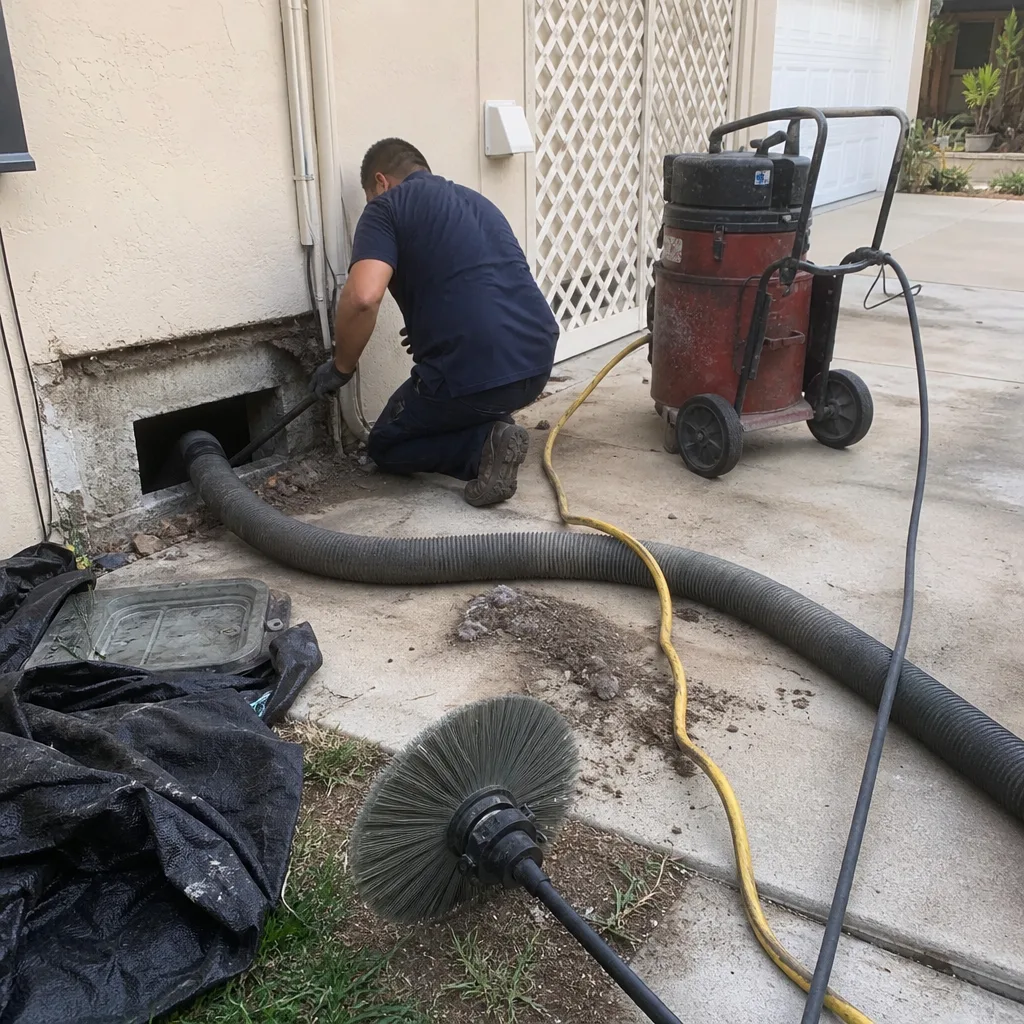
For an Air Duct Cleaning in Oceanside after a smoke event, the inspection sequence matters. We check for soot deposition on the return side first, then the supply side, then the blower assembly and evaporator coil. Soot is acidic and sticky. It doesn’t just sit on surfaces; it bonds to them. That’s why a brush-only cleaning or a shop-vac pass won’t remove what smoke leaves behind. Contact cleaning with a system like Rotobrush physically scrubs duct walls, which is what smoke-affected ducts need before anyone restarts airflow.
Post-Flood Duct Contamination: The 48-72 Hour Window
Oceanside’s coastal humidity changes the flood calculus. When water enters a crawlspace or a slab duct system, it doesn’t dry the way it does in Temecula or Fallbrook. The air stays moist. The duct surfaces stay moist longer. And the window for biological growth is short: 48 to 72 hours from the moment water contacts organic dust in the duct system. That dust, which is mostly skin cells, pet dander, and fabric fibers, becomes a food source the moment moisture hits it. What grows in that window is not something you can vacuum out later.
If flood water reached your ductwork, here’s the sequence we walk our Oceanside clients through:
- Do not run the system. Not even to “dry things out.” Moving moist air through the ductwork spreads contamination to every room and accelerates growth in places you can’t see.
- Kill the power to the HVAC system. Water and electricity share the same space. This is also a safety issue, not just a contamination issue.
- Extract standing water within 24 hours. If the water is in a crawlspace under the ducts, get it out with a sump pump or a professional extraction. Every hour matters.
- Inspect what you can see. Remove a floor register or two and look into the duct with a flashlight. If you see water, debris, or what looks like dirt caked to the walls, the system needs professional attention before it runs again.
- Leave the rest to someone who can see what you can’t. Duct interiors run through walls, ceilings, and subfloors. What you see through a register is a fraction of the story.
The hard truth about flood cases in Oceanside is that cleaning alone often isn’t enough. Coastal homes with older duct board, which handles moisture poorly, frequently need sections replaced. Homes with flex duct that has absorbed water may need runs pulled and re-run. A proper Air Duct Repair in Oceanside is the difference between a system that works and a system that quietly regrows the problem. Our position on this is simple: if cleaning reveals damaged, disconnected, or collapsed ductwork after a flood, repairing it on the spot is part of the job, not a referral to another contractor.
Sewage Event Response: Remediation vs. Cleaning
Oceanside’s older neighborhoods, especially parts of South Oceanside and the Loma Alta corridor, sit on infrastructure that dates back decades. Sewer lines under coastal homes age, shift, and occasionally back up. When sewage gas or raw sewage reaches a duct system, the distinction between cleaning and remediation stops being a technicality. It becomes the entire conversation.
Sewage contamination is a biological hazard. The duct walls are not just dirty; they’re contaminated with bacteria, viruses, and parasites that routine cleaning chemicals are not rated to address. If sewage gas entered the system, the duct interiors need treatment with a biocide appropriate for the specific contamination, which is a remediation scope. If raw sewage physically entered the ductwork, the porous materials, which include duct board, insulation, and flex duct, may need removal and replacement, because porous material cannot be reliably decontaminated.
What this means for a homeowner:
- A duct cleaning company without remediation-grade equipment is not the right call. This is not a knock on anyone’s shop vac. It’s a scope question. Equipment like Abatement Technologies gear is built for this kind of containment and air scrubbing work, and a company that owns it can handle what a standard cleaning company cannot.
- Expect a different process. Remediation involves containment (isolating the contaminated area), negative air pressure (which Nikro HEPA negative-air machines are designed to provide), cleaning, treatment, and often replacement of absorbent materials.
- Documentation is even more important here. Insurance companies scrutinize sewage claims. The more photos, videos, and written notes you have, the stronger your claim.
The question to ask any contractor in a sewage event is blunt: “Is this a cleaning case or a remediation case for you, and what equipment do you use for containment?” If the answer doesn’t include negative-air containment and a clear treatment protocol, keep calling.
Documentation: What to Capture Before Any Work Begins
Insurance adjusters work from evidence, not memory. In the chaos of an emergency, documentation feels like the last priority. It’s actually the first thing that determines whether your claim moves or stalls. Here’s what to capture, in order of importance, the moment you’ve dealt with immediate safety:
- Photos of the source event. Smoke outside, water in the crawlspace, sewage at the drain. Wide shots and close-ups. Include a timestamp if your phone supports it.
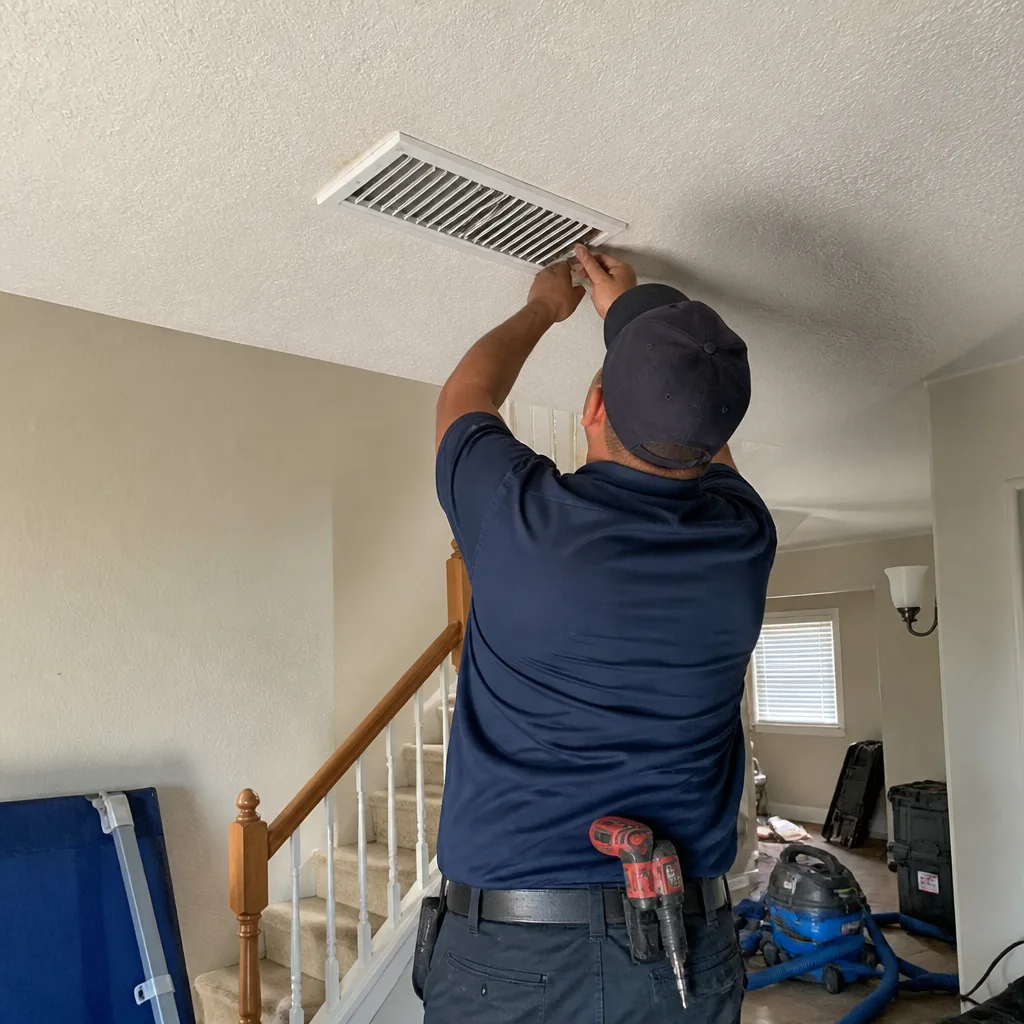
- Photos of the HVAC system before anyone touches it. Exterior of the air handler, the return grille, the supply registers, the duct runs visible in the garage or crawlspace. These establish the starting condition.
- Photos of any visible contamination inside the ductwork. Take off a register and shoot in with the flash on. If you see standing water, debris, or discoloration, photograph it. This is evidence that connects the event to the duct system.
- Air quality readings if available. If you own a particle counter or a consumer-grade PM2.5 monitor, take readings and write them down. Not everyone owns these, which is fine. If you have one, use it.
- A short written timeline. Date and time of the event, when you shut the system off, when water was extracted, when the contractor arrived. Three sentences, not a novel. This is gold for an adjuster.
- Invoice-ready notes. Contractor name, licenses if visible, what they said they found, what they quoted. If a dispute comes later, your notes matter more than their recollection.
One more point specific to ducts: before any cleaning starts, request that the contractor document the before condition of the duct interior with a camera. Companies doing proper Duct Cleaning Oceanside home work can run a camera into the system. That footage is powerful insurance evidence. Don’t skip it.
Vetting an Emergency Contractor Under Time Pressure
Emergencies make people hire badly. When smoke has covered the neighborhood or water is in the crawlspace, the instinct is to call the first company that answers and book the first available slot. We understand why. But three questions, asked on that Sunday call, separate real professionals from quick-buck operators. And they apply whether you’re calling us or anyone else in Oceanside.
- “Do you use contact cleaning equipment, or just vacuum and blow?” If the answer is “we use specialized brushes,” press further. Contact cleaning means something pushing against the duct wall, not just air moving through it. Rotobrush contact-cleaning technology scrubs duct walls, which is the difference between removing debris and just redistributing it. A company that only runs a vacuum and a blower will leave the problem behind.
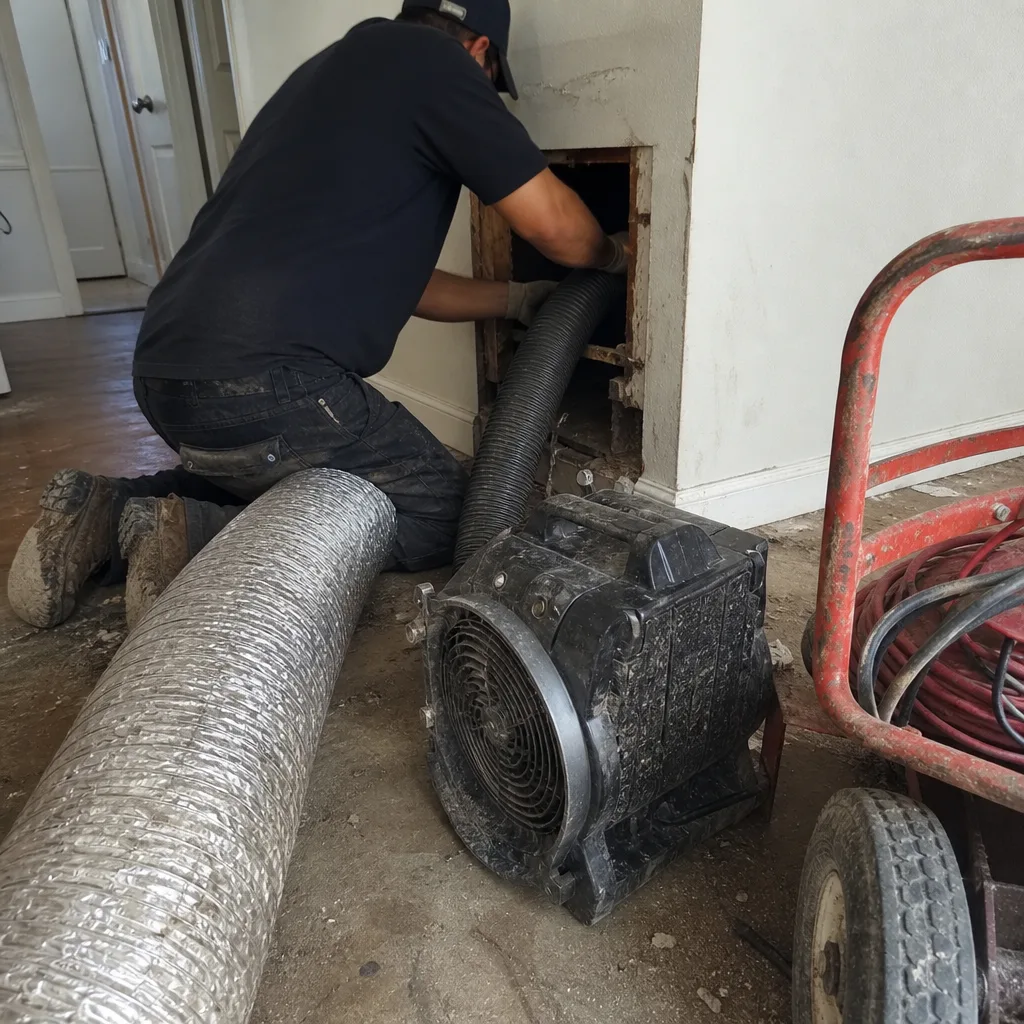
- “Do you use negative-air containment during cleaning?” This is the one that separates professionals from everyone else. Nikro HEPA negative-air machines pull air through a HEPA filter, keeping dislodged particulate from recirculating into your home. If the answer is no, or “we use a shop vac with a HEPA filter,” that’s not containment. Shop vacs exhaust air back into the room. The containment question matters more after contamination events, because the last thing you want is smoke particulate or flood-spore dust blown into your living room while someone “cleans” the ducts.
- “Can you repair duct damage you find, or do I need another company?” After a water event, ducts are often damaged, not just dirty. Disconnected runs, crushed flex duct, saturated duct board, all of it. If the answer is “we only clean,” you’re hiring two jobs when you could hire one. The Air Duct Repair in Oceanside capability matters more in emergency scenarios than in routine maintenance, because the odds of finding damage are far higher.
One more honest note: in a true emergency, you may not get a company that checks all three boxes for a same-day visit. That’s the reality of disaster response. But asking the questions tells you what you’re buying, and whether you should plan for a follow-up with a properly equipped company once the immediate pressure is off.
Restarting Your System: The Inspection Sequence
Restarting a system after a contamination event without inspection is like driving a car after a collision without checking the frame. It might run. It might also make everything worse. Here’s the sequence we follow when we’re called to a post-event Oceanside home, whether the event was smoke, water, or sewage:
- Visual inspection of the air handler and blower. The blower assembly is the heart of the system. If contamination reached it, restating the fan spreads it to every room. We look before we spin.
- Inspection of the return side first, then the supply side. Smoke and water contamination enters through the return in most cases. The return side shows the earliest and heaviest deposition.
- Coil inspection. The evaporator coil sits in the airflow stream. If the ducts are contaminated, the coil is too, and a dirty coil reduces efficiency and blows contamination into the supply runs.
- Filter check and replacement. A clogged filter is a sign of a heavy particulate load. Replace it, but don’t stop there. The filter catches what reaches it; it doesn’t clean the ducts upstream.
- Decision point: clean, repair, or replace. After inspection, the path is clear. Smoke-affected ducts usually need contact cleaning. Water-affected ducts often need repair plus cleaning. Sewage-affected ducts may need replacement of porous materials. The inspection tells you which path applies.
If you’re working with a filtration brand like Aprilaire or Honeywell, tell the contractor before work starts. These systems have specific filter housings and airflow requirements. A cleaning that ignores them or, worse, damages a filter cabinet, creates a new problem. In our experience, homes with Aprilaire or Guardsman filtration setups have better post-event outcomes than homes running basic fiberglass filters, because the filtration catches more of the incoming particulate before it hits the duct walls. But filtration is not a substitute for cleaning after a major event. Filters catch; they don’t remove what’s already in the ducts.
Dryer Vents in Emergency Situations: A Separate Risk
Most homeowners think of the dryer vent and the duct system as one thing. They’re not. The dryer vent is a separate exhaust run that carries hot, lint-laden air from the dryer to the outside. In an emergency context, it creates a different set of problems, and the biggest one is fire.
After a wildfire smoke event in Oceanside, dryer vents often fill with a mix of lint and soot, which is more flammable than lint alone. After a water event, a dryer vent that takes on moisture becomes a nest for debris that dries into a packed, combustible blockage. And after any event that requires shutting the house down, the dryer vent is easily forgotten, because it’s not part of the HVAC system and it sits behind the appliance where no one looks.
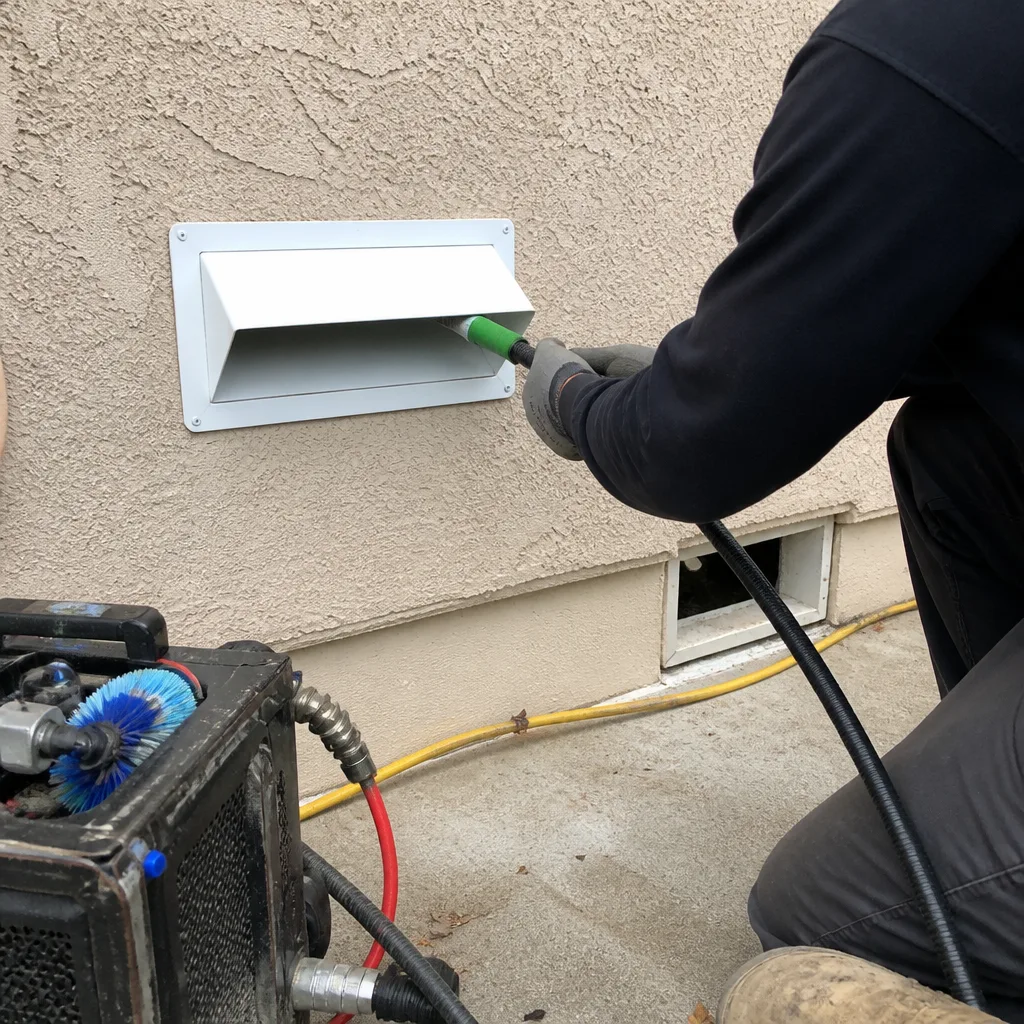
Dryer Vent Cleaning in Oceanside is a specific service with a specific purpose: reducing a documented fire risk. The US Fire Administration tracks dryer fires every year, and the leading cause is failure to clean the vent. If your home has been through a smoke or flood event, treat the dryer vent as a separate line item. Clean it. Document it. If you’re filing an insurance claim, include the dryer vent work in the same claim scope, because the same event that contaminated your ducts likely compromised the vent as well.
Common Mistakes to Avoid
- Running the fan to “clear the air” after a smoke event. The fan pulls smoky outdoor air through the return and pushes it through the system. What settles in the ducts stays there until it’s cleaned. Shut the system off, not the fan on.
- Waiting a week after a flood to check the ducts. The 48 to 72 hour growth window doesn’t pause because you’re busy. By day five, you’re not scheduling a cleaning; you’re scheduling a repair and likely a replacement.
- Hiring a cleaning company for a sewage event. Sewage contamination is remediation scope. If the company doesn’t use negative-air containment and a treatment protocol, they’re not equipped for the job, and lying to yourself about it doesn’t make the ducts safe.
- Skipping the photos because “things are crazy right now.” Ten minutes of phone photos on day one is worth more than twenty hours of dispute resolution later. Shoot everything. Shoot the event, the standing water, the open register, the dirty filter. Just shoot.
- Restarting the HVAC system after a water event without an inspection. Spinning a blower through wet or debris-filled ductwork spreads contamination and can damage the blower motor. The system stays off until someone qualified looks at it.
- Assuming a portable HEPA purifier clean the ducts. A purifier cleans the air in one room. It does nothing to the duct walls. The duct system remains contaminated until it’s cleaned or repaired, and the purifier just makes one room tolerable while the rest of the house waits.
- Ignoring the dryer vent after an emergency. The same event that hits your ducts hits your dryer vent. A blocked vent is a fire hazard, and after a smoke event, the blockage is worse. Clean it separately and document it separately.
When to Call a Professional
Call a professional if the event was more than a brief smell. If smoke kept you indoors for more than a few hours, if water rose in the crawlspace or reached floor level near the air handler, if sewage backed up anywhere near the duct system, or if you see discoloration or debris inside a floor register, the system needs a professional inspection. Same goes if you restart the system and notice burnt-smoke odor coming out of the registers, uneven airflow between rooms, or visible dust settling on surfaces within hours of cleaning. These are signs that something deeper is wrong. Duct Cleaning Oceanside offers free estimates in Oceanside – call (855) 382-4811.
Frequently Asked Questions
Post-event duct cleaning in Oceanside typically falls between $450 and $1,200 depending on the size of the system, the type of contamination, and whether repair work is needed. Smoke events tend toward the lower end unless soot deposition is heavy; flood events run higher because they often require repair plus cleaning, and sewage events are priced as remediation, which is a separate scope with containment and treatment protocols. Call (855) 382-4811 for an exact quote – estimates are free.
Not until the system has been inspected and, if needed, cleaned. Smoke particulate settles inside ductwork and on the coil, and restarting airflow redistributes it into the living space. In coastal homes like those in Oceanside, the humidity can also reactivate soot that has settled, causing odor problems that linger for months. Shut the system off, leave it off, and schedule an inspection before you restart it.
Cleaning addresses debris and surface contamination. Remediation addresses biological hazards, which is what sewage introduces. Remediation involves negative-air containment to prevent cross-contamination, a treatment protocol appropriate for the specific contamination, and often replacement of porous materials like duct board, insulation, and flex duct. A company without remediation-grade equipment, including containment capability like Nikro HEPA negative-air machines, cannot properly address a sewage event.
Request before-and-after photos or video from inside the ducts, not just outside the registers. A company doing contact cleaning with Rotobrush equipment can run a camera into the system to show you the duct walls before and after. If the company only provides photos of the registers or the van, that’s not proof of interior work. The documentation also serves your insurance claim.
Yes. A dryer vent accumulates lint, and smoke particulate that settles into that lint makes the buildup more flammable. A Dryer Vent Cleaning in Oceanside is a separate service from duct cleaning, and it’s worth treating it as a separate line item in your post-event plan. The fire risk is documented and real.
You shouldn’t restart it at all until someone has inspected the system. Water in the ducts or the air handler creates a 48 to 72 hour window before biological growth begins, and restarting airflow does not dry the system – it spreads whatever is growing into every room. If the event was minor and you can see no visible water in the ductwork, you might get away with an inspection. If water was visible near the air handler or in floor registers, treat it as a repair case and call (855) 382-4811 for a free estimate.
The Bottom Line
Oceanside’s wildfire smoke, coastal floods, and aging infrastructure make emergency duct contamination a question of when, not if. The home’s first line of defense is the off switch. Shut the system down, leave it down, and document everything before any work begins. Then call someone who can tell you the difference between cleaning, repair, and remediation, and who has the equipment to back up that distinction. If you’re not sure what applies to your situation, call (855) 382-4811 and describe what happened. We’ll tell you what we think you’re dealing with and whether the system needs an inspection before you restart it.
Written by the team at Duct Cleaning Oceanside, serving Oceanside since 2011.
See the difference
 Before
 After
 Before
 After
 Before
 After