
Last updated November 2, 2026
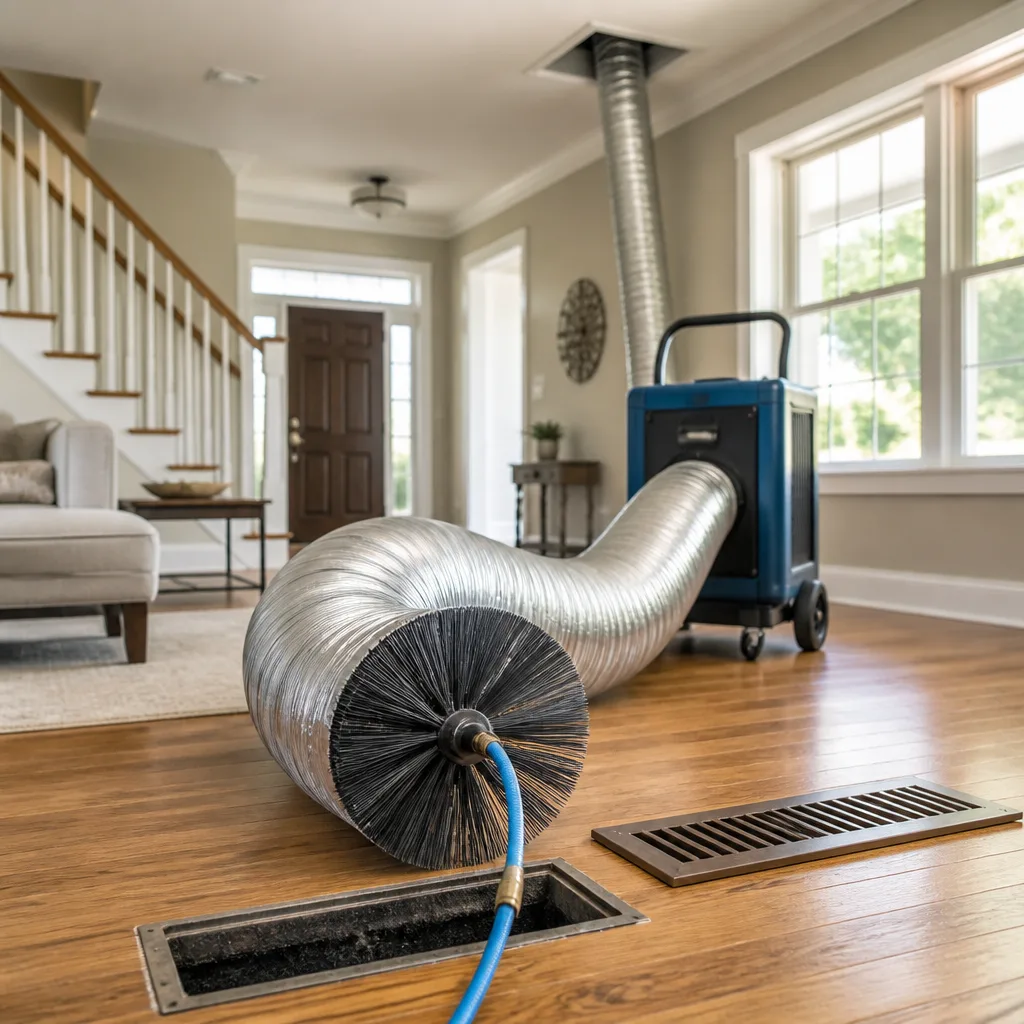 Whole-home duct cleaning
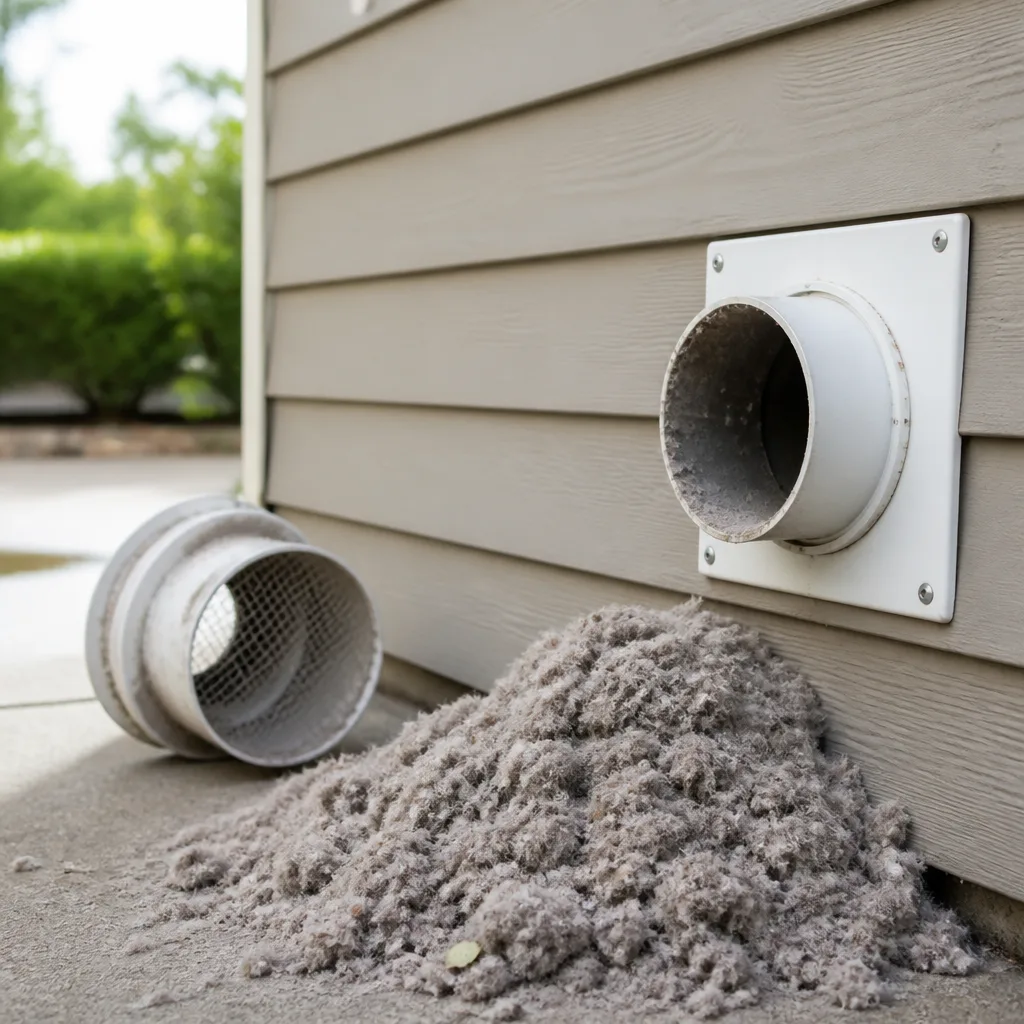 Dryer vent cleaning
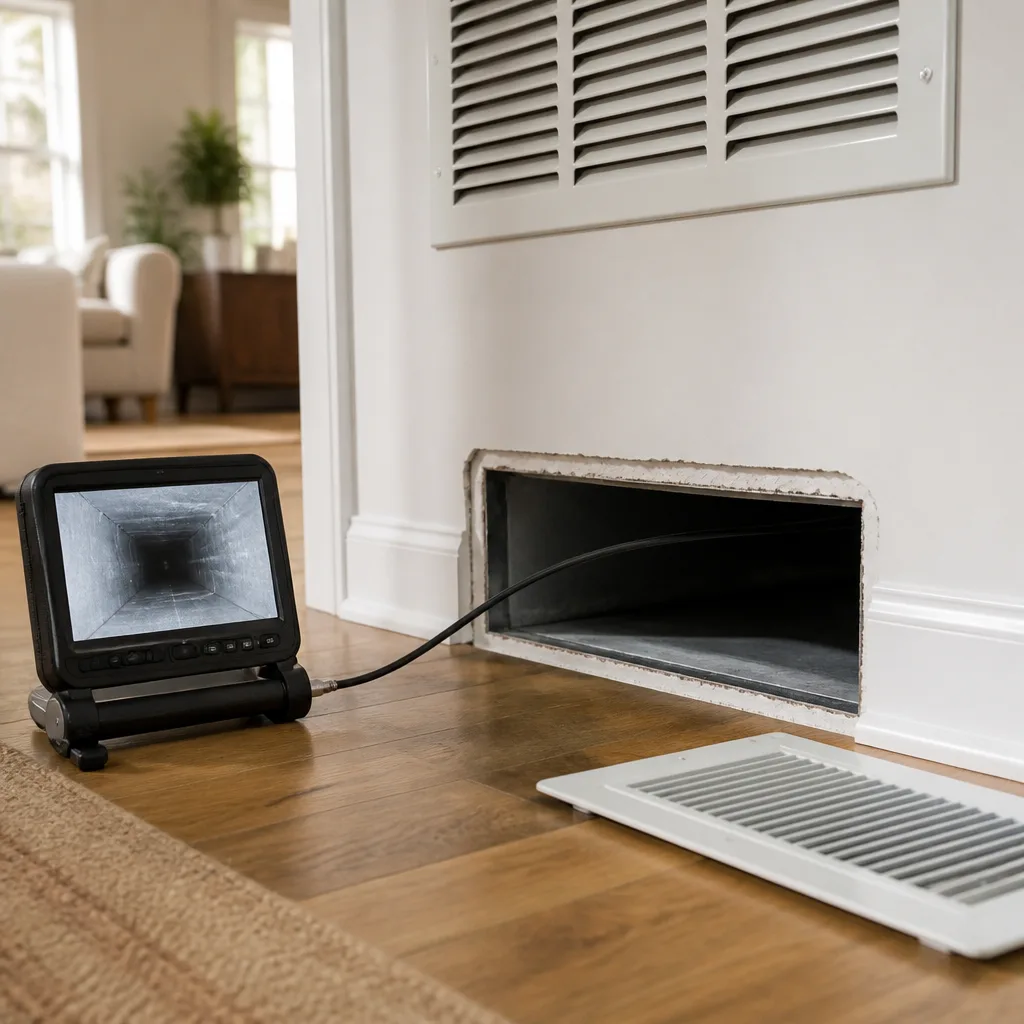 Camera inspection
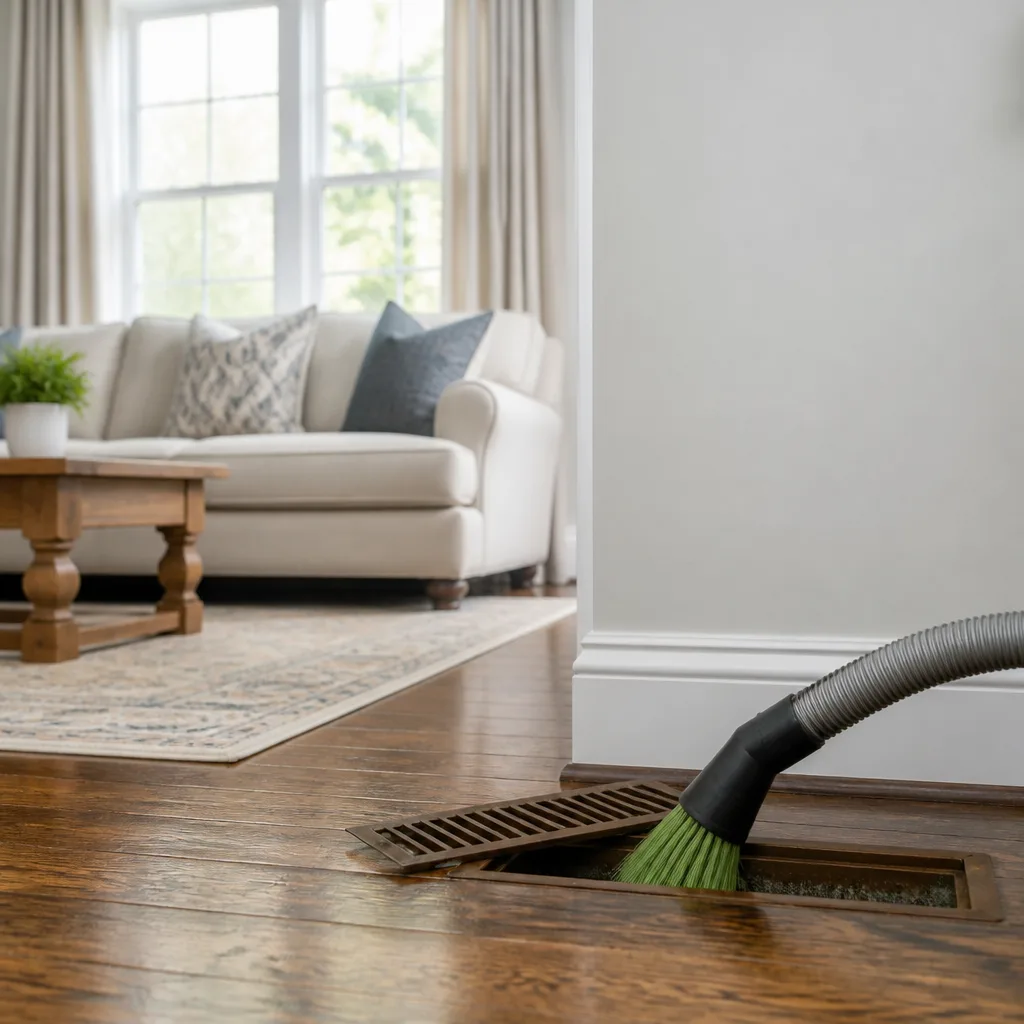 Sanitizing & deodorizing
Whole-system duct and dryer vent check with before-and-after photos - you see exactly what came out of your vents
That "$99 whole-house special" is a bait ad - the real number appears once they are in your hallway, or the "clean" is a shop-vac at the register. We photograph the inside of your ducts before and after instead.
DIY vs Professional Air Duct Cleaning: The Oceanside Homeowner’s Decision Guide
Every consumer-grade duct cleaning kit sold on Amazon shares the same fundamental limitation: no tool in the package creates negative air pressure, which means anything you dislodge has to go somewhere, and that somewhere is often your living room. This guide walks through what a homeowner in Oceanside and the surrounding North County areas can reasonably accomplish with a Saturday afternoon and a shop vac, and where the physics of moving air makes do-it-yourself efforts hit a hard ceiling. You’ll learn why the first 18 inches of duct near a register are easy, why the remaining 85 percent of your system is not, and how to decide whether 2026 is the year you call in contractor-grade equipment. We’ll cover what professional gear actually does differently, how to spot a low-effort cleaning company, and the How to Hire an Air Duct Cleaning Contractor in Oceanside: A Step-by-Step Guide that tells you whether to DIY or call.
Quick Answer
DIY air duct cleaning in Oceanside can remove visible dust and debris from the first 18 inches or so of duct accessible through each register, which covers roughly 15 percent of a typical system, and it cannot create the negative air pressure containment that prevents dislodged particulates from recirculating through your house. Professional cleaning with Rotobrush contact-cleaning equipment physically scrubs the full interior surface of the ducts while HEPA-rated negative-air machines hold the system under vacuum so nothing escapes into living space. If your system has years of accumulation, post-remodel debris, evidence of rodents, or visible mold at the air handler, a professional is the only option that addresses the whole system rather than the parts you can see.
Styles & brands we work with
- Whole-home duct cleaning
- Dryer vent cleaning
- Camera inspection
- Sanitizing & deodorizing
Key Takeaways
- DIY is limited by physics, not effort. Without negative air pressure containment, whatever you dislodge beyond arm’s reach goes into the air you’re breathing, not the vacuum.
- You can clean roughly 15 percent of your system. Register openings and the first 18 inches of duct are within reach of consumer brushes and crevice tools. The rest of the run, especially the trunk line, is not.
- Flexible duct is common in Oceanside tract homes and easily torn. The stiff brushes in consumer kits snag and puncture at bends, and a torn crossover duct under the insulation leaks conditioned air into no-man’s-land.
- Some situations make DIY actively counterproductive. Post-construction drywall dust, rodent droppings, and visible mold require contain-and-remove methods that no homeowner setup can manage.
- Professional equipment is not a bigger shop vac. Rotary contact brushes and negative-air machines work together to remove and contain debris at the point of dislodging, which is what separates cleaning from recirculating.
Table of Contents
- The 18-Inch Problem: What DIY Actually Cleans
- The Physics of Duct Cleaning: Why Negative Air Pressure Matters
- What a Homeowner Can Legitimately Accomplish Between Professional Cleanings
- Duct Material Risks: Why Flexible Ducting Is Vulnerable
- When DIY Actively Makes Things Worse
- The Four-Variable Test: DIY or Call in Oceanside?
- Why Equipment Matters: Rotobrush, Nikro, and What They Actually Do
- Oceanside-Specific Factors That Affect Duct Condition
The 18-Inch Problem: What DIY Actually Cleans
Here is a useful way to think about the average duct system in an Oceanside single-family home. The registers you see in the ceiling or floor are the end points of branch ducts that run back to a central trunk line, and that trunk line feeds everything from the air handler in the garage or attic. The branch runs are typically 5 to 9 inches in diameter and extend 10 to 20 feet before they reach the trunk. Your arm, or the flexible wand on a consumer duct cleaning kit, reaches about 18 inches past the register before the bend in a typical ceiling takeoff stops progress completely. No amount of twisting or forcing gets the brush around the elbow, and the trunk line itself remains untouched. So what the homeowner cleans with a brush and shop vac is the visible portion of each branch run and nothing more. In a standard three-bedroom house with 8 registers, that works out to roughly 120 linear feet of ductwork, of which you can physically contact about 15 percent. The other 85 percent continues accumulating dust, dander, and whatever else moves through your HVAC system, and every time the blower kicks on, the material in the deep runs feeds right back through the home.
We see this pattern constantly in Oceanside: homes built in the 1980s and 1990s in neighborhoods like Fire Mountain, South Oceanside, and the Rancho Del Oro corridor where the original flexible ductwork is still in place and has never been serviced. The registers look dusty, so the homeowner gets a kit, cleans the visible section, and can see a satisfying patch of clean metal. Three weeks later the visible dust is back, because the reservoir of material in the trunk and the upper branch runs was never removed.
None of this means the homeowner effort is wasted. Cleaning the register, wiping down the visible duct, and making sure the damper moves freely are all legitimate maintenance. The problem is the expectation gap: DIY approaches are marketed as if they clean “your ducts” when they actually clean only the first 18 inches of each branch. Understanding that line is the difference between a maintenance task done well and a system cleaning that never actually happened.
The Physics of Duct Cleaning: Why Negative Air Pressure Matters
Duct cleaning is fundamentally a containment problem. The dust, dander, construction debris, and allergen particles sitting in your ductwork are inert until something disturbs them. Once a brush or air blast dislodges that material, it becomes airborne and the pressure difference in the duct determines where it goes. In a positively pressurized system, or one with no pressure control at all, dislodged particles travel toward the nearest opening, which during a DIY job is usually the register you’re working through and the room it serves. The fine fraction of that debris hangs in the air for hours. The logic is simple: if you don’t create a controlled path for dislodged material to exit the system, you’re loosening it and letting it drift into the house.
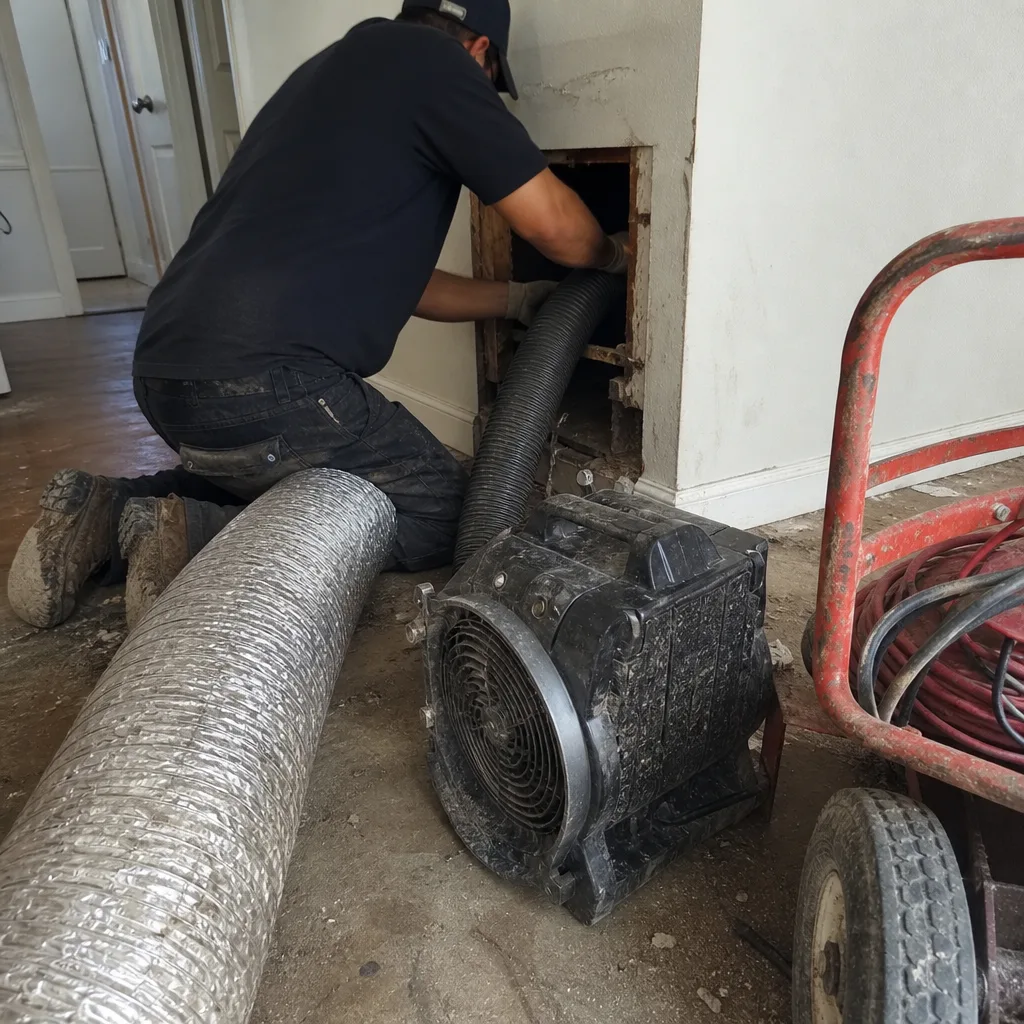
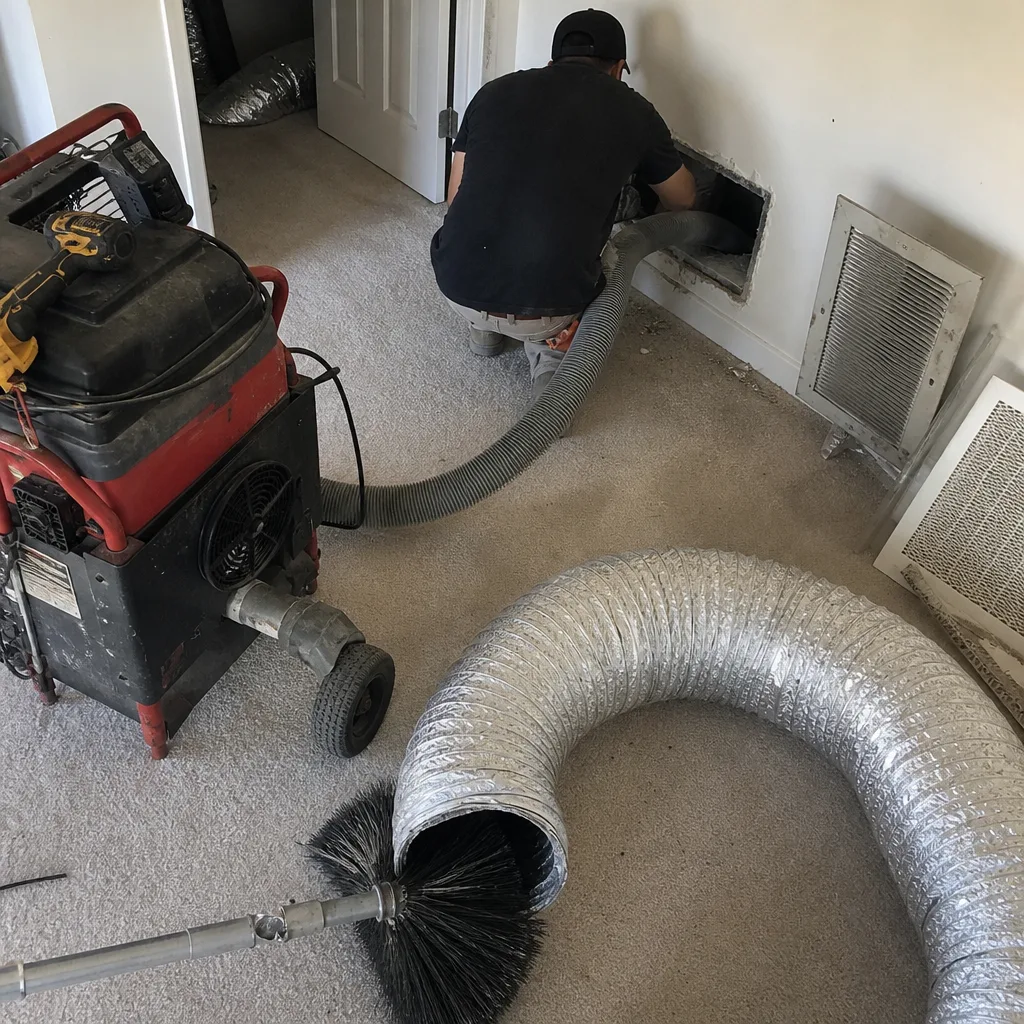
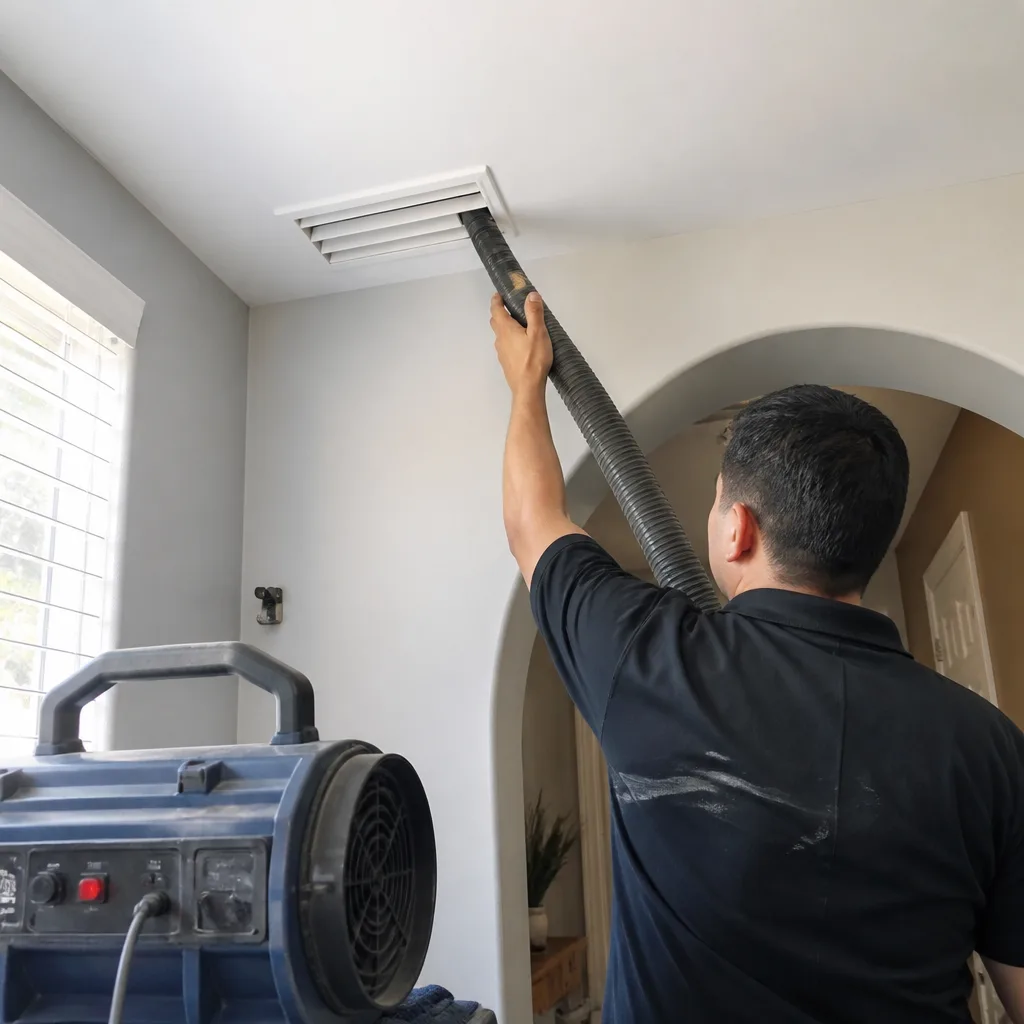
Professional approaches handle this with a negative-air machine, also called a negative-air filter unit or a HEPA vacuum containment system. The machine connects to the ductwork and continuously pulls air out of the system through a HEPA filter, creating lower pressure inside the ducts than in the living space. Any particle dislodged by the cleaning tool follows the airflow toward the vacuum and is captured, not released. The equipment we run at Air Duct Cleaning in Oceanside pairs Nikro HEPA-rated negative-air units with Rotobrush contact-cleaning tools precisely because the two actions cannot be separated: mechanical agitation without negative pressure containment makes the job worse, and negative pressure without mechanical agitation doesn’t remove material adhered to duct walls.
No consumer kit creates negative pressure. The tools are designed to knock material loose and rely on a shop vac or household vacuum to pull some portion of it out through the register opening, which is a fundamentally different operation. A shop vac running through a 4-inch hose connected to a register has a fraction of the airflow of a dedicated negative-air machine sized for the full duct run, and it pulls from a single point rather than the whole system. The material dislodged at distance from the intake never reaches the vacuum; it just becomes airborne in the duct and eventually the home. This is the core reason even a thorough DIY effort cannot replicate professional results, and it’s worth understanding before spending money on kits that promise otherwise.
What a Homeowner Can Legitimately Accomplish Between Professional Cleanings
Between professional cleanings, there are several mechanical tasks worth doing that have real impact and don’t require specialized equipment. The key is knowing which tasks actually remove material, which tasks are cosmetic, and which tasks risk damaging something you’ll later pay to repair.
Here is what a homeowner in Oceanside can reasonably do in an afternoon:
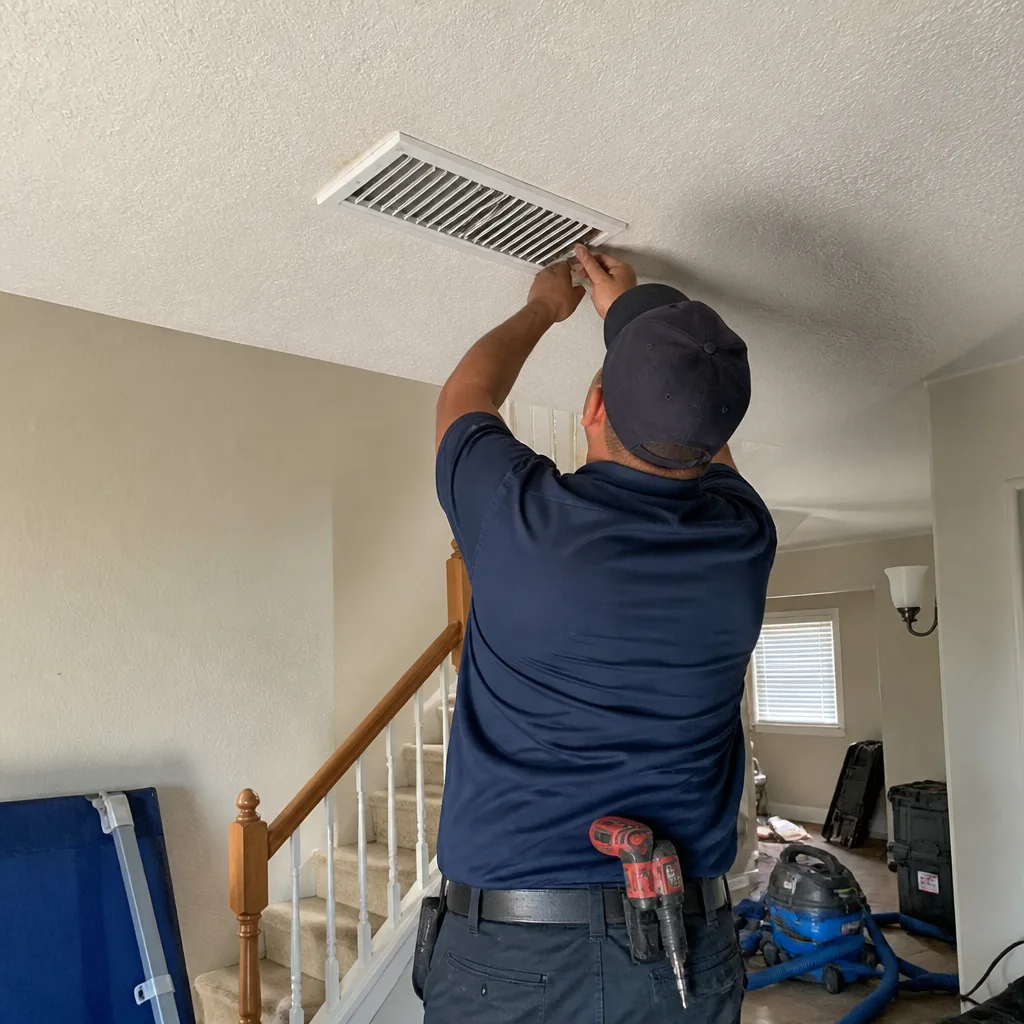
- Register and grille removal and washing. Register covers and return grilles accumulate dust and the wipes you do on the visible surface don’t catch what’s behind them. In a ranch house or mid-century South Oceanside home, 4-by-10-inch and 6-by-12-inch registers are typically held in with two screws. Removing them, washing both sides with dish soap and water, and wiping the first 6 inches of duct with a damp rag removes visible buildup and improves airflow through the opening. If the register has a built-in damper, move it through its full range while it’s out and clean the pivot points.
- First 18 inches of branch ducts. Using a flexible-but-not-stiff brush and a shop vac with a crevice attachment, you can remove loose dust from the straight section between the register and the first bend. Work from the register opening inward, and only in straight sections of rigid metal duct. The material you remove this way is genuinely removed; it’s not moving further into the system unless you force it there.
- Return air grille inspection and cleaning. The return side of the system is often the dirtiest because it carries unfiltered air, and in many Oceanside homes the return is nothing more than a wall cavity. Cleaning the visible return grille and checking the filter slot for correct filter size and proper seating is useful. Most homes we see have filters that don’t fit the slot, which lets dirt bypass the filter entirely.
- Filter replacement. This is basic but repeatedly missed. In Oceanside, where the weather pushes HVAC runs from roughly May through October, a one-inch filter replaced every 60 to 90 days during the cooling season is a floor, not a ceiling. Homes near the beach can go a bit longer; homes east of El Camino Real with more dust and pollen may need monthly changes.
- Visual inspection. Using a flashlight and a small mirror or a phone camera, check the accessible duct sections for visible mold, pest droppings, insulation deterioration, or disconnected joints. The goal here is not to fix anything, just to identify changes that warrant a pro.
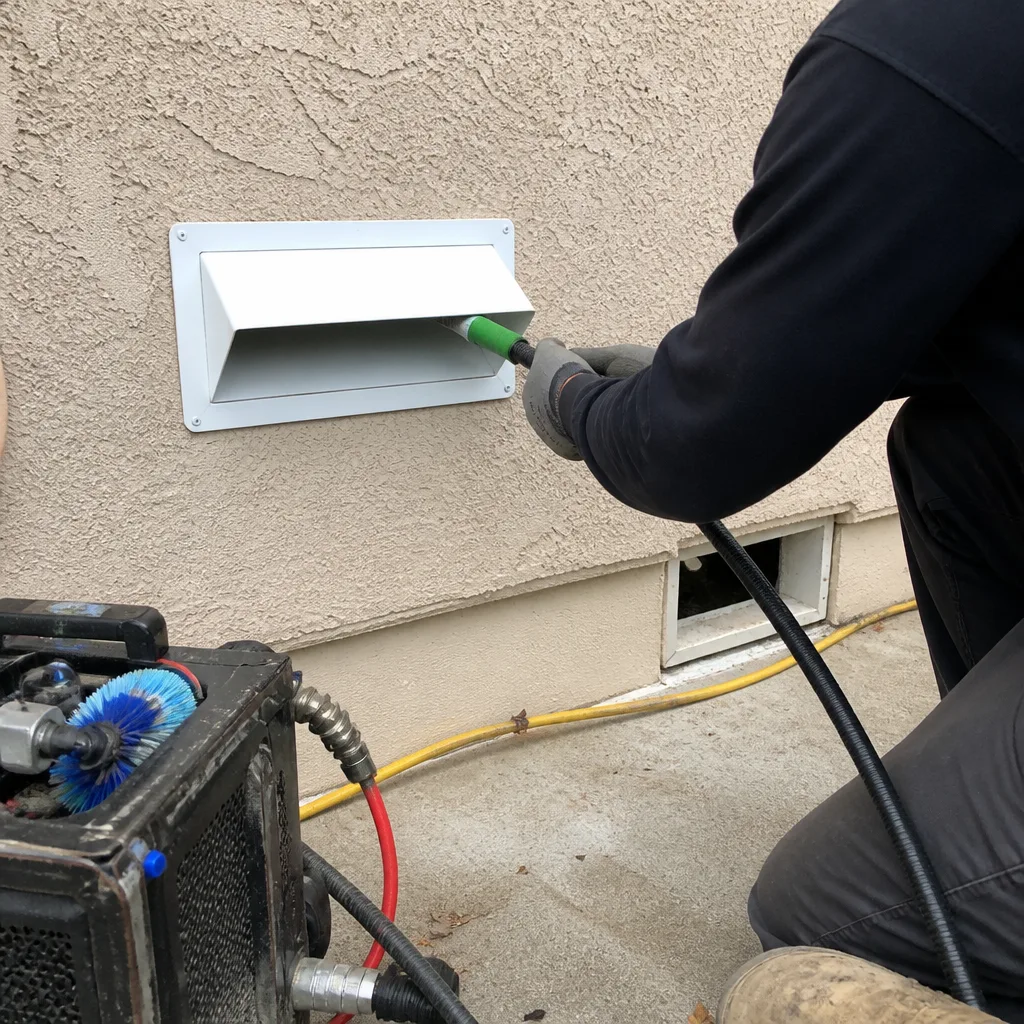
One additional note: Dryer Vent Cleaning in Oceanside is a separate system from your HVAC ducts, but it belongs in the same conversation because Oceanside’s coastal air carries fine particulate that settles in dryer exhaust runs. Homeowners should check the exterior dryer vent hood for lint buildup and make sure the damper opens and closes freely. The run behind the wall, which is where the fire risk concentrates, is not reachable with a homeowner-grade brush, and a dense lint plugged run can become a documented fire hazard.
The common thread through these items is that they’re all accessible without getting into the trunk line or the far end of branch runs. They’re worthwhile maintenance tasks, and doing them does not conflict with a professional cleaning. What they are not is a substitute for it.
Duct Material Risks: Why Flexible Ducting Is Vulnerable
Coastal Oceanside’s tract housing stock, particularly homes built from the 1970s through the 1990s in subdivisions like Sunburst, Capistrano, and large parts of Fire Mountain, was largely ducted with flexible, spiral-wire-reinforced plastic and foil duct. It’s lightweight, cheap, quick to install, and prone to specific failures that get worse over time. This matters for the DIY-vs-pro question because the common consumer instinct is to push a stiff brush deeper into the duct to get to “the rest” of it, and that is exactly how flexible duct fires, tears, and gets damaged.
Flexible duct is a reinforced plastic inner liner with a wire coil spring embedded in the material, covered by an insulation sleeve and a vapor barrier. It bends and stretches, which makes it forgiving in cramped attic spaces but genuinely fragile at the bends. The wire coil handles tension and flex, not abrasion: run a stiff-bristled metal brush across the inner liner in a turn and you’ll catch the coil, and then the choice is to stop or force it. Forcing it either punctures the liner or tears the foil. The result is a duct that leaks conditioned air into the attic or crawlspace, and that leak is invisible to the homeowner.
We have opened ducts in Oceanside homes where a previous DIY attempt had shredded the inner liner at the first ceiling bend. The homeowner never knew, because the damage was inside the sleeve. The visible symptom, months later, was a room that stopped cooling evenly and a rise in the electric bill as the AC fought to condition the entire attic. Leaking ducts pull dust from unconditioned spaces directly into the airflow, so the cleaning effort sometimes makes air quality worse by creating a new ingestion point.
In contrast, a professional cleaning operation using Rotobrush contact-cleaning handles flexible duct differently: rotational agitation with the correct brush head for the duct diameter, moving at a controlled speed, with the material under negative pressure the whole time. The tool contacts the walls to scrub off adhered material without digging into the liner. It’s the difference between a tool designed for the job and a tool designed to fit in a box and be sold at a price point. If you have flexible duct and you plan to use a consumer brush, work only in the straight section you can see, and stop at the first bend. Every inch past that is a gamble.
When DIY Actively Makes Things Worse
There are situations where a homeowner with good intentions and a brush is better off leaving the system untouched. The reason is not snobbery about professional equipment; it’s that certain contents of a duct system are hazardous to disturb without containment, and attempting to clean them without the right method can spread the problem from the ducts into the entire house. Here are the scenarios where we tell Oceanside homeowners to stop and call before touching anything.
Post-Remodel Drywall Dust
After a kitchen remodel, a room addition, or any job that generates fine drywall dust, the dust doesn’t stay in the room being worked on. The HVAC system pulls it through the returns and deposits it along the entire duct run, especially at turns and on the inside of return plenums. Drywall dust is extremely fine, and when you start brushing it, the dislodged fraction hangs in the air. Without negative pressure containment, you’ll redistribute it through the house, and get dust in rooms that were previously clean. This is a job for contain-and-remove equipment, not a brush and a vacuum.
Confirmed or Suspected Rodent Activity
If you’ve found droppings in the attic near duct runs, heard scratching that correlates with the duct path, or seen chewed insulation or damaged duct sleeves, do not open the registers and start brushing inside. Rodent droppings and urine can carry hantavirus and other pathogens, and disturbing dried droppings releases particulate into the air you’re breathing. This is a remediation-level project. The proper approach is containment and removal with HEPA filtration, followed by repair of the gnawed or soiled duct sections. At Air Duct Repair in Oceanside, we handle the full sequence: assess, contain, clean, and repair the damaged ductwork. A homeowner attempting this with a shop vac is making airborne whatever was previously resting on the duct floor.
Visible Mold at the Air Handler
In Oceanside, mold in the HVAC system most often shows up on the cooling coil, the drain pan, and the first section of the supply plenum, where cold metal meets moist coastal air and condensation forms. If you see black, green, or brown growth at the air handler or on the interior of the duct near the supply, the problem is not something you wipe away. Disturbing it releases spores, and unless the moisture source is corrected, it returns. This is a professional assessment and remediation job. A homeowner who wipes the visible growth and calls it done has removed the symptom while leaving the reservoir and the moisture source untouched.
Signs of Major Duct Failure
If registers are blowing weakly, some rooms are always 10 degrees off from the thermostat, or you can hear air moving in the attic when the system runs, you have a duct problem that cleaning will not solve. Disconnected, collapsed, or badly damaged duct runs need repair, and doing a cleaning job around them is a partial fix for a broken system. The better sequence is diagnosis and repair first, then cleaning of the now-intact system.
The Four-Variable Test: DIY or Call in Oceanside?
When homeowners ask us whether a particular system is a candidate for DIY or needs professional work, we run them through four questions. The answers almost always make the decision clear, and they’re specific enough to apply directly to an Oceanside home.
- How large is the home, and how many registers does it have? Up to about 1,200 square feet with 6 to 8 registers, you can maintain the register ends and the first couple of feet of each branch in an afternoon. Past that, the trunk line length and the number of branch runs make the percentage of system you cannot reach a bigger deal. A 2,800-square-foot two-story near the Camp Pendleton side of Oceanside has 40 to 60 linear feet of trunk line plus branch runs. The amount of untouched duct surface in a home that size means any DIY effort is fundamentally superficial.
- How old is the system, and is there a record of the last professional cleaning? Systems over 15 years old that have never been cleaned have accumulated a deep layer of material that DIY tools cannot remove. If the last pro cleaning was within five years and the house has had regular filter changes, a homeowner can maintain visible registers and stretch the interval. If there’s no record and the system predates the current owner, the default should be professional.
- Are there biological indicators or moisture problems? Any visible mold on duct surfaces, musty odor that intensifies when the HVAC runs, or evidence of rodents in the attic near duct runs rules out DIY entirely. These are contain-and-remove problems, and the equipment required is not available at retail.
- Has the home had recent renovation or heavy use? Post-remodel dust, a period with pets shedding heavily, a smoker in the home, or several years of coastal pollen exposure can all accelerate accumulation. Homes near the beach get fine particulate from the marine layer; homes inland get more plant pollen. If the answer points to heavy recent loading, professional cleaning is the call.
If you score one or more of these as a “professional” and you still want to do maintenance work, do the register cleaning, the filter change, and the visual inspection, then let a pro handle the system interior. The sequence matters: cleaning before the deep system clean means the pro works in a clean environment, and the maintenance effort isn’t wasted.
Why Equipment Matters: Rotobrush, Nikro, and What They Actually Do
The core of the professional difference comes down to two pieces of equipment working together, and we’ll name them specifically because they’re not interchangeable with consumer gear. The first is the Rotobrush system, which is exactly what the name suggests: a rotating brush head attached to a powerful vacuum that combines agitation and collection in a single stroke. The brush head rotates and physically scrubs the duct walls, which is what removes compacted debris and dust that has adhered over years. The vacuum pulls that loosened material out immediately through the hose. There is no window of time during which dislodged dust drifts through the system. The tool removes at the point of contact.
The second is the Nikro negative-air machine. This is a HEPA-filtered air mover that connects to the duct system and maintains the entire system under negative pressure during cleaning. It pulls air out of the ducts, through a HEPA filter, and exhausts into the home or outside depending on the setup, and that means any particle dislodged anywhere in the system moves toward the vacuum and is captured. This is the difference between cleaning and recirculating. Used together, these two systems are how a full duct cleaning actually gets the trunk line, the far reaches of the branch runs, and the return side clean.
There’s a practical side to this for Oceanside homeowners with premium filtration. Homes in communities like Rancho Del Oro and Morro Hills increasingly run whole-home filtration matched to brands like Honeywell, Aprilaire, or Guardsman. Those systems are designed to handle smaller particulate than standard one-inch filters can catch, and a professional cleaning that works around and with those systems means the duct cleaning integrates with the existing air quality setup rather than bypassing it. It’s also worth knowing that a professional cleaning of a system with premium filtration matters more, because the filter is doing real work and loading up with material faster than a standard filter would. The ducts downstream of that filter need to be clean for the whole setup to deliver what it’s designed for.
One more piece of the equipment story: Duct Cleaning Oceanside home service is about the full path the air takes, and that includes the dryer vent, which is technically a separate system from your HVAC. The dryer vent carries damp, dense air and lint, and a clogged run is a fire risk, not just an efficiency issue. It deserves the same level of mechanical cleaning as the HVAC ducts, with equipment that physically removes the compacted lint plug rather than loosening the front layer and leaving the rest.
Oceanside-Specific Factors That Affect Duct Condition
Oceanside sits in a band of climate conditions that shape how your ducts accumulate material and how fast. The marine layer that moves in most summer mornings brings high relative humidity and fine particulate from the ocean. East of El Camino Real, wind from the inland valleys carries pollen and dry dust through most of the year. Homes near the beach deal with salt-laden air that accelerates the breakdown of exposed metal components and contributes to condensation on cold surfaces. Homes inland deal with a longer, drier pollen season and more particulates in the air.
Those differences change how often a system needs professional cleaning and what accumulates first. In beach-adjacent neighborhoods like South Oceanside and the Wyndham area, the dominant risk is moisture: condensation on duct surfaces near the air handler, rust on duct hangers, and the organic growth that follows. In inland neighborhoods like the areas around Mission and El Camino, the dominant load is fine dust and pollen, which accumulates in the trunk line and along the return side of the system. Homes in between, which is most of Fire Mountain and Rancho Del Oro, get a mix of both.
Home construction also matters. The tract homes built in the Oceanside building booms of the 1980s and 1990s went up fast and were ducted predominantly with flexible duct in the attic. Those systems are now 30 to 40 years old in many cases, and the original duct insulation is worn, the inner liners are brittle, and the runs have sagged and kinked in places. The older the flexible duct, the less tolerant it is of aggressive DIY tools and the more value there is in a professional contact-cleaning pass that respects the material while still getting it clean.
Oceanside also runs its HVAC hard through a long cooling season. May through October is a solid six months of air conditioning, with homes near the coast sometimes running longer than that when the marine layer suppresses afternoon heat but interiors still get warm. The more hours the system runs, the more air it moves, and the faster material accumulates on duct surfaces. A system that runs 2,000 hours a year in Oceanside deposits more particulate per year than a system in a mild-weather city that runs 700 hours a year.
See the difference
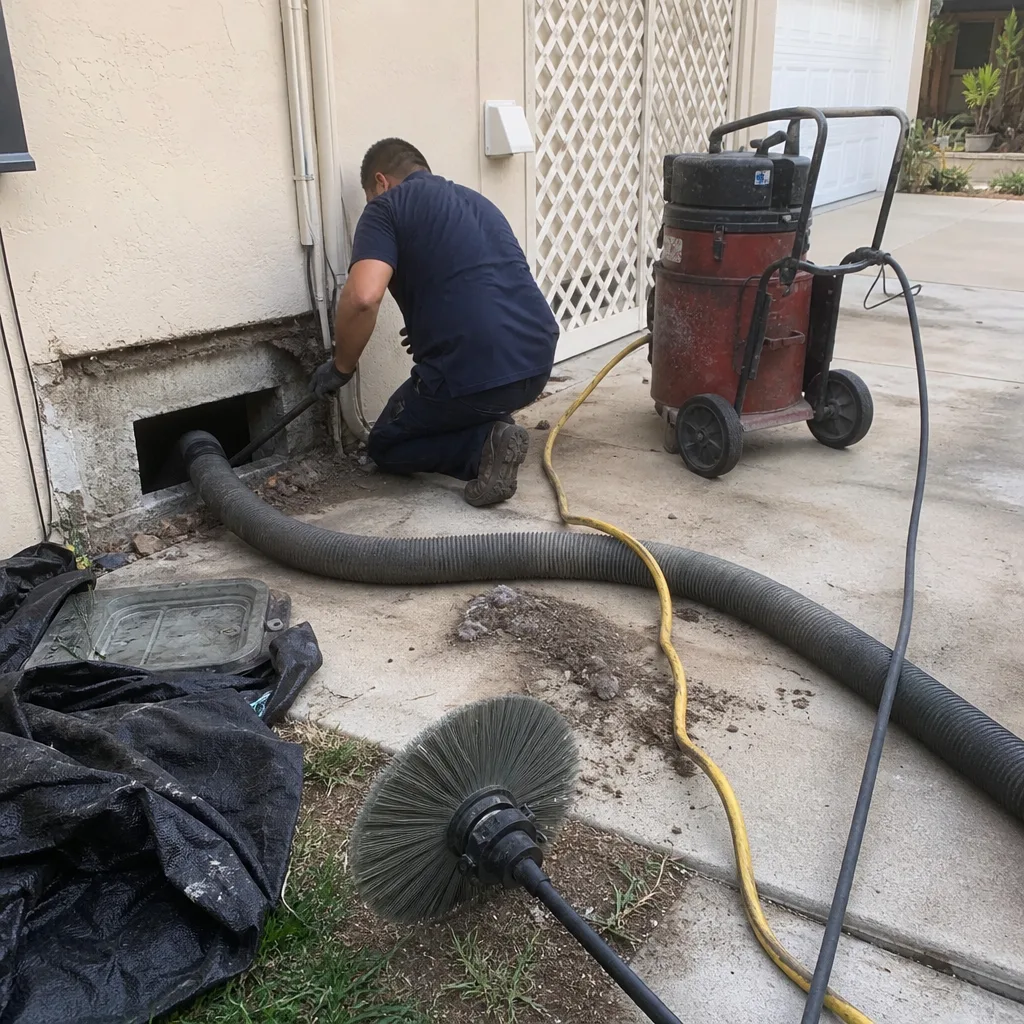 Before
 After
 Before
 After
 Before
 After
Common Mistakes to Avoid
- Pushing a stiff brush past the first bend in flexible duct. In Oceanside’s tract-home attics, the first bend is typically 18 to 24 inches above the register boot, and forcing a consumer brush past it risks tearing the liner. A torn liner turns a cleaning task into a repair project, and the homeowner usually can’t see the damage happen.
- Using compressed air to blow dust out of ducts. Compressed air creates enormous particle mobilization and provides no containment at all. Everything that was resting in the duct becomes airborne in the living space. This is worse than doing nothing.
- Running a shop vac without a HEPA filter. A standard shop vac filter catches large debris but exhausts fine dust straight back into the room, which means you’re cleaning the duct and polluting the air at the same time. At minimum, use a HEPA-rated filter and ideally a bag insert.
- Cleaning around a damaged duct run and calling the job done. If a branch run is disconnected, collapsed, or torn, the system is leaking. Cleaning the visible sections does nothing for the leak, and the leak keeps pulling attic air into the house. Repair belongs before or alongside cleaning; the work should not be a partial fix.
- Attempting to clean visible mold with household chemicals. Spraying bleach or household cleaners into a duct with mold growth removes surface color and leaves the mold community mostly intact, plus adds chemical residue to the system. Mold remediation requires containment and removal, not wipedowns.
- Using a consumer-brush kit on the trunk line through a small access hole. The trunk line is the last place you want to disturb material without negative air pressure. It’s the largest reservoir of dust in the system and the farthest from the registers you can access, so whatever you dislodge stays in the system and redistributes later.
When to Call a Professional
When the system has never been professionally cleaned and the house is more than 10 years old, call. When you see dust returning within days of wiping surfaces despite clean filters, call. When you’ve had remodel work done recently and the HVAC ran during construction, call. When someone in the home has persistent allergy or respiratory symptoms that improve away from the house, call. When the ductwork shows visible mold, rodent signs, or sagging and damaged sections, call. Air Duct Cleaning services from Duct Cleaning Oceanside offer free estimates in Oceanside and the surrounding North County area; call (855) 382-4811 and we’ll assess whether your system needs a full clean, a repair-first approach, or just a maintenance pass. The assessment is straightforward: what’s in the ducts, what condition the runs are in, and what the right order of work is.
Frequently Asked Questions
Whole-system air duct cleaning in Oceanside typically runs between $350 and $650 for a standard single-family home, depending on square footage, number of registers, system accessibility, and condition. Homes with long trunk runs, two systems, or severe accumulation run higher, and repair work identified during cleaning is priced separately. Call (855) 382-4811 for an exact quote on your home, estimates are free.
The low-cost offers usually come from operations that spend 30 to 45 minutes in the home, use a brush and a shop vac, and never touch the trunk line. They price per vent to sound competitive and then upsell once the system is open. A full-system contact cleaning with negative-air containment takes 3 to 5 hours and costs more because it is more work. The price difference is not marketing; it’s a different scope of work.
Ask for before-and-after photos of the trunk line and branch runs, not just the registers. A professional using Rotobrush and negative-air equipment can show images from inside the ducts at the start and end of the job. You should also see the material that came out of the system, either in the vacuum canister or as a measured volume.
For most Oceanside homes, every 5 to 7 years is a reasonable interval, with the shorter end for homes near the beach or with heavy HVAC use from May through October. Homes with pets, remodel work, or a period of smoking inside move to the 3-to-5-year range. If you replace filters regularly and maintain the register ends, the interval stays on the longer end.
You can maintain the exterior hood and the first few feet of the run from the outside, and you should check that the exterior damper moves freely. The interior run, especially through walls, floors, or attic spaces, requires a rotary brush system to remove compacted lint, and a fully blocked run is a fire hazard. That part belongs to a professional with the right equipment. Call (855) 382-4811 if you’re not sure what condition your dryer vent is in.
Filtration captures what moves through the filter, which is typically the return side and the air handler. The ducts downstream of the filter still accumulate material that settles out of the moving air, and the filter itself loads up faster when the system is clean. Homes running Honeywell, Aprilaire, or Guardsman filtration benefit from professional cleaning on the same schedule as unfiltered homes, and the cleaning works with those systems rather than against them or around them.
The Bottom Line
DIY duct cleaning is a useful maintenance task for the visible portion of your Oceanside home’s ducts, and nothing more. You can clean registers, maintain filters, inspect what’s accessible, and remove loose debris from the first 18 inches of each branch run. What you cannot do is clean the trunk line, reach the far portions of branch runs, or create the negative air pressure that keeps dislodged material from spreading through the house. If your system is due for a real cleaning, if there’s remodel dust or biological material in the ducts, or if the system is old and has never been cleaned, the professional route is not a luxury, it’s the only approach that addresses the whole system. For more guides & resources, see our blog. The equipment differs, the outcome differs, and the air you breathe reflects that difference.
Written by the team at Duct Cleaning Oceanside, serving Oceanside since 2011.