
Last updated November 2, 2026
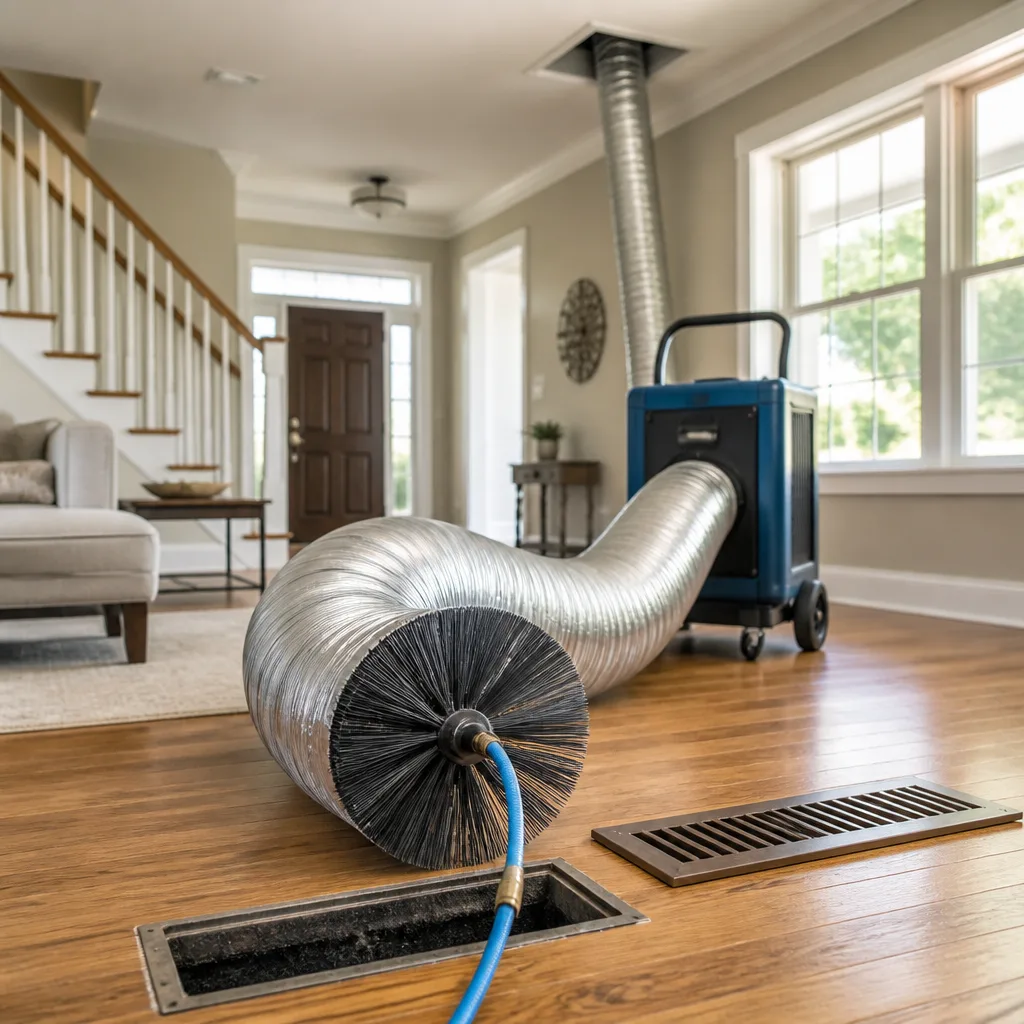 Whole-home duct cleaning
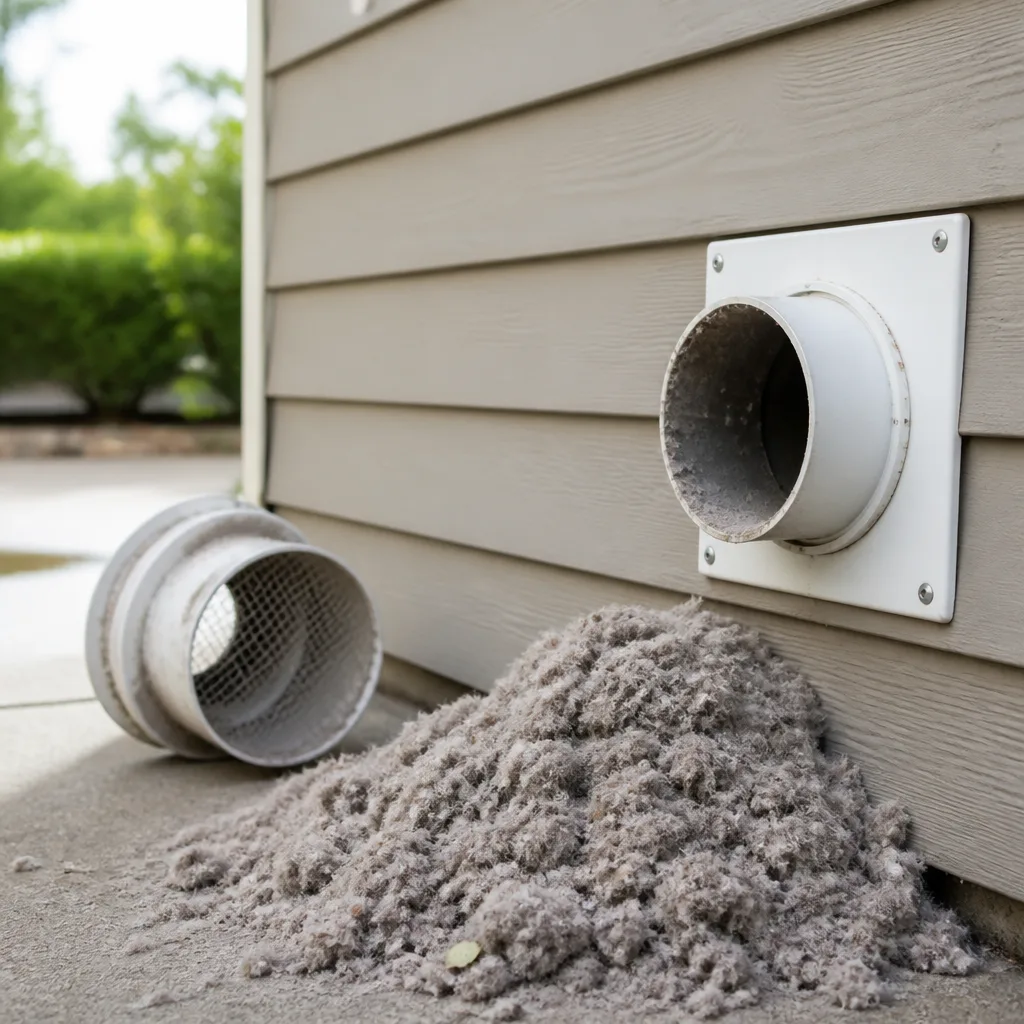 Dryer vent cleaning
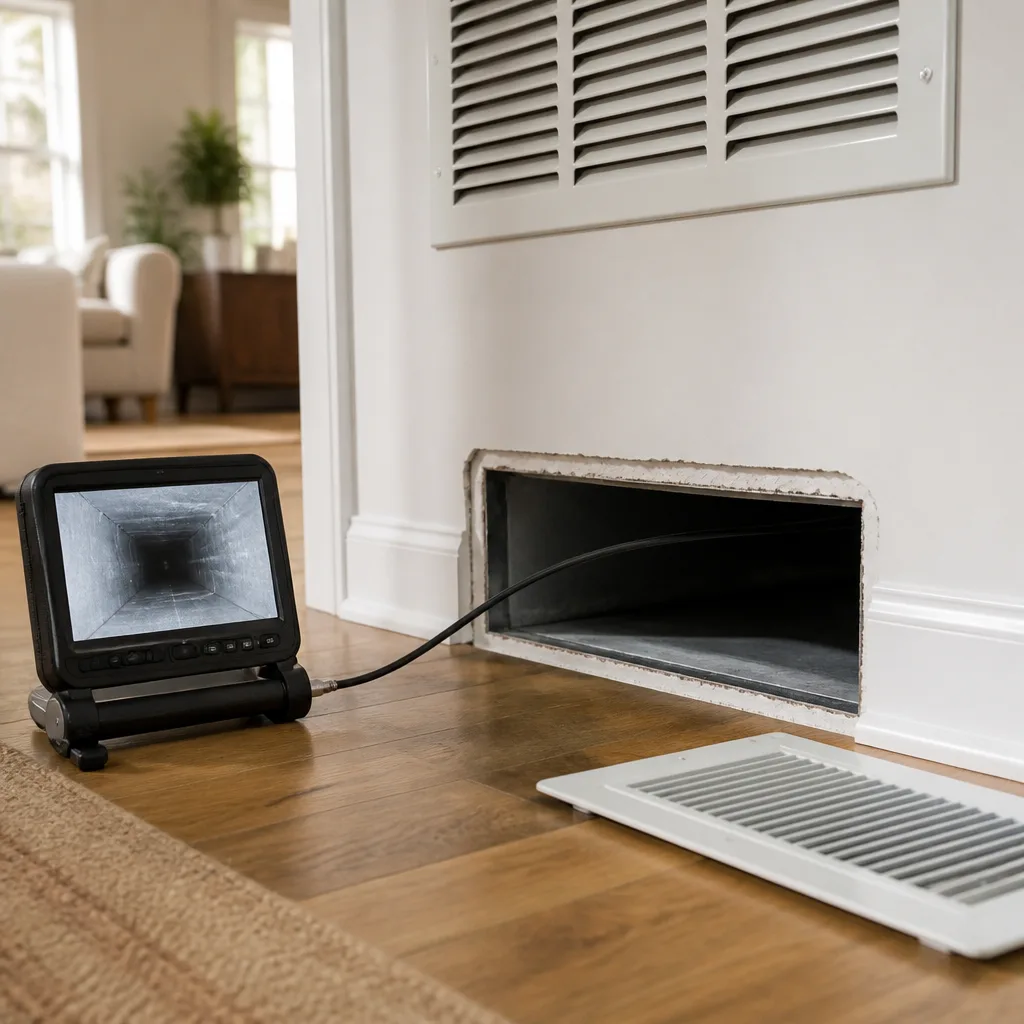 Camera inspection
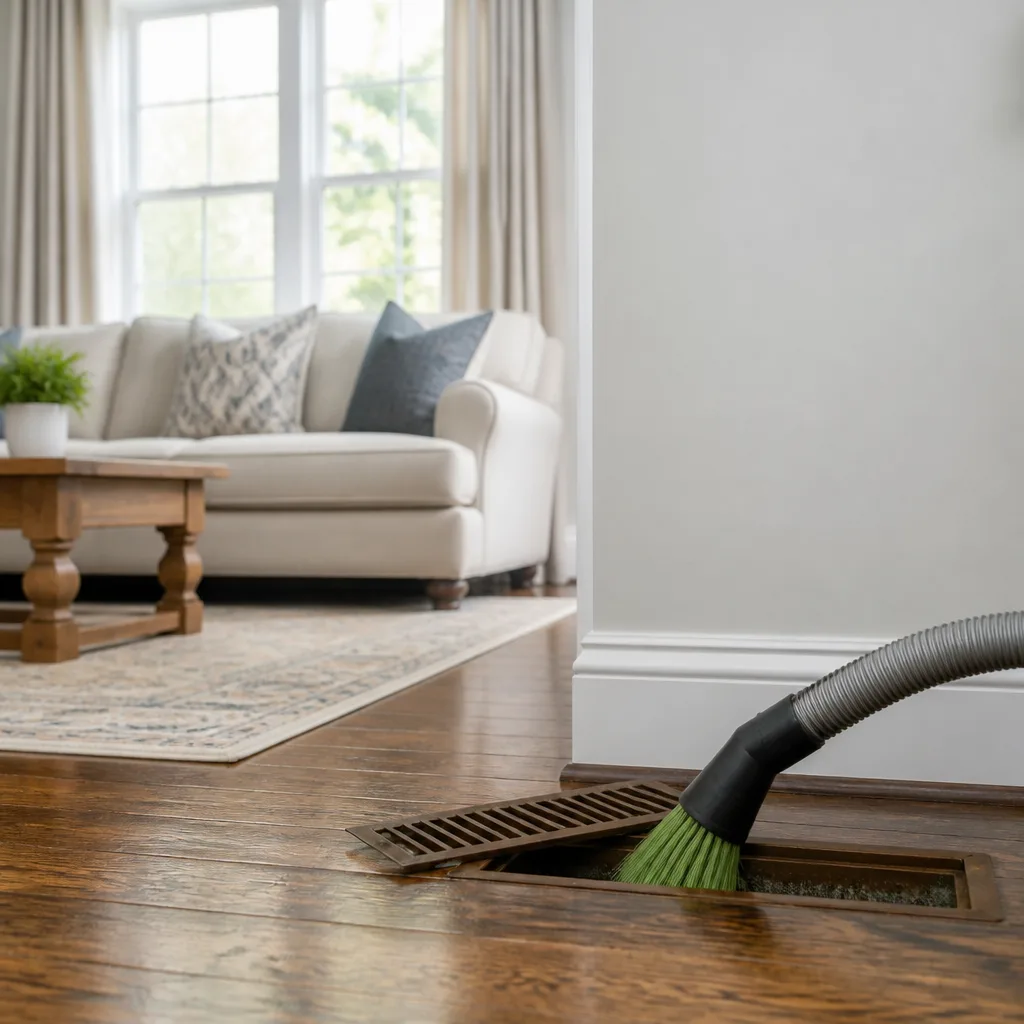 Sanitizing & deodorizing
Whole-system duct and dryer vent check with before-and-after photos - you see exactly what came out of your vents
That "$99 whole-house special" is a bait ad - the real number appears once they are in your hallway, or the "clean" is a shop-vac at the register. We photograph the inside of your ducts before and after instead.
How to Hire an Air Duct Cleaning Contractor in Oceanside: A Step-by-Step Guide
The most common duct cleaning scam in Southern California starts with a $49 coupon and ends with a shop vac, a flashlight, and an invoice for “mold treatment” the tech applied without testing anything. Oceanside homeowners fall for it every week because the industry makes it nearly impossible to tell a legitimate operator from a guy with a van and a vacuum. This guide gives you the exact questions to ask, the equipment to look for, and the red flags that send a contractor packing before they touch your registers.
Styles & brands we work with
- Whole-home duct cleaning
- Dryer vent cleaning
- Camera inspection
- Sanitizing & deodorizing
Quick Answer
To hire a legitimate contractor for our Air Duct Cleaning services in Oceanside, verify they use contact-cleaning equipment like Rotobrush and a HEPA negative-air machine with a documented CFM rating, confirm they’ll provide camera proof of the work, and ask whether they can repair damaged ducts they find rather than just cleaning around them. Get a line-item quote, not a lump sum, and never book from a coupon mailer.
Table of Contents
- Why the Equipment Matters More Than the Price
- The Four Questions That Filter Out 90% of Bad Contractors
- What NADCA Membership Actually Means (And What It Doesn’t)
- How to Read a Duct Cleaning Quote in Oceanside
- Red Flags to Watch for During the Job Itself
- Why a Contractor Who Repairs Ducts Is Structurally More Accountable
- What Oceanside’s Coastal Climate Does to Your Ductwork
- Common Mistakes to Avoid
- When to Call a Professional
- Frequently Asked Questions
- The Bottom Line
Why the Equipment Matters More Than the Price
Ask any ten duct cleaning companies in Oceanside what they charge and you’ll get ten different numbers. Ask what equipment they run and nine of them will say “commercial-grade” or “truck-mounted” without naming a single manufacturer. That vagueness is the tell. The gap between a real cleaning and a theatrical one is almost entirely a function of the tools, and most homeowners never think to ask.
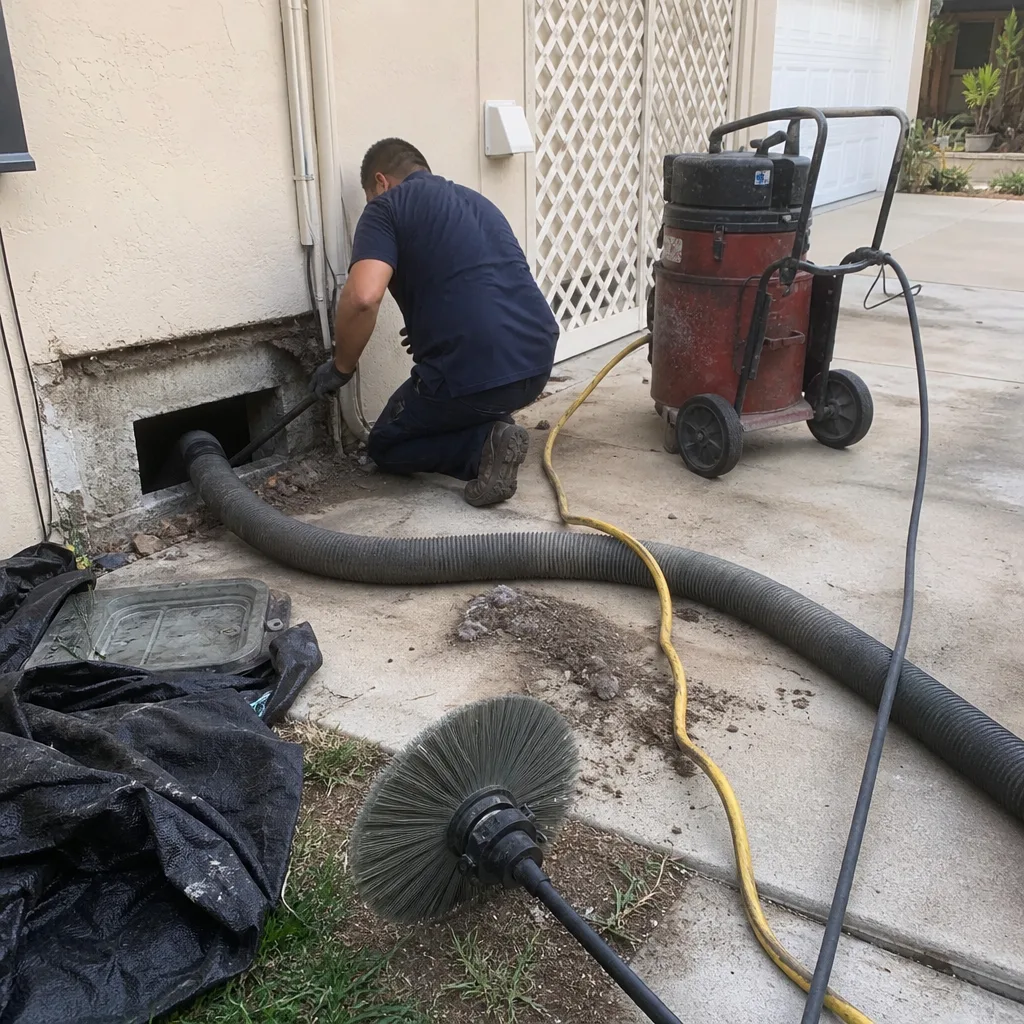
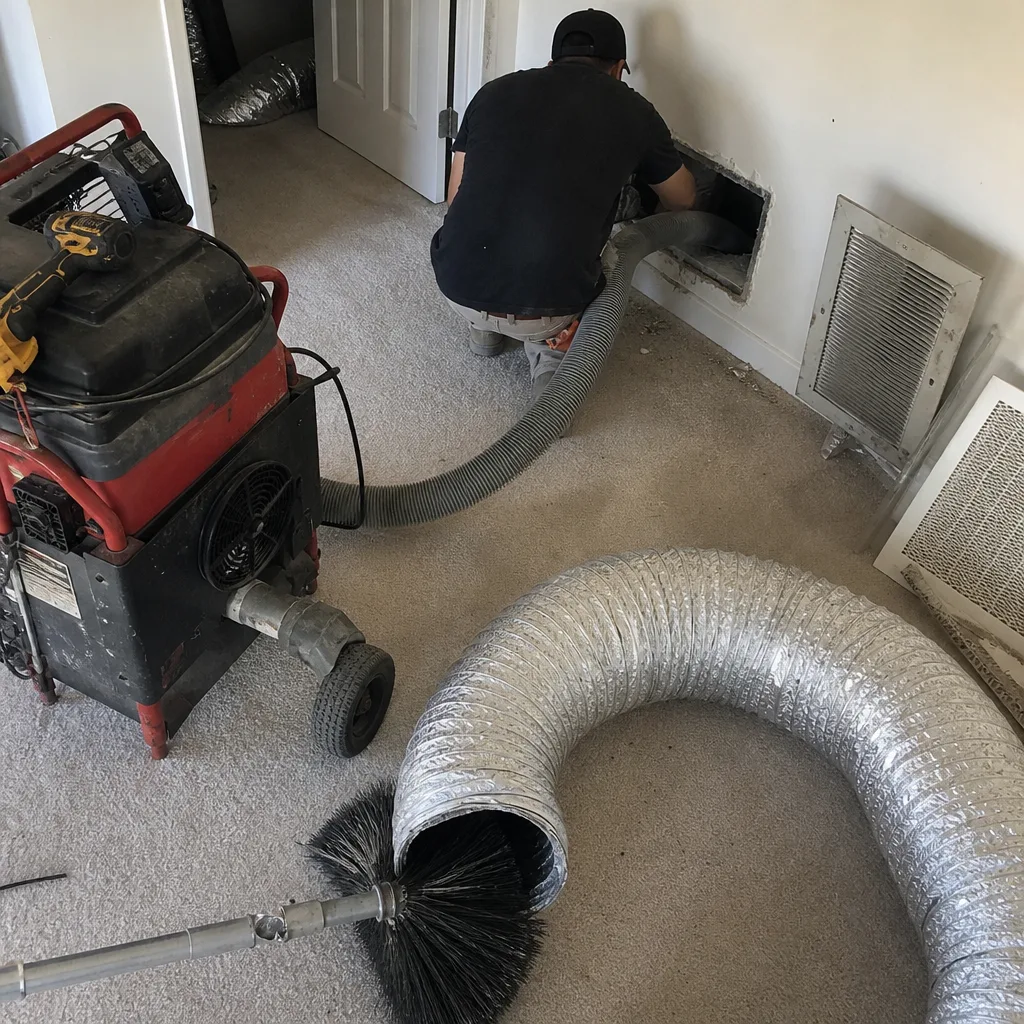
Here’s what actually happens inside your ducts during a professional cleaning. A contact-cleaning system, like the Rotobrush units used by established HVAC contractors, pushes a rotating brush head through the duct run while a vacuum pulls dislodged debris backward into a collection chamber. The brush physically scrubs the duct walls. That’s the crucial part. Blowing compressed air through a duct will move loose dust around, but it won’t remove the compacted film of dust, pet dander, and cooking grease that builds up over years on the metal walls. Rotobrush contact brushes remove that layer because they touch the surface.
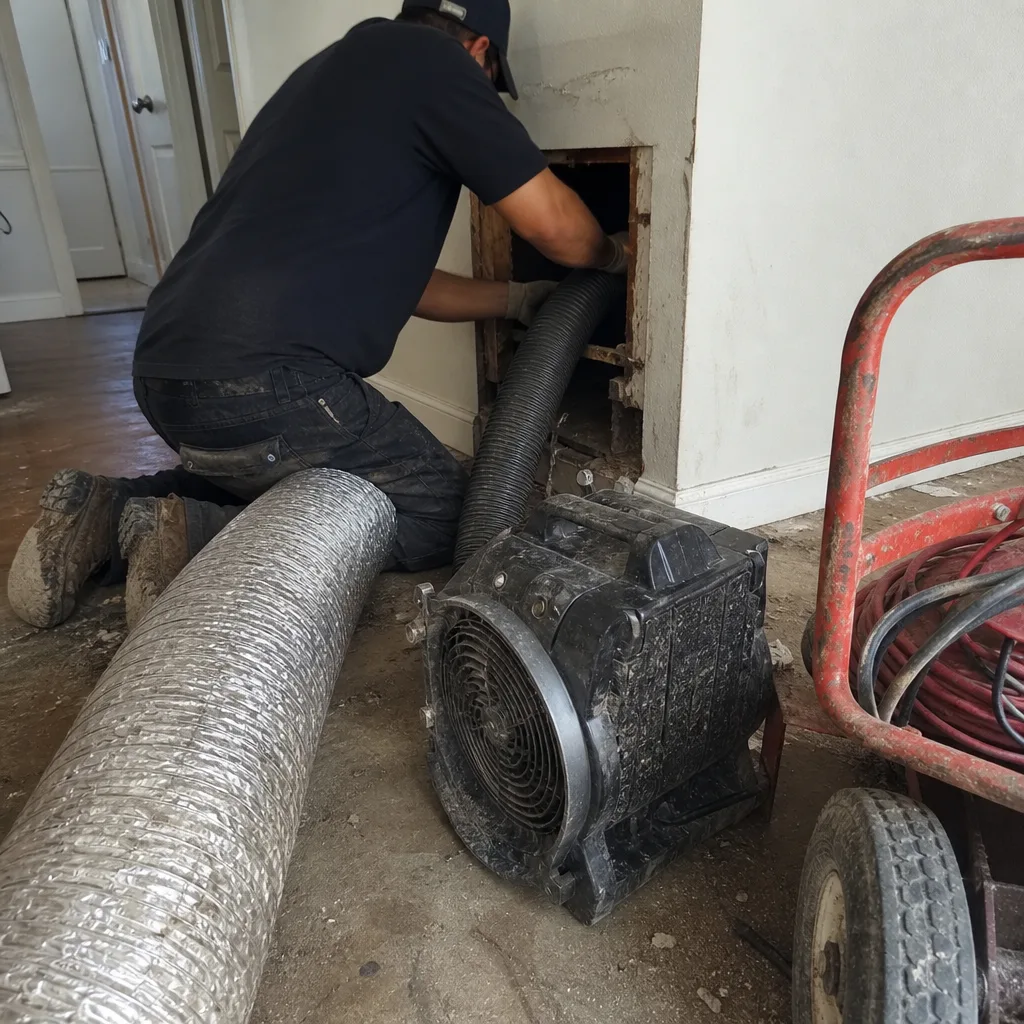
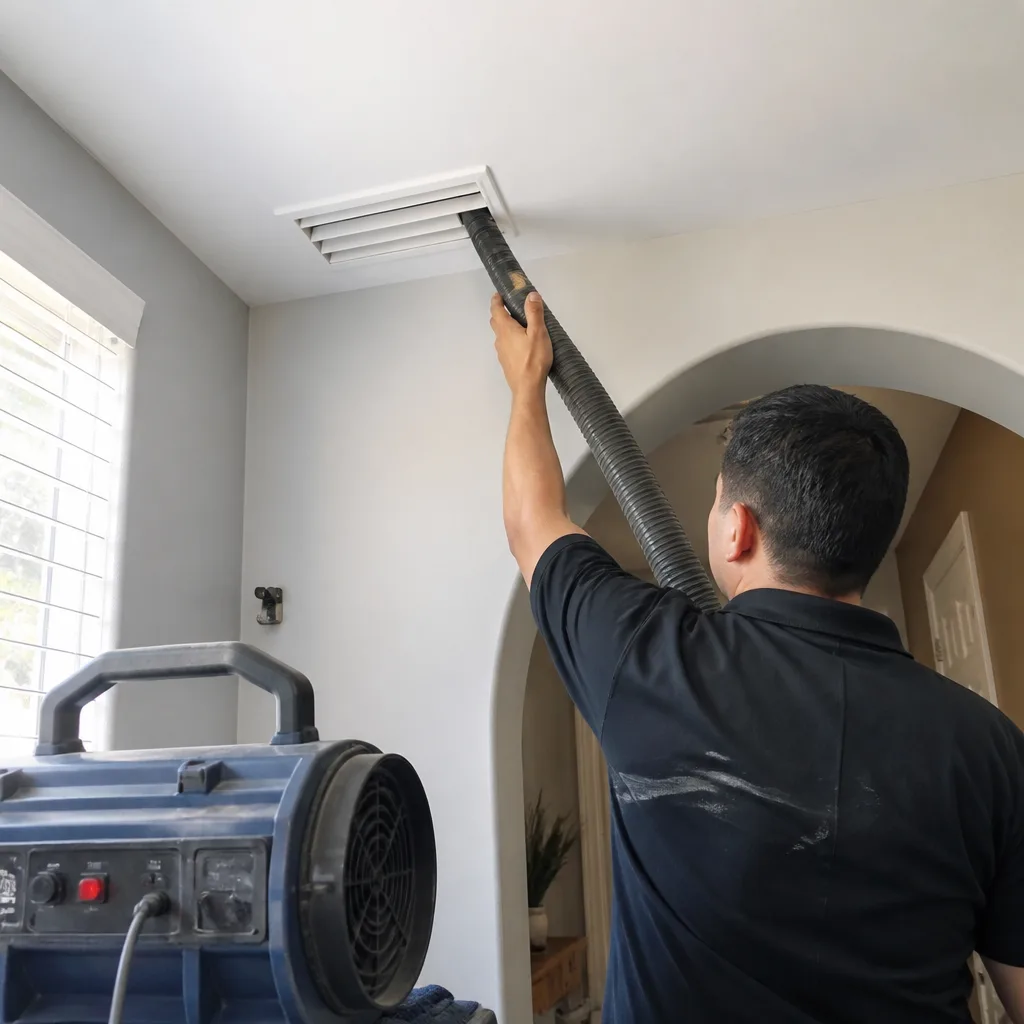
The second piece is containment. A Nikro HEPA-rated negative-air machine is what separates professional work from a mess. The machine attaches to the duct system and creates negative pressure, which means air flows into the collection system rather than escaping into your living room. Without negative-air setup, every particle the cleaning process dislodges can recirculate through the house for days after the tech leaves. In our experience cleaning ducts across Duct Cleaning Oceanside home service areas, homes cleaned without HEPA containment often look dustier a week after the cleaning than before.
Equipment matters for one more reason: accountability. A contractor who spent $40,000 on professional-grade gear has a business to protect. A contractor with a shop vac and a brush attachment can change his phone number tomorrow. The equipment isn’t just about results. It’s a filter for who’s serious.
The Four Questions That Filter Out 90% of Bad Contractors
You don’t need to become a duct cleaning expert to hire one. You need four questions. Any contractor who answers all four clearly and specifically is almost certainly legitimate. Anyone who hedges, deflects, or says “don’t worry about it” should be crossed off your list before the conversation goes further.
- “What contact-cleaning system do you use, and who manufactures it?” The answer should be a brand name you can look up: Rotobrush, Nikro, Abatement Technologies. If they say “industrial equipment” or “truck-mounted system” without a manufacturer, they’re describing a vacuum. A legitimate operator is proud of their gear and will name it instantly.
- “Do you run a HEPA negative-air machine during cleaning, and what’s its CFM rating?” CFM is cubic feet per minute, the measure of how much air the machine moves. Professional units run 1,500 to 2,000 CFM or higher. If they don’t know their CFM rating, they don’t run negative-air containment, period. This question alone eliminates most low-end operators in Oceanside.
- “Will you show me camera footage of the inside of my ducts before and after?” Every legitimate contractor runs a camera through the ducts before starting and after finishing. It’s how they document the condition, identify damage, and prove the work was done. If camera inspection isn’t included, walk away. You deserve proof, not a promise.
- “What happens if you find damaged or disconnected ducts during the cleaning?” This is the question that separates one-service operators from full-scope contractors. A cleaner who can’t repair damage will either ignore what they found or tell you to call someone else. A contractor with in-house Air Duct Repair in Oceanside capability can fix it on the spot and stands behind the whole system, not just the dust removal.
Write these four questions down before you make calls. The way a contractor answers matters as much as what they say. Specific, immediate answers signal experience. Vague, deflective answers signal a van and a vacuum.
What NADCA Membership Actually Means (And What It Doesn’t)
NADCA, the National Air Duct Cleaners Association, is the closest thing the industry has to a governing body. Membership requires adherence to a written standard, the ACR (Assessment, Cleaning, and Restoration) standard, and members are supposed to follow specific procedures for source removal cleaning. That’s the good part. It’s a real organization with real standards.
What NADCA membership doesn’t mean is equally important. It doesn’t certify individual technicians in most cases. A company can join NADCA with one certified Air Systems Cleaning Specialist (ASCS) on staff and send uncertified techs to do the work. It doesn’t audit every job. It doesn’t guarantee the company uses HEPA negative-air machines or contact-cleaning equipment. And membership is voluntary, which means the worst operators simply never join and face no consequence for it.
How do you verify a contractor’s NADCA standing? Go to the NADCA website and search their member directory. Check whether the company is listed as certified versus simply a member. Then ask the person on the phone: “Who is your ASCS on staff, and will they be on the job?” If the certified person exists only on paper and never on the truck, the certification is marketing. In Oceanside, where the coastal climate accelerates duct corrosion and makes thorough source-removal cleaning more important than in dryer inland areas, the difference between a NADCA-certified operator and a non-certified one often shows up as a material difference in results.
How to Research a Contractor Before They Arrive
- Check the California Contractors State License Board (CSLB) database. While duct cleaning itself doesn’t require a specific license in California, any contractor performing duct repair or HVAC modifications must hold a C-20 warm-air heating, ventilating, and air-conditioning contractor’s license. A company that offers repair but has no C-20 is a red flag.
- Look at review patterns, not just averages. A 4.8-star rating with 400 reviews is more trustworthy than a 5.0 with 12. Look for reviews that mention specific details: “they showed me the camera footage” or “they set up the negative air machine.” Generic praise tells you little.
- Ask for references from Oceanside specifically. A contractor who’s worked in Fire Mountain, South Oceanside, or Rancho del Oro knows how those neighborhoods’ homes age. Coastal moisture means different duct conditions than inland Carlsbad or Vista, and experience with local housing stock matters.
How to Read a Duct Cleaning Quote in Oceanside
A detailed quote tells you more about a contractor than their website does. The structure of the quote reveals the structure of the job they intend to do. Lump-sum pricing with a single line item (“whole house duct cleaning: $389”) is a signal that the contractor plans to spend as little time as possible in your home. Line-item pricing that breaks out the actual scope of work shows a contractor who knows what the job requires.
Here’s what a professional quote for a typical 2,000 – 2,500 square foot Oceanside home should include:
- Supply duct cleaning, per run or per system. This is the main event. Expect the supply side to be itemized separately from the return side.
- Return duct cleaning. Often dirtier than the supply side because return air carries unfiltered particulates. If the quote doesn’t mention returns, ask why.
- Plenum and trunk line cleaning. The main distribution boxes and large trunk ducts collect the most debris. A quote that skips these is an incomplete scope.
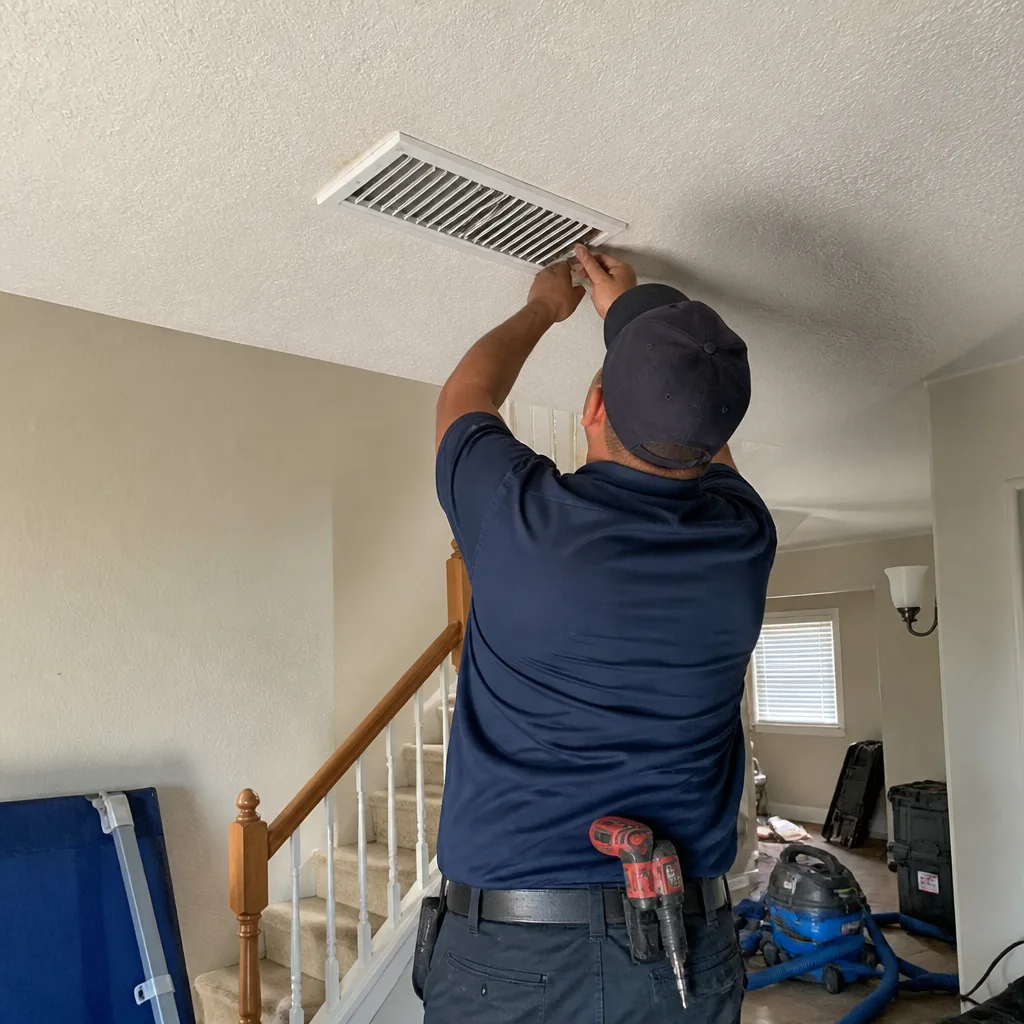
- Registers and grilles. Should be removed, cleaned, and reinstalled as part of the job, not a line-item upsell.
- Blower fan and housing. The fan that moves air through the system gets coated with the same dust as the ducts. Cleaning it is part of a real job.
- HEPA negative-air containment. If HEPA containment isn’t on the quote, it isn’t happening on the job.
- Camera inspection before/after. Should be included, not optional.
What about price? See our Air Duct Cleaning Cost Breakdown: The Oceanside Homeowner’s Reference for 2026 for full details. In the Oceanside market, a legitimate whole-house duct cleaning for a 2,000 – 2,500 square foot home typically runs between $450 and $900, depending on the number of runs, the age of the home, and the condition of the ductwork. That’s a range, not a quote. If someone offers the same job for $79, they’re not cleaning your ducts. They’re collecting a trip fee and looking for upsell opportunities. If someone quotes $2,500 for routine cleaning with no remediation work, you’re being overcharged. The honest number sits in the middle.
One more thing: any quote that avoids mentioning repair contingencies is incomplete. Ductwork in coastal Oceanside homes degrades. When we inspect systems in older neighborhoods like Loma Alta or along the 101 corridor, we routinely find disconnected runs, crushed flex duct, and rusted-out sections that a cleaning alone can’t solve. A professional quote should note that if damage is discovered, repair will be discussed with the homeowner before any additional work proceeds. That’s not an upsell tactic. That’s transparency.
Red Flags to Watch for During the Job Itself
You asked the right questions and the quote looked legitimate. Now the tech is in your driveway and it’s time to watch the actual work. Here’s what separates a real job from a performance, and the signs you’re watching the latter.
- No plastic sheeting at the registers. Before cleaning begins, the crew should seal off the registers not actively being worked. This controls airflow and keeps dislodged particles in the duct system rather than your living room. If the tech starts without any containment setup, he’s not doing source removal. He’s blowing dust around.
- No negative-air machine connected before cleaning starts. The HEPA negative-air unit should be attached to the duct system before the first brush enters the first run. You should see a large machine, hear it running, and know that the system is under negative pressure. No machine means no containment. Stop the job and ask.
- Cleaning without an inspection. The tech should run a camera through your ducts before starting and walk you through what they see. If they skip straight to cleaning without showing you the condition first, how will you know what changed? Professional operators document everything because it protects them too.
- Heavy reliance on “sanitizer” or “mold treatment” upsells. A tech who “discovers” mold during a routine cleaning and offers to spray a fogging agent usually found it with an untrained eye and a sales incentive. Actual microbial contamination requires testing first, then specific remediation. Spraying chemicals without identification is not remediation. It’s theater with an invoice.
- The job is done in under two hours. A legitimate whole-house duct cleaning on a 2,000+ square foot home takes four to six hours. If the crew is packed up in 90 minutes, they didn’t clean the ducts. They knocked some dust loose and called it done.
- No post-job camera walkthrough offered. After the cleaning, the crew should run the camera again and show you the difference. If they’re rushing to the next job and can’t show you the result of the one they just finished, that result is probably not worth seeing.
If you see these signs, you’re not obligated to let the job continue. The contractor works for you. A legitimate operator would rather stop and address your concerns than leave you with a bill for work you don’t believe was done.
Why a Contractor Who Repairs Ducts Is Structurally More Accountable
Here’s a structural fact about the duct cleaning industry in California: most companies clean and leave. They’re not equipped to do anything about what they find, so they have a built-in incentive to find nothing. A disconnected duct run? A collapsed section of flex? A rusted-out trunk line? A cleaner who can’t repair these things will either miss them entirely or mention them vaguely and move on. The incentive structure rewards inattention.
A contractor with in-house repair capability faces a completely different incentive. When our crew finds a disconnected return in a Rancho del Oro home, we have to do something about it because we told the homeowner it existed. We can’t claim it wasn’t there. We can’t suggest someone else deal with it. The accountability is built into the service model. Repair capability doesn’t just mean the company can fix things. It means the company must look for things to fix, because every repair found is a repair they’re capable of completing correctly.
This applies to your Air Duct Cleaning in Oceanside decision in a practical way. A cleaning-only contractor will quote a lower price because their scope is narrower. That lower price buys you dust removal with a blind eye turned to damage. A contractor who cleans and repairs charges more for the cleaning because they’re doing a more complete inspection and standing behind a more complete result. You’re not paying for repair work you may not need. You’re paying for the honesty that comes from someone who can’t ignore what they find.
The difference shows up most clearly in older Oceanside homes. Housing stock from the 1960s and 1970s in neighborhoods like South Oceanside and Fire Mountain often contains original metal ductwork that’s been patched, repaired, and modified by five decades of previous owners. Those systems are rarely clean and rarely intact. A cleaning-only contractor will clean what’s there. A full-scope contractor will clean what’s there and tell you what’s broken, because that’s the actual condition of your home’s air delivery system.
What Oceanside’s Coastal Climate Does to Your Ductwork
Oceanside’s location on the Pacific shapes the condition of every duct system in the city. The marine layer that rolls in most evenings brings humidity that inland cities like Escondido or Temecula never experience. That humidity settles in unconditioned spaces: attics, crawl spaces, wall cavities. And that’s exactly where your ductwork lives.
The practical effect is corrosion and biological growth at rates that surprise homeowners who moved to Oceanside from dryer climates. Galvanized steel ducts in a coastal attic are exposed to salty, humid air for hours every night. Over years, the galvanized coating breaks down and rust sets in. Flex duct with a torn outer jacket absorbs that moisture, and the fiberglass insulation inside becomes a breeding ground for mold. We regularly see systems in Oceanside with signs of moisture exposure that would be unusual ten miles inland.
This coastal reality changes the hiring calculation. For year-round maintenance tips, see our Seasonal Air Duct Cleaning Care for Oceanside: Year-Round Homeowner’s Guide. It makes the equipment questions in this guide more important, not less. HEPA negative-air containment matters more when you’re cleaning ductwork that may contain microbial growth. Camera inspection matters more when rust and disconnection are likely. And repair capability matters most of all, because coastal duct problems are structural problems, not just dust problems. A cleaning that removes the dust but leaves the rust in place has addressed half the issue.
It also means you should think about the whole air system, not just the ducts. Many Oceanside homes have compensated for coastal air quality with premium filtration. Honeywell whole-home media filters are common here. So are Aprilaire units and Guardsman systems. A professional duct cleaning should be compatible with these. The cleaning process shouldn’t bypass your filtration and shouldn’t send a cloud of dislodged particles straight into a filter that’s not designed for that load. A contractor who asks about your filtration setup before starting is thinking correctly about your home as an integrated system. A contractor who never mentions filtration is treating your ducts like a vacuum cleaner bag.
Common Mistakes to Avoid
- Booking from a coupon mailer. The $49 whole-house special is a classic bait. The tech arrives, tells you there’s a “problem” that requires expensive treatment, and the coupon price was never real. Legitimate contractors don’t use coupons because legitimate work has a legitimate cost.
- Hiring based on price alone. In a market like Oceanside where equipment quality varies this dramatically, price is a poor proxy for value. A $300 cleaning that doesn’t remove compacted debris is more expensive than a $600 cleaning that does.
- Not asking about containment before booking. You wouldn’t hire a painter who doesn’t use drop cloths. Don’t hire a duct cleaner who doesn’t use HEPA negative-air containment. If dislodged dust can escape into your living space, the process is incomplete.
- Assuming licensing means competence. California doesn’t require a specific license for duct cleaning, which means the barrier to entry is a van and a business card. Licensing research on the CSLB only matters for repair work. Always ask about equipment and NADCA standing regardless.
- Skipping the camera inspection. If you never see the inside of your ducts before and after, you’re paying for trust, not work. Camera proof is the single most valuable thing a contractor can offer.
- Treating duct cleaning as optional maintenance. Oceanside’s coastal humidity means duct problems compound. A system that’s gone 15 years without cleaning in this climate isn’t just dusty. It’s deteriorated, and the longer you wait, the more repair work it’ll need.
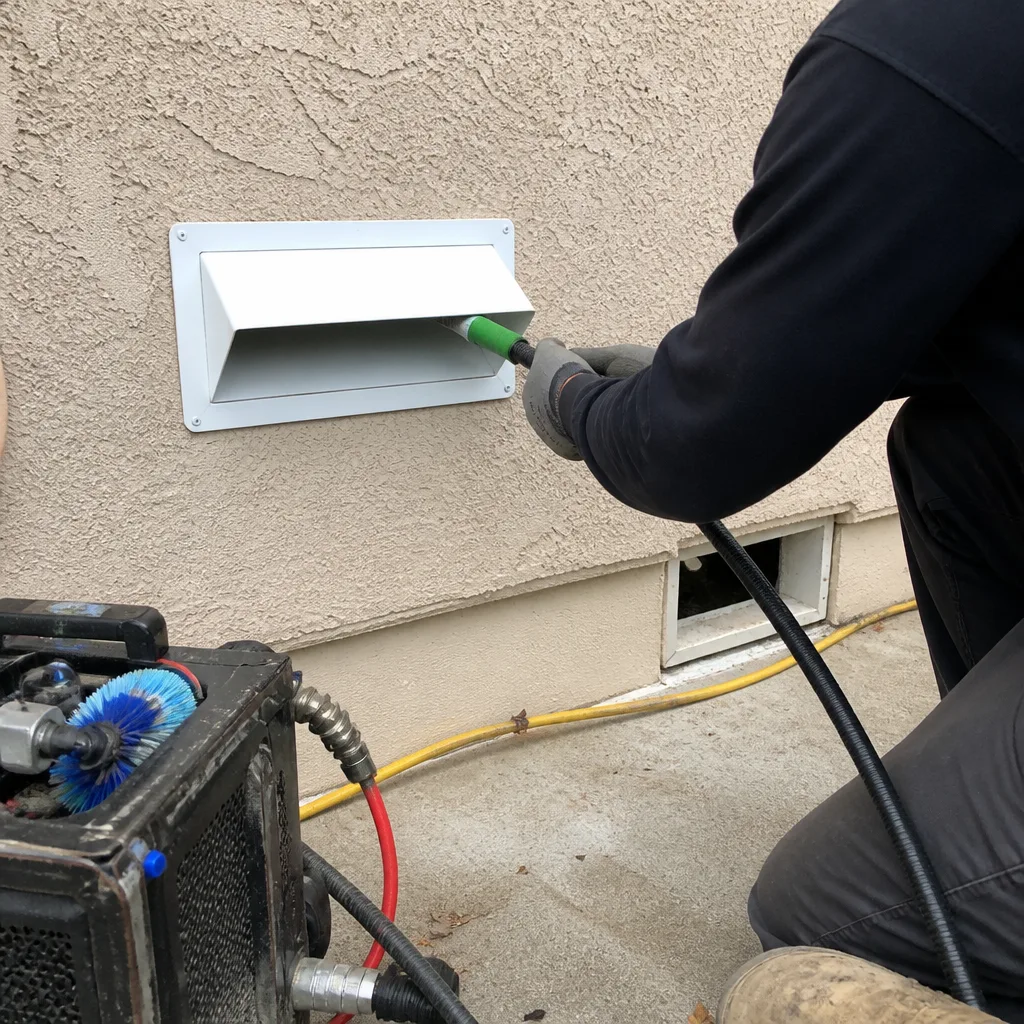
- Ignoring the dryer vent. Dryer Vent Cleaning in Oceanside isn’t an add-on. It’s a separate fire-safety service with its own documented risk profile. Clogged dryer vents cause thousands of house fires each year in the U.S., and the lint accumulation in coastal homes with high humidity is often worse because moisture makes lint cling to the vent walls.
When to Call a Professional
If you’ve read this far and you’re uncertain whether your ducts need attention, here are the situations that justify a professional evaluation in Oceanside. You bought a home and have no records of prior duct cleaning, which means you’ve inherited someone else’s years of neglect. You’ve noticed visible dust accumulating on surfaces within days of cleaning, which suggests the ducts are distributing particulates rather than containing them. Someone in the household has allergy symptoms that worsen indoors. You’ve lived in a coastal Oceanside home for more than five years without an inspection, and the marine layer has had half a decade to work on your ductwork. Or you’ve renovated recently, and construction dust has been pulled into the system. Any one of these is reason enough to schedule an inspection. Duct Cleaning Oceanside offers free estimates in Oceanside, call (855) 382-4811.
Frequently Asked Questions
A legitimate whole-house air duct cleaning in Oceanside typically costs between $450 and $900 for a 2,000 to 2,500 square foot home, depending on the number of duct runs, system condition, and whether HEPA containment and camera inspection are included. Quotes below $200 are almost certainly bait-and-switch pricing, and quotes above $2,000 for routine cleaning with no remediation work should be questioned. Call (855) 382-4811 for an exact quote on your Oceanside home, estimates are free.
Cheap duct cleaning quotes come from contractors using portable vacuums instead of contact-cleaning systems, skipping HEPA negative-air containment, and planning to spend 90 minutes on a job that takes four to six hours when done correctly. The coupon price is a trip fee; the real invoice comes from upsells once the tech is inside your home. A legitimate contractor’s price reflects equipment, time, and a complete scope of work.
You should see camera footage of the inside of your ducts before the cleaning begins and after it ends, with the same access points used both times so you can compare what changed. A professional contractor runs the camera unprompted because it protects both of you. If no camera is offered, you’re being asked to trust a process you can’t verify.
Yes, and coastal conditions make it more important than in inland cities. The marine layer brings nightly humidity that accelerates rust in metal ductwork and encourages biological growth in fiberglass-lined flex duct. Oceanside systems that are 10+ years old often show moisture-related damage that wouldn’t appear in dryer climates, which means inspection and cleaning reveal structural problems early, before they become expensive repairs.
Air duct cleaning addresses the HVAC system that distributes heated and cooled air through your home. Dryer vent cleaning addresses the separate exhaust duct that carries hot, lint-laden air from your clothes dryer to the outside. They serve different systems and different purposes: duct cleaning is about air quality and system efficiency, while dryer vent cleaning is about fire prevention, since accumulated lint is a documented ignition source. Both should be on a homeowner’s maintenance schedule, but they’re separate services.
Clean the ducts before a new HVAC system is installed, never after. Once the old system is removed and before the new one is connected, the ductwork is accessible and the cleaning can’t contaminate new equipment. Installing a new system and then cleaning the ducts afterward means the new blower and coil are immediately exposed to whatever debris the cleaning process dislodges. Call (855) 382-4811 to schedule a pre-installation cleaning in Oceanside, estimates are free.
The Bottom Line
Hiring a duct cleaning contractor in Oceanside is not about finding the lowest price or the most persuasive website. For more guides & resources, explore our blog. It’s about asking four specific questions, verifying the answers, and watching for the six red flags that reveal a superficial job while it’s happening. The right contractor runs named, professional-grade equipment, provides camera proof, contains the process with HEPA negative-air, and can repair what they find rather than cleaning around it. The wrong contractor has a van, a vacuum, and a coupon. The questions in this guide separate one from the other in about five minutes on the phone.
Written by the team at Duct Cleaning Oceanside, serving Oceanside since 2011.
See the difference
 Before
 After
 Before
 After
 Before
 After