
Last updated November 2, 2026
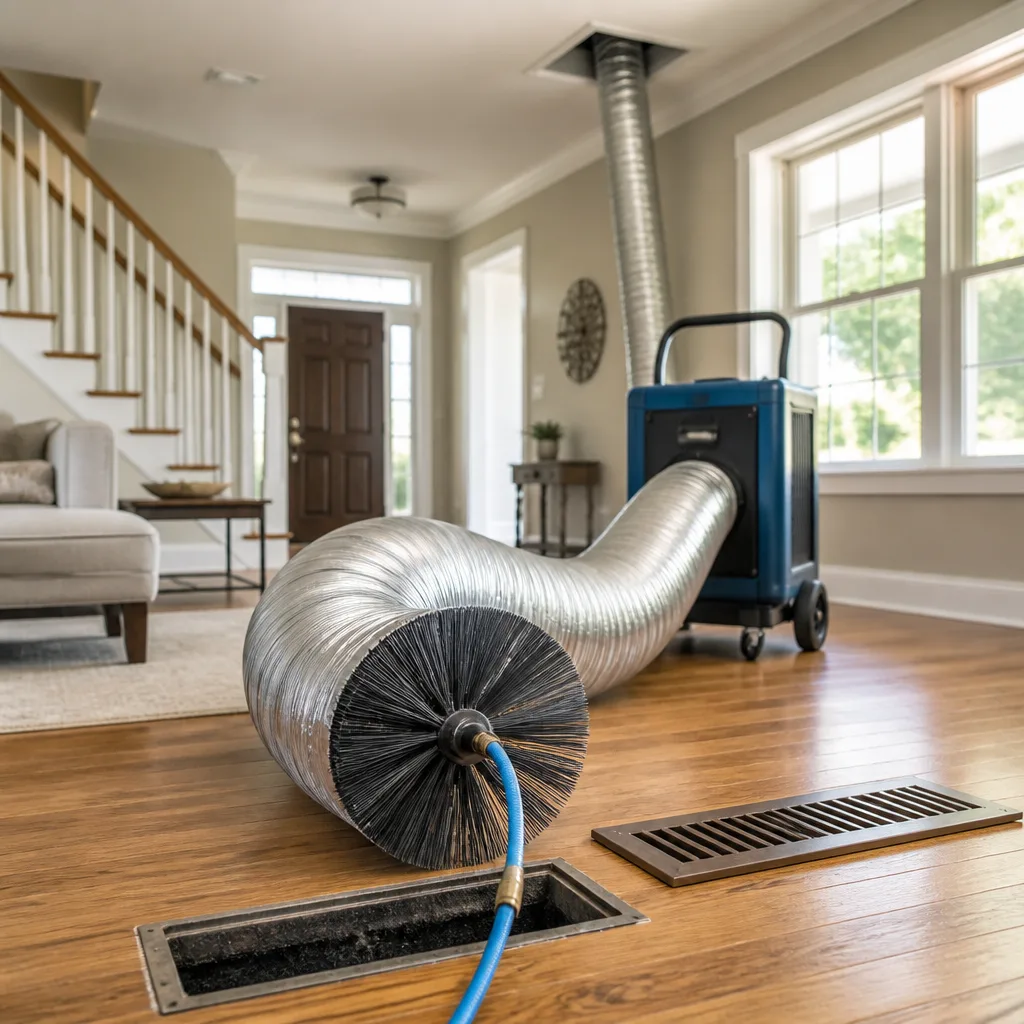 Whole-home duct cleaning
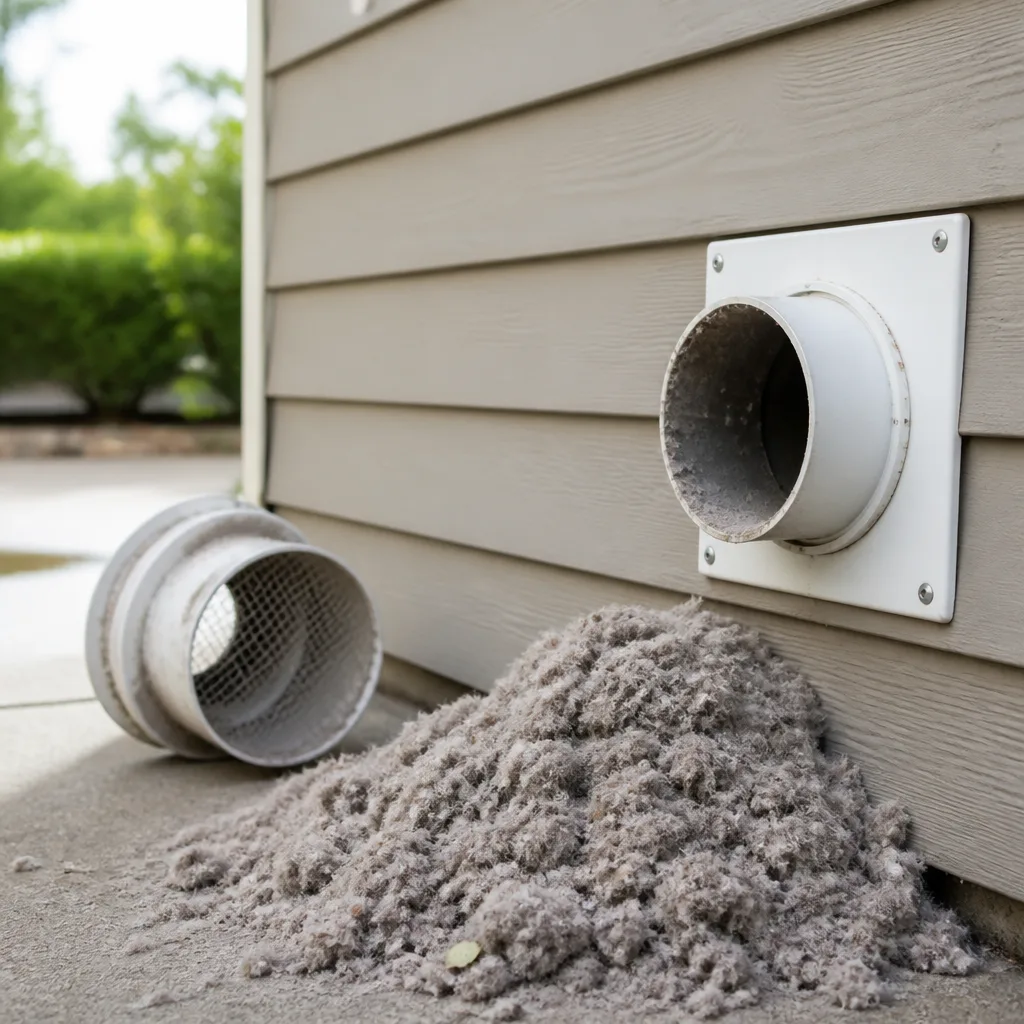 Dryer vent cleaning
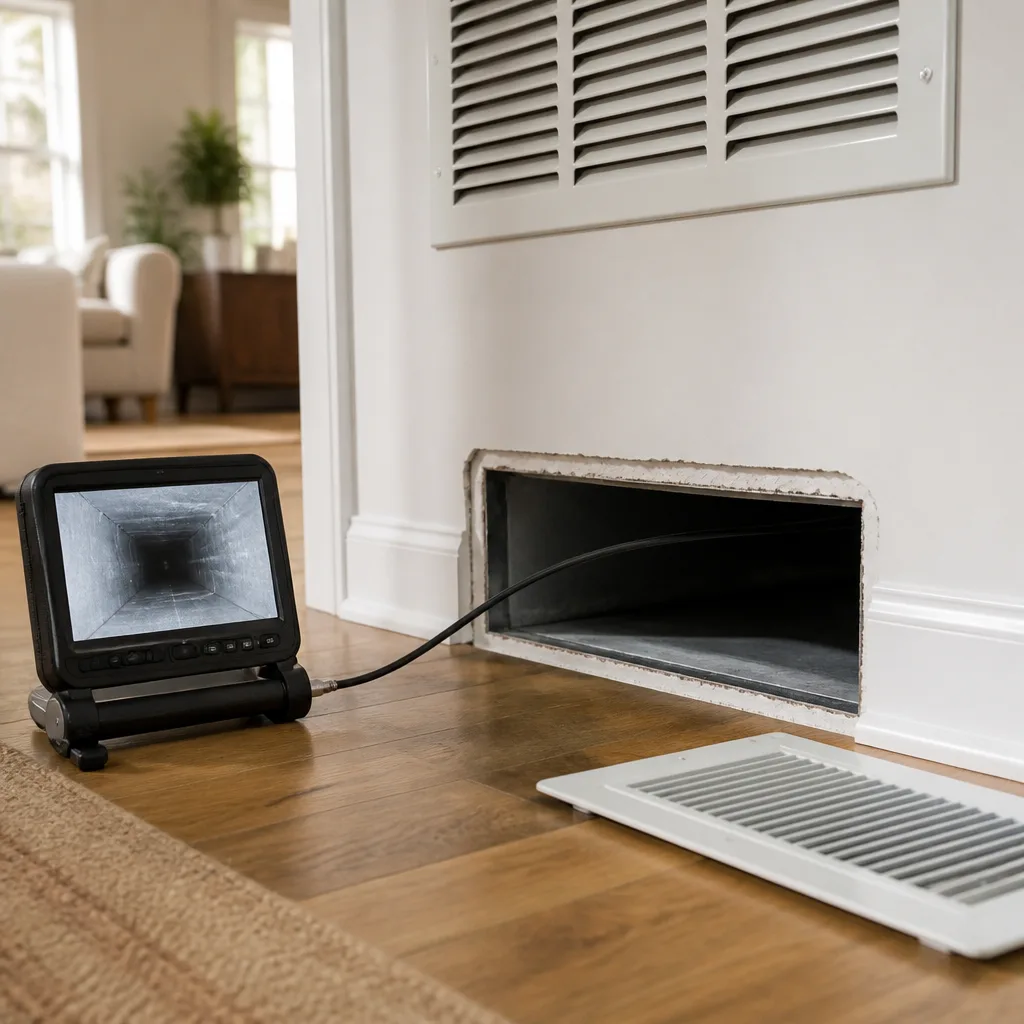 Camera inspection
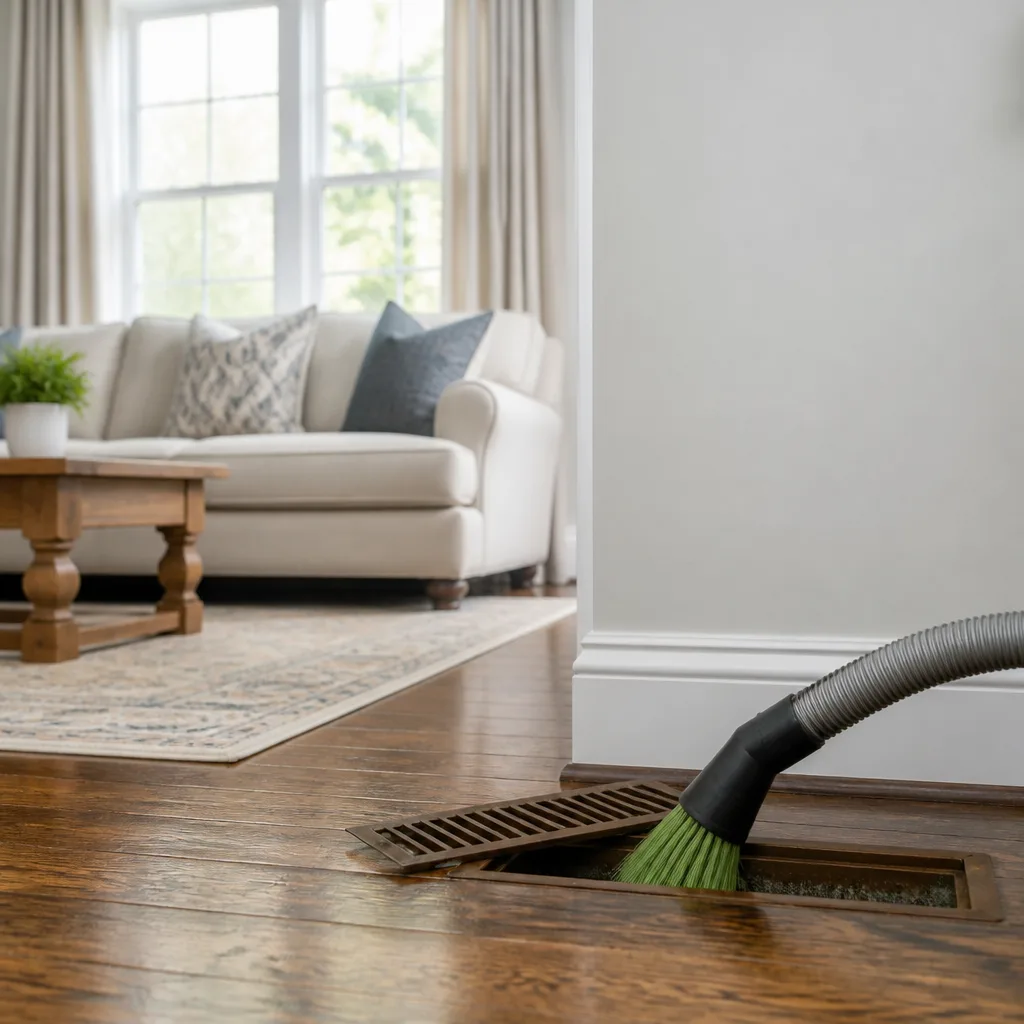 Sanitizing & deodorizing
Whole-system duct and dryer vent check with before-and-after photos - you see exactly what came out of your vents
That "$99 whole-house special" is a bait ad - the real number appears once they are in your hallway, or the "clean" is a shop-vac at the register. We photograph the inside of your ducts before and after instead.
Choosing the Right Air Duct Cleaning Brand: A Buyer’s Guide for Oceanside
Here’s a number that should stop you cold: the average six-room home circulates roughly 40,000 cubic feet of air per hour through its ductwork when the HVAC system runs. In Oceanside’s marine layer climate, where windows stay shut against damp coastal air much of the year, that circulation loop is doing most of your household breathing. Now ask yourself what’s coating the inside of those ducts. The answer determines whether you’re paying for a real cleaning or a very expensive wave of a vacuum wand. Our Complete Air Duct Cleaning Guide for Oceanside Homeowners explains what actually happens when professional equipment meets your ductwork, which systems do what, and how to evaluate a contractor before you book.
Quick Answer
The right air duct cleaning brand for an Oceanside home isn’t a logo on a van. It’s the equipment platform the company runs: Rotobrush contact-cleaning systems physically scrub duct walls to remove compacted debris, Nikro HEPA negative-air machines contain dislodged particulates during extraction, and Abatement Technologies equipment brings remediation-grade filtration to residential air quality work. The company’s tools, not their marketing, determine what actually leaves your ducts.
Styles & brands we work with
- Whole-home duct cleaning
- Dryer vent cleaning
- Camera inspection
- Sanitizing & deodorizing
Table of Contents
- Why Equipment Is the Only Brand That Matters
- Rotobrush Contact Cleaning: How the Brush Actually Works
- Nikro HEPA Negative-Air Machines: What Containment Really Means
- Abatement Technologies: Remediation-Grade Equipment in a Residential Duct
- Truck-Mounted vs. Portable Negative-Air: A Surprising Comparison
- How to Evaluate Equipment Claims Before Booking in Oceanside
- Why “Repair, Not Just Clean” Changes the Equation
- How Duct Cleaning Interacts with Whole-Home Filtration
Why Equipment Is the Only Brand That Matters
Read twenty Yelp reviews for duct cleaners in Oceanside and count how many mention the equipment. You’ll get maybe one, possibly two. The rest will talk about punctuality, friendliness, price. This is like reviewing a dentist without noting whether they used a drill or a pick. The tool doing the work is the entire story.
Here’s why this matters more in duct cleaning than almost any other home service. A duct system is a closed environment you cannot see into. The walls of your supply and return runs are hidden behind drywall, above ceilings, under floors. The contractor could spend four hours in your home and you’d have no direct observation of what was removed. The only proof of work is the equipment’s documented capability and the process it enables. A shop vac with a long hose can move some loose dust. A contact-cleaning system with HEPA negative-air containment removes compacted debris and captures what it dislodges. These are different services wearing the same invoice line item.
In our experience serving Oceanside homes since 2011, the homeowners who ask about equipment before booking are consistently the ones who don’t need a second cleaning six months later. The ones who ask only about price are the ones who call back.
So here’s the framework we’ll use throughout this guide. A duct cleaning “brand” in the professional sense is the mechanical platform a company builds its service around. Three dominant systems define the residential market: Rotobrush for contact cleaning, Nikro for HEPA negative-air extraction, and Abatement Technologies for remediation-grade air handling. Each has a distinct mechanical approach, with real tradeoffs. Understanding these systems is how you separate a legitimate provider of Air Duct Cleaning services in Oceanside from a van with a vacuum.
Rotobrush Contact Cleaning: How the Brush Actually Works
Rotobrush is the contact-cleaning system used by professional HVAC contractors, and its mechanical principle is straightforward: a rotating brush head makes direct physical contact with the interior walls of your ductwork, scrubbing debris loose rather than relying on airflow to carry it away. This distinction is the single most important concept in residential duct cleaning, so we’ll dwell on it.
Most low-end duct cleaning relies on a vacuum pulling air through the system. That moving air picks up whatever is loose enough to become airborne. But duct debris isn’t all loose. Years of condensation cycles, especially in Oceanside’s coastal humidity, compact dust into a film that adheres to duct walls. Pet dander, construction dust, and the fine particulate that settles in low-flow areas become caked. Air movement alone won’t remove this layer at typical residential vacuum pressures. It needs mechanical agitation.
The Rotobrush head, driven by a flexible shaft that runs through the duct system, spins stiff bristles against the duct interior. This physical scrubbing dislodges the compacted layer, and the vacuum system simultaneously captures what breaks free. In flexible duct systems, which are common in Oceanside’s newer tract housing in neighborhoods like Fire Mountain and Rancho del Oro, contact cleaning is especially important because flex duct has a ribbed interior surface that traps debris in the ridges. Airflow-only cleaning leaves those ridges coated. A contact brush gets into them.
What to ask a contractor who says they use Rotobrush: which head are you running, and does the operator inspect the duct interior with a camera before and after? The brush is only as effective as the person driving it and the verification process behind it.
Nikro HEPA Negative-Air Machines: What Containment Really Means
If Rotobrush is the tool that loosens debris, Nikro HEPA negative-air equipment is what keeps that debris from recirculating through your Oceanside home while the work happens. This is the containment layer, and it’s where a lot of duct cleaning services quietly fail.
Here’s the mechanical principle. A Nikro unit connects to the duct system and pulls air through a HEPA filter at a documented rate, measured in cubic feet per minute (CFM). This creates a sustained negative pressure differential inside the ductwork. In plain terms, the duct interior becomes a lower-pressure environment than the surrounding rooms. Air wants to flow into the ducts, not out of them. Any particulate dislodged during cleaning gets carried by that airflow toward the Nikro’s HEPA filter, where it’s captured. The exhausted air, which returns to the living space or vents outside, has passed through filtration that removes 99.97% of particles at 0.3 microns.
What this prevents is the nightmare scenario of a bad cleaning: a contractor agitates years of accumulated dust and allergens, but their underpowered extraction lets a portion of it billow back through the registers into the bedrooms. A cleaning that makes the air worse is worse than no cleaning at all. The Nikro system exists to make that mechanically impossible.
One specification worth understanding: rated CFM. Negative-air machines are rated for how much air they move, and that number must be matched to the size of the duct system being cleaned. A unit rated too low for a large system cannot maintain the negative pressure differential needed for containment. This is why you should ask any Oceanside duct cleaner what CFM their extraction equipment is rated for, and whether they match it to system size. If they can’t answer, they’re probably running a portable shop vac and hoping you won’t notice.
Abatement Technologies: Remediation-Grade Equipment in a Residential Duct
Abatement Technologies equipment occupies a different category than general duct cleaning tools. The company built its reputation manufacturing air filtration and containment equipment for asbestos abatement, mold remediation, and hospital infection control. That origin matters because it means the containment standards baked into the equipment exceed typical residential duct cleaning requirements by a wide margin.
Think about what remediation work demands. When a crew removes asbestos-containing material or remediates mold, the air inside the containment area must be filtered to a standard that protects both the workers and the surrounding environment. The negative-air machines used for this work must maintain pressure differentials over hours or days, not minutes, and the HEPA filtration must be certified and verifiable. This is not the duty cycle of a shop vac.
When Abatement Technologies equipment appears in a residential duct cleaning context, what it brings is headroom. The same machine rated for a hazardous-material containment can handle a routine residential cleaning at a fraction of its capacity, which means it maintains pressure differentials easily, runs cool, and doesn’t strain. It also extends capability into scenarios a standard duct cleaner isn’t prepared for: post-construction dust loads, remediation after a rodent or pest issue in the ductwork, or air quality concerns that go beyond routine maintenance.
For an Oceanside homeowner inheriting a neglected system, especially after a remodel or in an older coastal home where humidity has created conditions for microbial growth, this equipment class means the company isn’t out of its depth. The tools are designed for worse than what they’ll encounter.
Truck-Mounted vs. Portable Negative-Air: A Surprising Comparison
There’s a persistent belief in the duct cleaning industry that truck-mounted vacuums are inherently superior to portable units. The reasoning seems intuitive: a big engine in a truck must pull harder than a small machine in your hallway. The reality is more complicated, and it’s worth understanding before you pay a premium for a “truck-mounted system” in Oceanside.
The problem is hose run. A truck-mounted vacuum sits outside your home, often at the curb or in the driveway. The hose connecting that vacuum to your duct system may run 150 to 200 feet. Every foot of that hose introduces friction loss. The powerful negative pressure generated at the truck degrades significantly by the time it reaches the actual ductwork in the far bedroom. The rated CFM at the machine is not the CFM at the point of extraction.
A professional-grade portable negative-air machine, by contrast, sits directly at the duct access point. A Nikro unit placed at the main return pulls its full rated CFM through inches of connection, not hundreds of feet of hose. The negative pressure differential it creates at the duct wall is often higher than what a truck mount delivers at the end of a long run, despite the truck mount’s larger raw engine.
This doesn’t mean truck-mounted systems are bad. A well-designed truck mount with a short hose run can be effective. But the marketing shorthand that “truck-mounted” equals “professional” while “portable” equals “lesser” doesn’t survive contact with physics. The question to ask is: what’s the rated CFM at the point of extraction, and how long is the hose run? A portable machine with honest specifications and a short connection usually outperforms a truck mount strung across a yard and through three rooms.
How to Evaluate Equipment Claims Before Booking in Oceanside
Contractors in Oceanside will tell you they have professional equipment. Some of them mean it. The way to find out which is to ask a few specific questions before you book, and to verify the answers. Here’s a step-by-step method that takes ten minutes and eliminates most of the bad options.
- Ask for the model number of their extraction equipment. Not the brand name. The specific model. A legitimate contractor running a Nikro or Abatement Technologies unit will know the model off the top of their head. If they hesitate or say “it’s a professional system,” they’re likely running retail-grade equipment.
- Look up the spec sheet. Once you have the model number, find the manufacturer’s specification online. You’re looking for two numbers: rated CFM and filtration standard (you want HEPA, not just “high efficiency” or “allergen filter”). The spec sheet is public. Compare the rated CFM to the NADCA minimum for your system size, which is typically 125 CFM per ton of cooling capacity for proper containment.
- Ask what cleaning tool they use for contact work. “Rotobrush” or an equivalent mechanical agitation system is what you want to hear. “We have a vacuum that pulls everything out” is a red flag. Airflow alone does not clean duct walls.
- Ask whether they inspect with a camera before and after. Equipment without verification is just theater. A contractor who runs a duct camera shows you what was actually removed. One who doesn’t is asking you to trust the process sight unseen.
- Ask about their containment procedure. What prevents dislodged dust from entering the living space during cleaning? The answer should mention negative air pressure and HEPA filtration. If the answer is “we seal the registers,” that’s not enough. Sealing registers creates backpressure that can reduce extraction efficiency and doesn’t address the return side.
These questions work because they’re not about trust or reviews or vibes. They’re about documented equipment specifications that a legitimate professional can state instantly. The contractors who fail this test fail it fast.
Why “Repair, Not Just Clean” Changes the Equation
Here’s a scenario we see regularly in Oceanside homes, especially in older coastal properties and in homes that have been through multiple remodels. The homeowner books a duct cleaning. The technician arrives, runs the equipment, and at some point discovers something wrong: a disconnected duct run in the crawlspace, a collapsed section of flex duct, a return plenum that’s pulling air from an unconditioned attic. In the standard industry model, the cleaning company packs up, hands you a note that says “duct damage found, contact an HVAC contractor,” and leaves. You now have a second contractor to find, schedule, and pay.
The alternative model is a company that does air duct repair in Oceanside as an in-house service. When cleaning reveals damage, the same crew fixes it on the spot. This isn’t a convenience feature. It’s a meaningful difference in what you’re buying. A cleaning-only service is contractually and practically limited: they can clean around problems, but they cannot resolve them. A company that repairs what it finds is accountable for the full condition of your duct system, not just the loose dust.
This changes the evaluation criteria. When comparing companies, ask what happens when cleaning uncovers damage. If the answer involves a referral to another contractor, factor that into your decision. Duct damage is not rare. Duct systems in Oceanside’s coastal air are prone to rust at connections, separation at joints, and deterioration in crawlspaces where moisture levels are high. Finding a problem during cleaning is more common than not. What the company can do about it determines the real value of the appointment.
How Duct Cleaning Interacts with Whole-Home Filtration
Many Oceanside homes have invested in whole-home filtration systems, and the brands most common in our service area are Honeywell, Aprilaire, and Guardsman. These systems sit at the HVAC unit, filtering air before it circulates through the supply ducts. They work well, but they have a limitation: they filter air at one point. They do not clean the ductwork downstream of the filter.
This is not a criticism of filtration systems. A Honeywell media filter or an Aprilaire electrostatic filter does exactly what it’s designed to do, and it does it well. But the dust that settles in your supply ducts, the debris that accumulates in return runs, the coating on the interior walls of flex duct in the attic: none of that is addressed by a filter at the unit. The filter sees air on its way in. It never sees the inside of the ducts.
Professional duct cleaning with contact agitation and HEPA negative-air extraction removes what the filter never sees. The two services are complementary, not competitive. A home with both is a home where the air path is clean from return register to supply register. In our experience, homes with high-quality filtration systems still benefit from periodic contact cleaning, because the filtration doesn’t eliminate duct wall accumulation; it just changes the composition of what accumulates toward finer particulate that clings more stubbornly.
When you book a duct cleaning, mention what filtration system you’re running. A professional crew should know how to work with and around Honeywell, Aprilaire, and Guardsman equipment without disrupting it, and should be able to advise you on whether your filter media needs attention after the cleaning. The cleaning and the filtration are parts of one system: everything connected to what your family breathes.
Common Mistakes to Avoid
- Believing “truck-mounted” automatically means more power. A 200-foot hose run can reduce effective CFM at the duct below what a portable negative-air machine delivers at the access point. Ask for the extraction point CFM, not the engine’s rated output.
- Booking a cleaning without camera verification. In Oceanside’s coastal housing, flex duct in attics and crawlspaces can harbor compacted debris that a visual inspection would reveal. If the company doesn’t offer before-and-after duct camera footage, you have no proof of work.
- Choosing a cleaning-only company when your ducts may need repair. Disconnected runs and crushed flex duct are common in older Oceanside homes. If the cleaner can’t repair what they find, you’re paying for two appointments and two contractors.
- Trusting reviews that never mention equipment. A five-star review that praises punctuality and friendliness tells you nothing about whether the ducts were actually cleaned. Ask the contractor directly what systems they run.
- Assuming a cheap coil cleaning is equivalent to full duct cleaning. Some Oceanside companies advertise low-cost “whole system” specials that turn out to be an evaporator coil wipe-down plus a cursory register vacuum. Read the scope, ask about contact cleaning, and be suspicious of prices that seem too good for the labor involved.
- Skipping dryer vents while cleaning ducts. If the company offers dryer vent cleaning in Oceanside, bundle it. A clogged dryer vent is a documented fire risk, and it’s not a topic for later. The lint load in a typical Oceanside laundry room vent line is substantial after a few years.
- Expecting one cleaning to be permanent. Ducts accumulate debris over time. The right expectation is a cleaning that removes the existing load thoroughly, not a permanent fix. Ask what maintenance interval the company recommends for your specific home and system.
See the difference
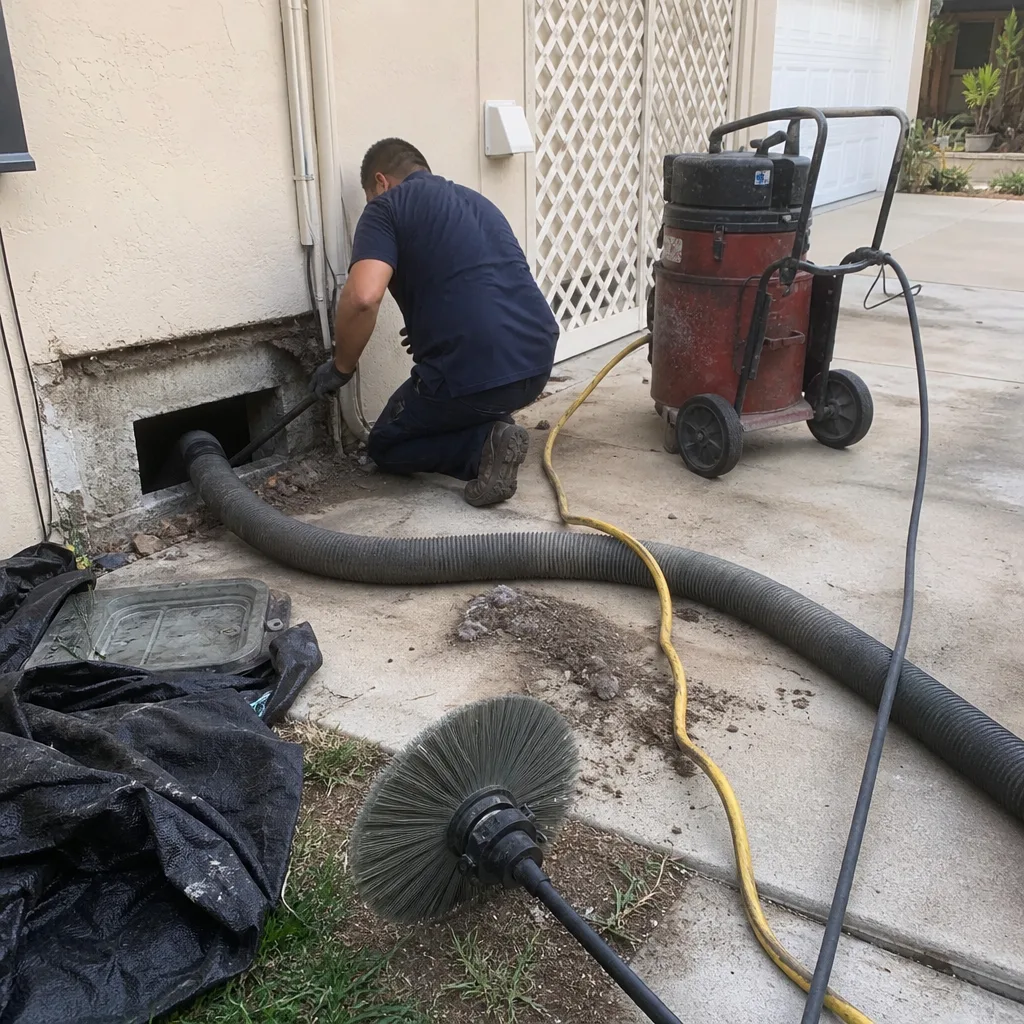 Before
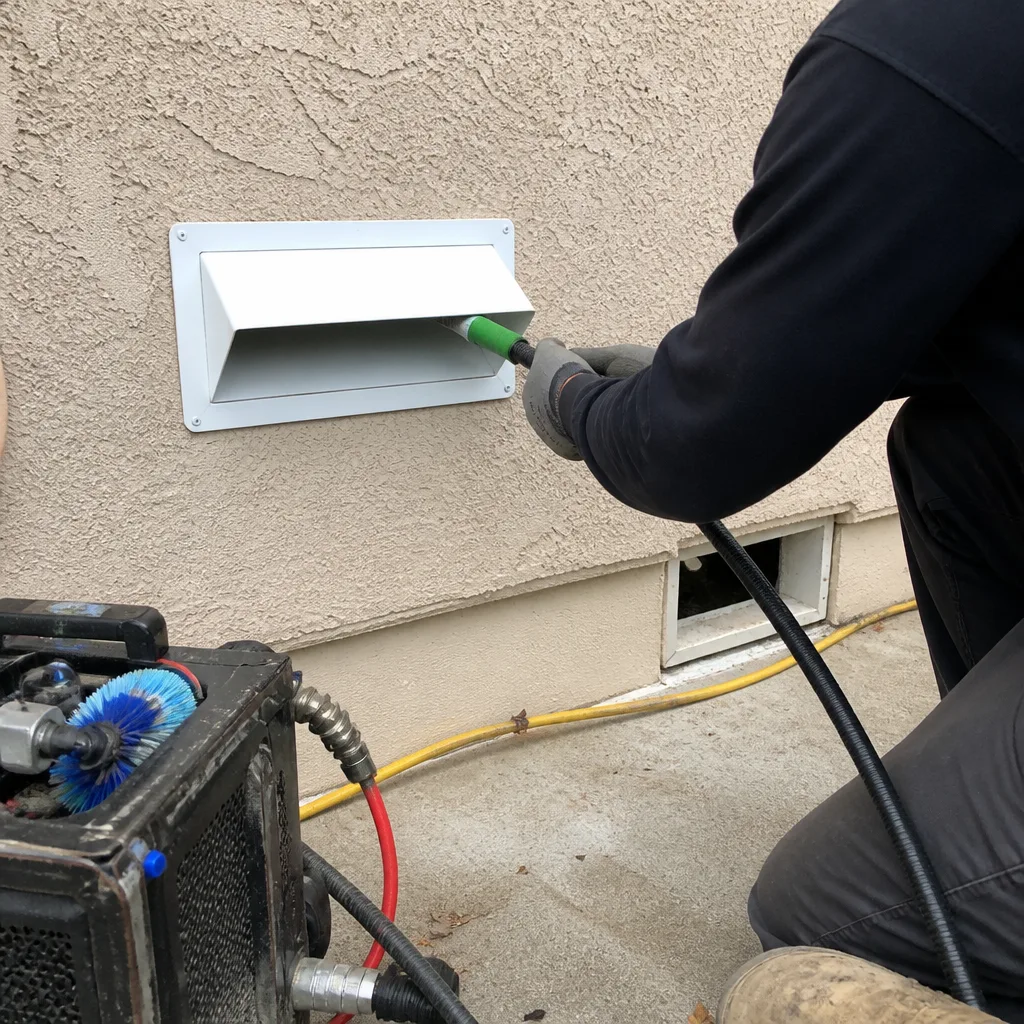 After
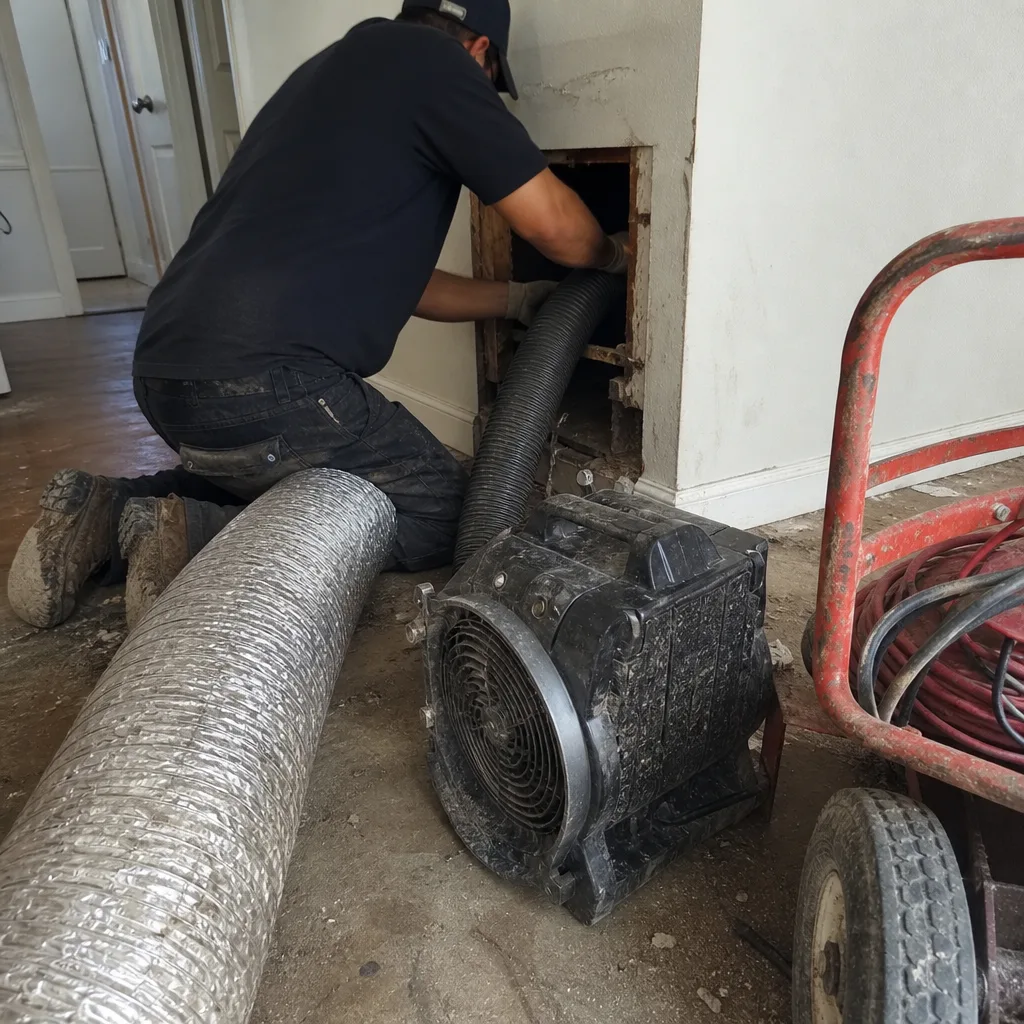 Before
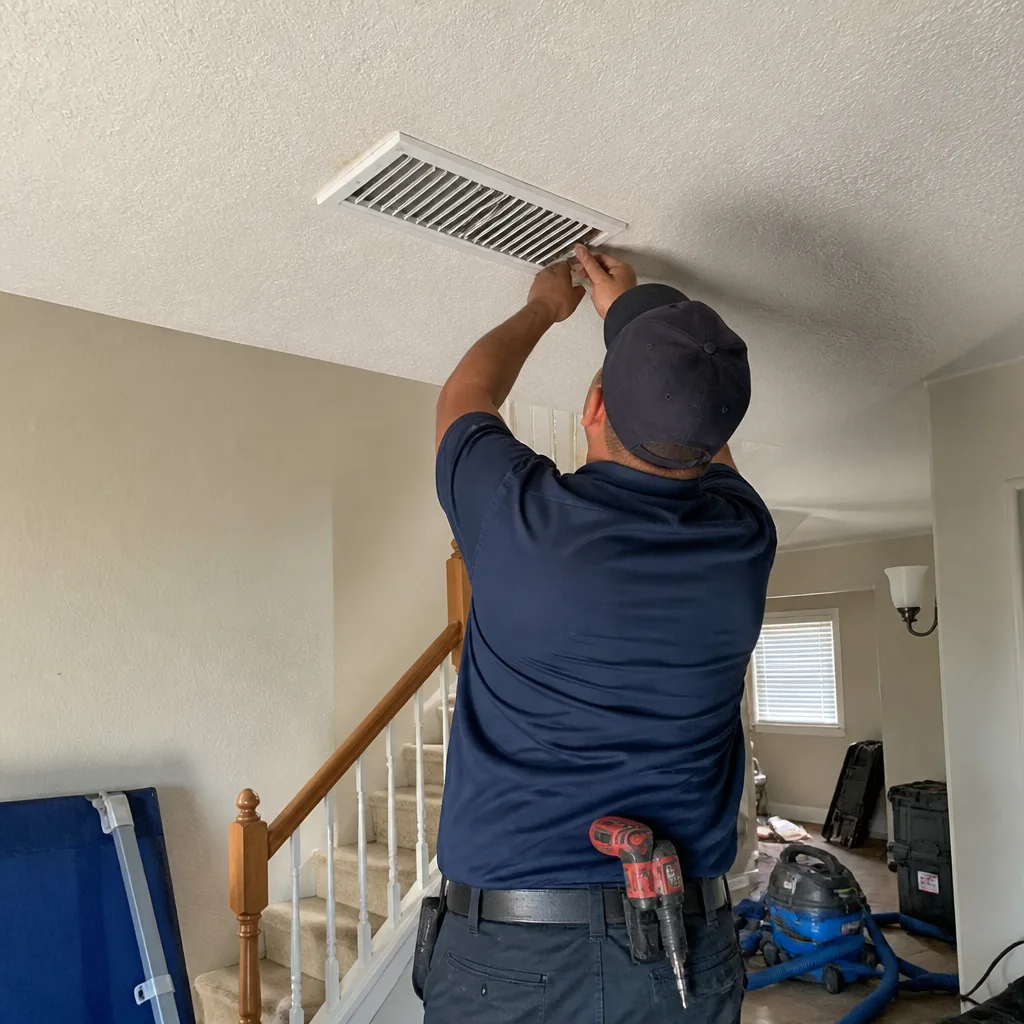 After
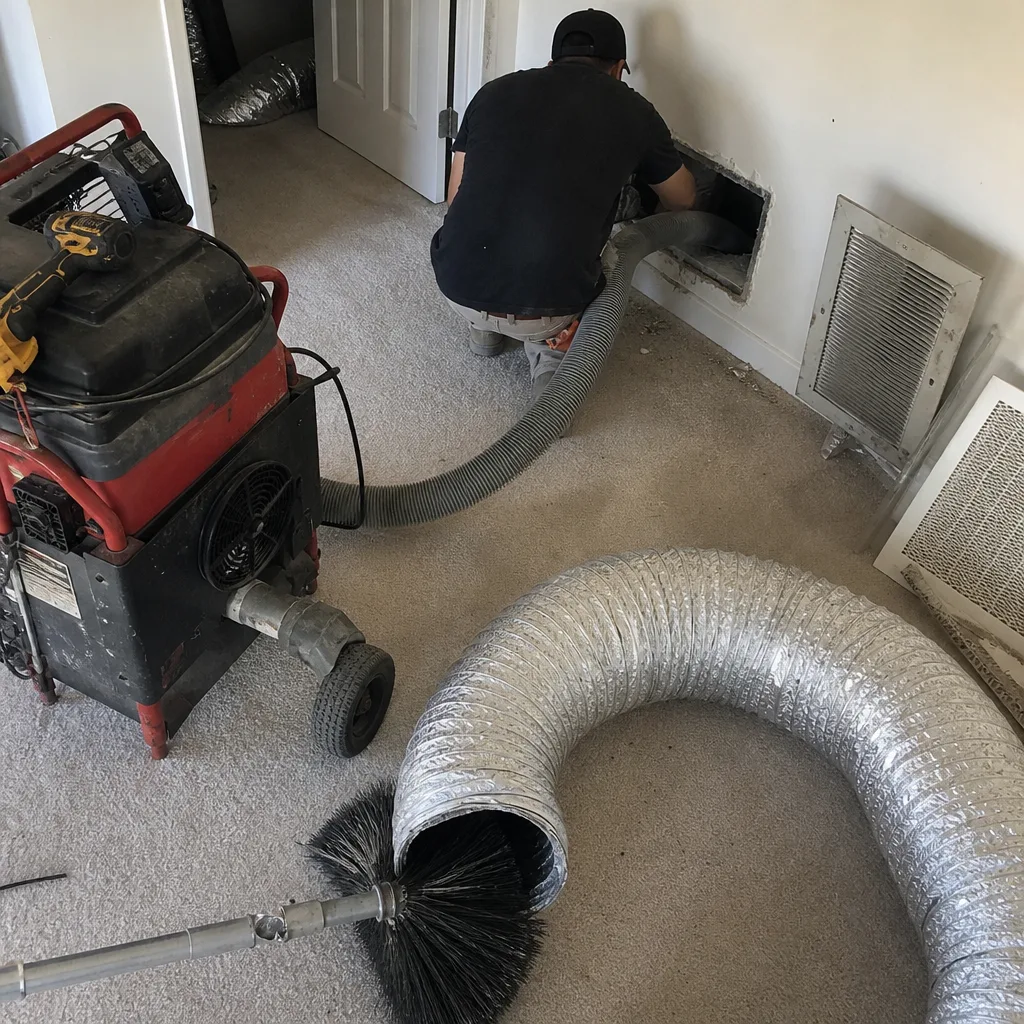 Before
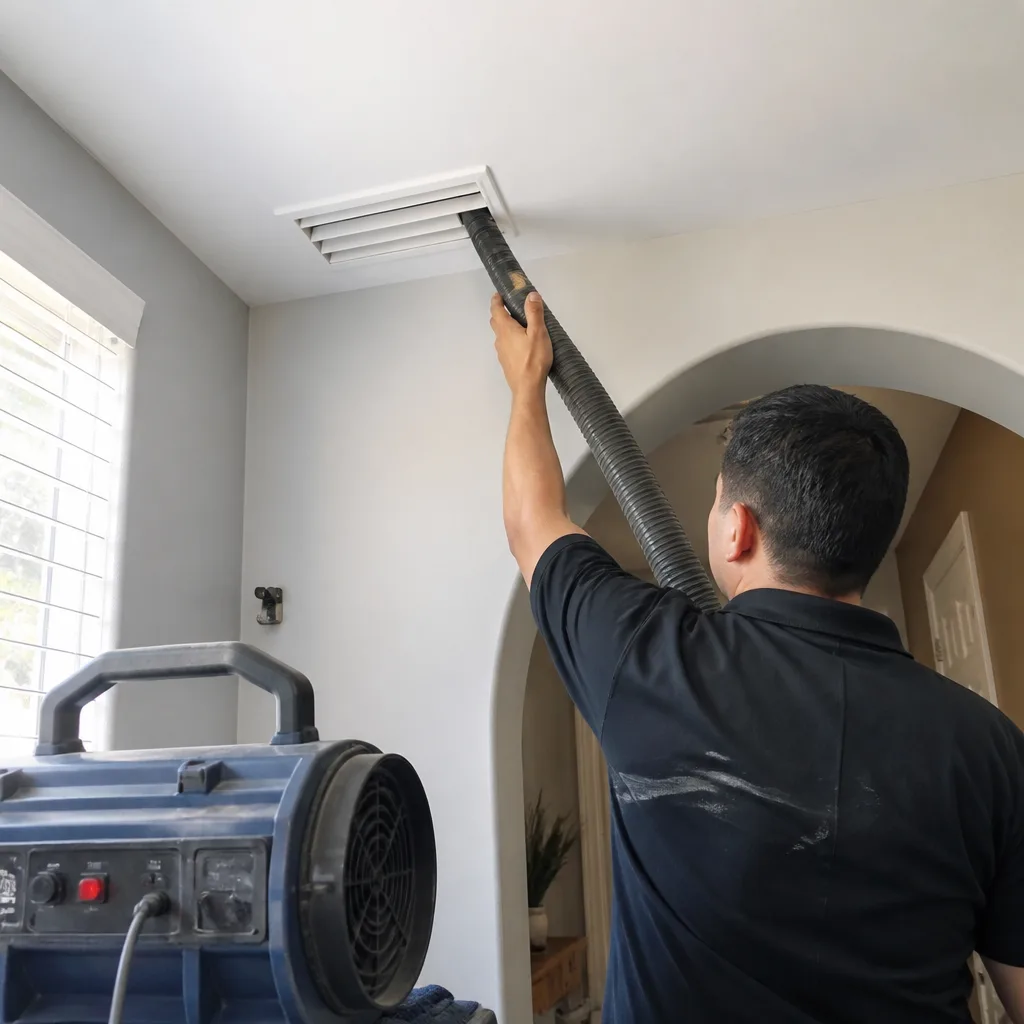 After
When to Call a Professional
You should call a professional when you see dust accumulation on supply registers within days of cleaning, when you notice musty odors that strengthen when the HVAC runs, or when rooms in your Oceanside home stay unevenly heated or cooled without explanation. These symptoms point to duct conditions that equipment-grade cleaning and inspection can address. If you’ve inherited a home, finished a remodel, or haven’t had ducts cleaned in years, a professional assessment is the fastest way to establish the actual condition of your system. Air duct cleaning in Oceanside is a scheduled service, not an emergency, so plan the appointment for a time when the system can be down for a few hours. Duct Cleaning Oceanside offers free estimates in Oceanside. Call (855) 382-4811 to schedule one.
Frequently Asked Questions
Residential air duct cleaning in Oceanside typically ranges from $350 to $650 for a single-system home, depending on the number of supply and return runs, the system’s accessibility, and whether dryer vent cleaning is included. Homes with multiple HVAC systems or extensive flex duct runs in attics may run higher. The price should be quoted as a flat cost for the whole system, agreed before work starts, not as a per-vent rate that grows unpredictably. Call (855) 382-4811 for an exact quote on your Oceanside home. Estimates are free.
A significantly lower quote usually reflects different equipment and scope. A company running a portable shop vac with a brush attachment can operate at a much lower cost than one running Rotobrush contact-cleaning tools with Nikro HEPA negative-air containment. The labor involved is completely different. The cheaper quote also may not include camera verification, may not properly contain dislodged dust, and may not be able to repair damage found during cleaning. When comparing quotes, ask for the equipment model numbers and the full scope, not just the dollar figure.
You know the work was done when the company provides before-and-after camera footage of the duct interior. A professional system with a duct inspection camera shows you the compacted debris on the walls before cleaning and the clean surface after. This is the only direct evidence available, since ducts are hidden. If a company cannot provide camera verification, you’re trusting their word against an invisible surface.
Most Oceanside homes need a thorough contact cleaning every 3 to 5 years, with the exact interval depending on household factors: pets, occupants with respiratory sensitivities, recent construction, and whether the home sits near sources of particulate like agricultural fields east of town or busy roadways. Homes that underwent renovation should be cleaned immediately afterward regardless of schedule, since construction dust settles throughout the duct system. A reputable company will recommend an interval based on what they find in your specific system, not a blanket timeline.
Air duct cleaning removes accumulated dust, pet dander, and other particulate from the surfaces air passes over. For allergy sufferers, the benefit comes from eliminating a reservoir of irritants that can intermittently enter the air stream, particularly during HVAC startup and high-humidity periods common in Oceanside’s coastal climate. The effect is most noticeable in conjunction with whole-home filtration. Duct cleaning does not replace filtration, and it does not address outdoor allergens. It removes what’s accumulated inside the system.
Air duct cleaning addresses the HVAC distribution system: supply runs, return runs, trunk lines, registers, and the air handler. Dryer vent cleaning addresses the exhaust line from your clothes dryer to the exterior vent cap. The dryer vent accumulates lint, which is combustible, and dryer vent cleaning in Oceanside is primarily a fire-risk reduction service, not an air quality service. The two are distinct jobs with different equipment, and both should be part of a whole-home maintenance plan. Call (855) 382-4811 to schedule either or both.
The Bottom Line
In Oceanside’s coastal air, where homes are closed up against marine layer moisture much of the year, what’s inside your ductwork is what you’re breathing. The right duct cleaning company is defined by the equipment it runs: Rotobrush contact cleaning that scrubs duct walls, Nikro HEPA negative-air machines that contain dislodged particulate, and Abatement Technologies equipment that brings remediation-grade standards to residential work. Ask for model numbers, verify specifications, demand camera proof, and choose a company that repairs what it finds, not just cleans around it. Equipment is the brand. Everything else is a van with a logo on it. For a complete look at how Duct Cleaning Oceanside approaches the work, explore our guide to services and call (855) 382-4811 for a free estimate.
Written by the team at Duct Cleaning Oceanside, serving Oceanside since 2011. For more guides & resources, visit our blog.