
Last updated November 2, 2026
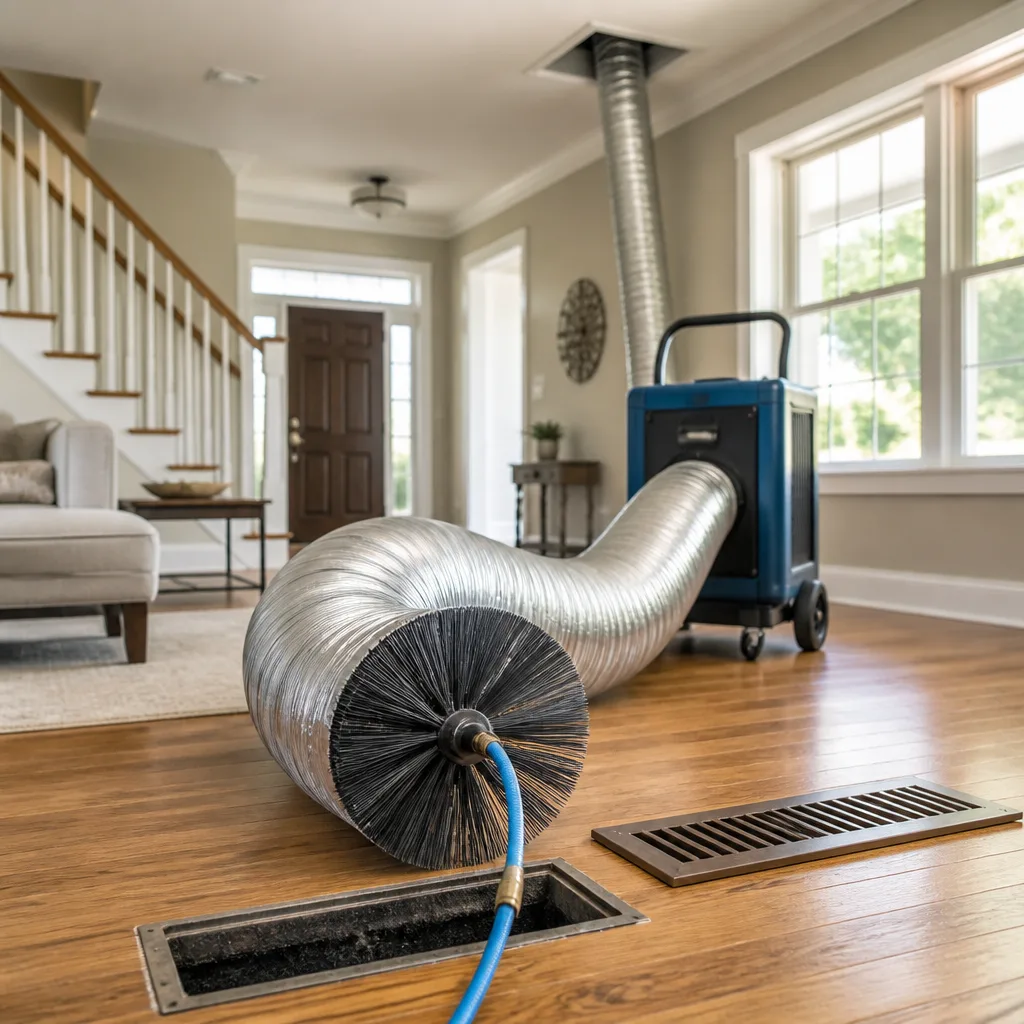 Whole-home duct cleaning
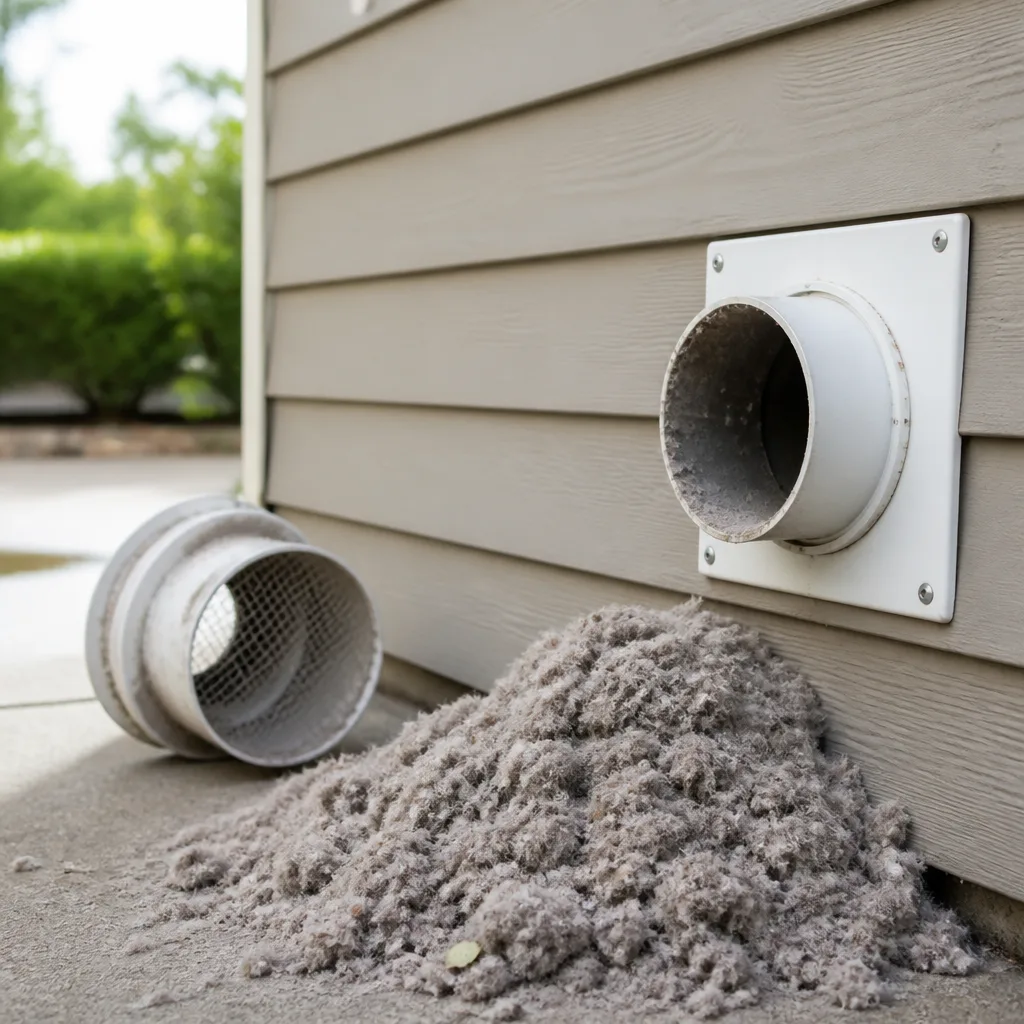 Dryer vent cleaning
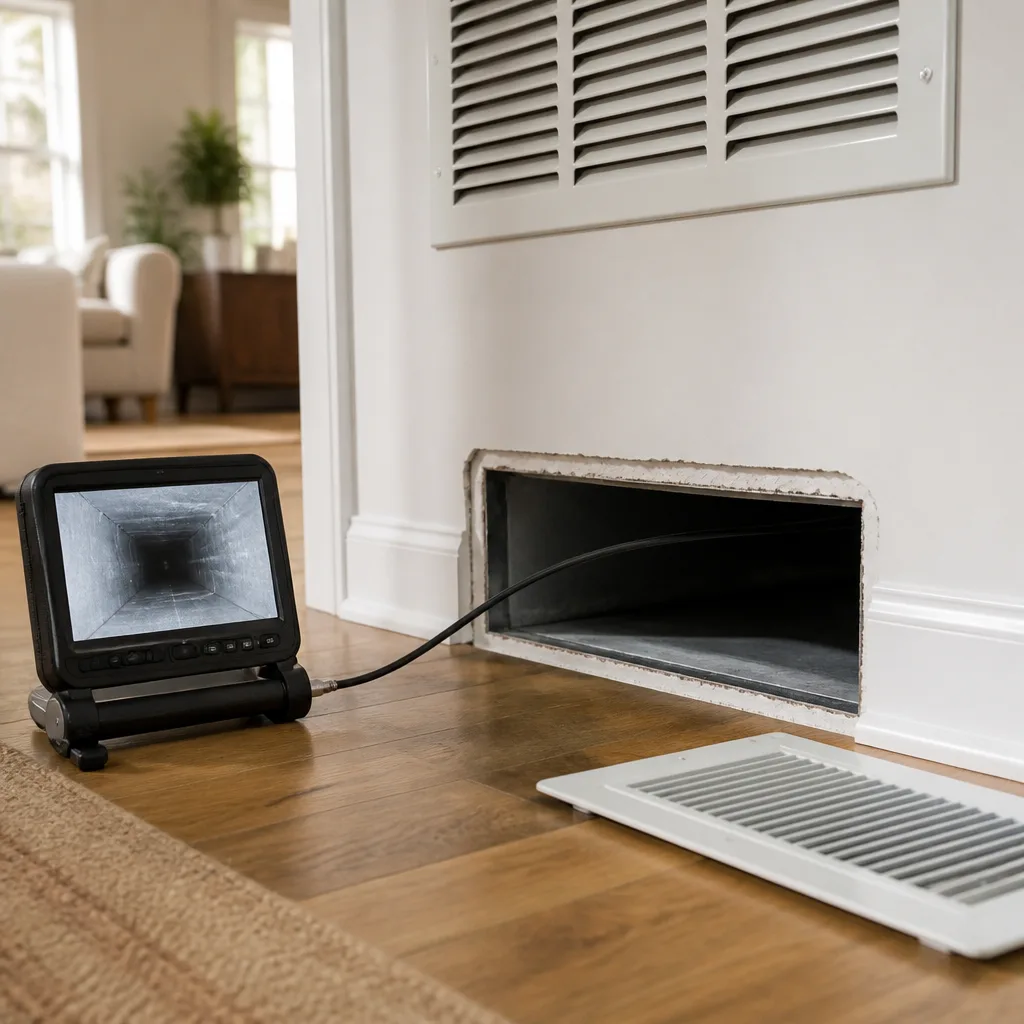 Camera inspection
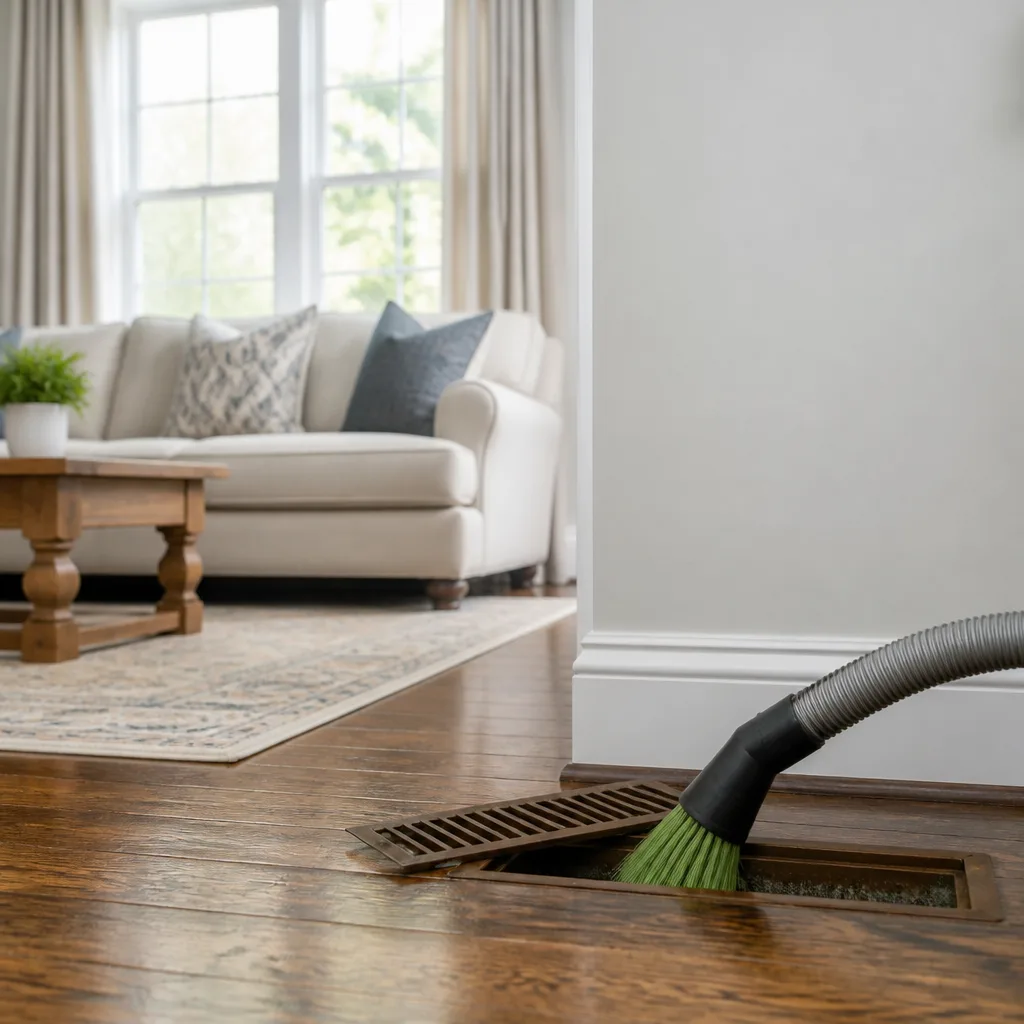 Sanitizing & deodorizing
Whole-system duct and dryer vent check with before-and-after photos - you see exactly what came out of your vents
That "$99 whole-house special" is a bait ad - the real number appears once they are in your hallway, or the "clean" is a shop-vac at the register. We photograph the inside of your ducts before and after instead.
The Complete Air Duct Cleaning Guide for Oceanside Homeowners
Oceanside sits close enough to the Pacific that the morning marine layer pushes relative humidity past 80% for months at a time. That single fact changes everything about how the dust inside your ducts behaves. In a dry inland home, loose particulate blows through and settles as powder. Here, moisture binds it to duct walls as a sticky film that low-powered vacuums simply can’t remove. This guide explains why coastal conditions demand a different approach, what actually works in Oceanside’s specific housing stock, and how to verify the job was done right.
Quick Answer
Air duct cleaning in Oceanside typically costs between $450 and $950 for a whole-home system, depending on square footage, the number of returns, and how long the ducts have gone uncleaned. Homes closer to the coast, where marine-layer humidity compacts debris against duct walls, often need contact-cleaning methods like Rotobrush rather than simple vacuum work. A thorough cleaning takes 3 to 6 hours, and the result should be measurable: stronger airflow from registers, visibly cleaner supply vents, and no dust plume when the system first kicks on.
Styles & brands we work with
- Whole-home duct cleaning
- Dryer vent cleaning
- Camera inspection
- Sanitizing & deodorizing
Table of Contents
- Why Coastal Humidity Changes Everything About Duct Cleaning in Oceanside
- How Oceanside’s Housing Stock Affects Your Ductwork
- What NADCA Standards Actually Require, and What Most Companies Skip
- How to Read Your Own Ducts: Normal Results vs. Problems Cleaning Won’t Fix
- How Often Should You Really Clean Your Ducts in Oceanside?
- Step by Step: What a Proper Cleaning Looks Like
- Dryer Vents and Fire Risk: The Part Most Guides Leave Out
- Filtration and Whole-Home Air Quality: What Your Ducts Connect To
Why Coastal Humidity Changes Everything About Duct Cleaning in Oceanside
Here’s what decades of work in Oceanside homes has taught us: duct dust here is not the same material you find in Escondido or Temecula. When the marine layer rolls in each evening and burns off mid-morning, it pushes indoor relative humidity high enough that fine particulate, the stuff that would otherwise blow through your system as loose powder, absorbs moisture and adheres to galvanized duct walls. It becomes a paste. Layer upon layer builds up over months, then years.
This matters for one specific reason. The most common duct cleaning method used by low-budget operators is a blow-and-vacuum approach: a technician cuts a hole in the supply plenum, connects a large vacuum, and then runs compressed air or a basic brush through the registers. In dry climates, that works well enough because particulate is loose and mobile. In Oceanside’s humidity, it fails routinely. The vacuum pulls air, but the compacted film stays stuck to the duct walls.
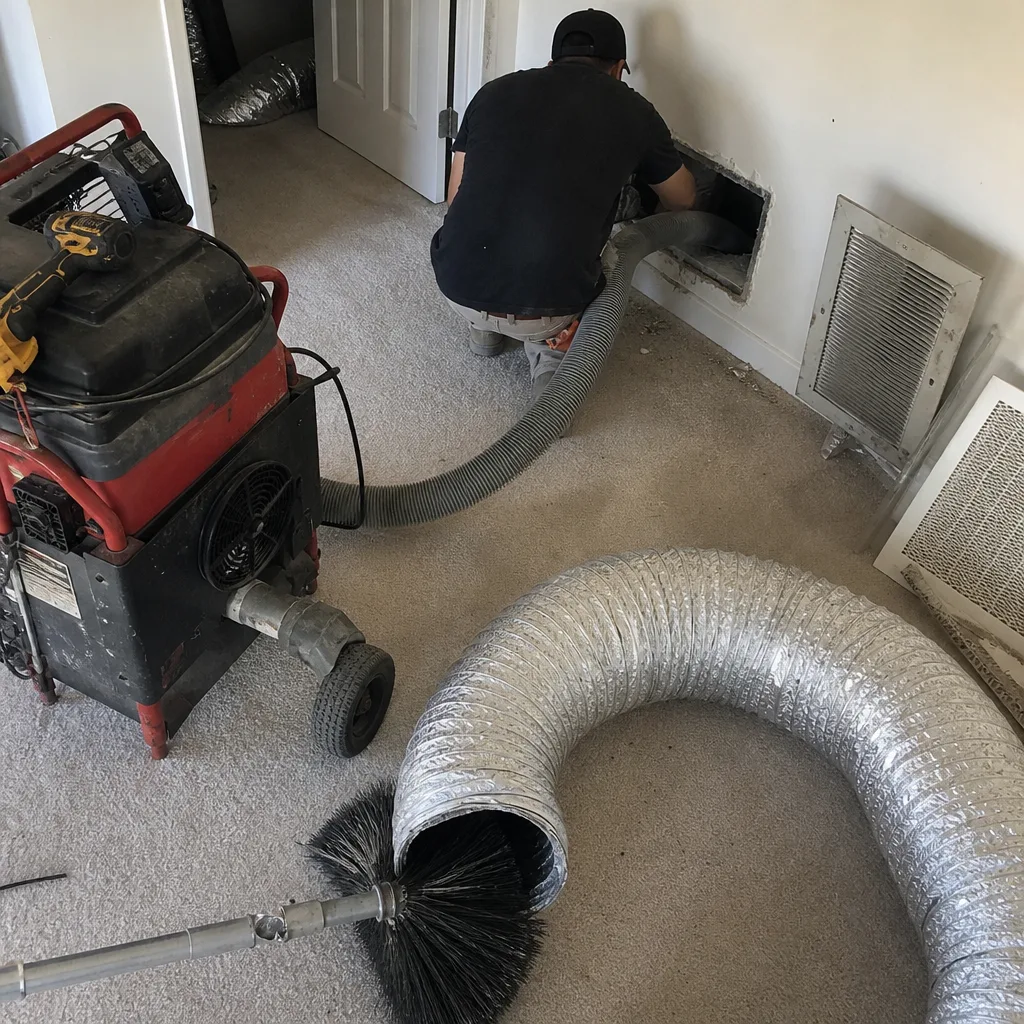
Contact cleaning solves this. A Rotobrush system pushes a spinning brush head down the duct run, physically scrubbing the walls while the vacuum pulls the dislodged debris out. The brush contacts the surface. The name tells you what matters. We’ve pulled out compacted material from Oceanside beach-area homes that had been “cleaned” by another company six months earlier, because the previous job never actually touched the duct walls.
If you live west of El Camino Real, in Fire Mountain, South Oceanside, or anywhere within a mile or two of the beach, this is your reality. The houses in these neighborhoods see marine influence almost every night of the year. Your ducts are not like a Lemon Grove house’s ducts. The cleaning method has to match the environment.
How Oceanside’s Housing Stock Affects Your Ductwork
Oceanside grew in waves, and each wave produced a different kind of duct system. Knowing which kind you have changes how the cleaning should be approached, where the access points are, and what problems you’re likely to find.
Post-WWII Slab Homes (1940s – 1960s)
Neighborhoods like South Oceanside, Loma Alta, and much of the downtown grid were built in the post-war boom, and many of these houses sit on concrete slab foundations. That means the original supply ducts are often embedded in or beneath the slab itself. Over decades, these ducts develop cracks, collapse, or fill with construction debris and rodent nesting. Cleaning embedded slab ducts is a different job than cleaning flexible attic ductwork. Access is limited. What looks like a “dirty duct” problem is frequently a “broken duct under the slab” problem.
This is exactly where Air Duct Repair in Oceanside matters. If a cleaning reveals a collapsed section under your slab, most companies will finish the job, shrug, and tell you to call a general contractor. That leaves you with a clean but still-broken system. Our crews repair what they find on the spot: reconnecting separated joints, patching accessible sections, and replacing collapsed flex runs. The point of cleaning is improved airflow and air quality. If the duct is broken, cleaning alone accomplishes neither.
Tract Construction (1980s – 2000s)
The housing boom that filled neighborhoods like Rancho del Oro, Ivey Ranch, and much of eastern Oceanside produced a different animal: flexible insulated ductwork run through attics and crawlspaces. Flex duct is cheap to install and, frankly, cheaply installed in many of these homes. We regularly find runs that were never properly secured, kinked at sharp angles, or disconnected at the junction box entirely. Rodents love the insulation. The plastic inner liner separates from the insulation over time, especially in the temperature swings of an Oceanside attic.
In these systems, cleaning requires more access points, and a technician who understands flex duct behavior. You cannot run a stiff brush through a kinked flex run without tearing it. The job demands experience with the material, not just the equipment.
Newer Construction and Converted Spaces
Homes built after 2010, and older homes with recent additions or garage conversions, often have mixed systems: sheet metal trunks with flex branches, or ductless mini-splits paired with a partial ducted system for the bedrooms. These integrations create dead zones where dust accumulates because airflow is imbalanced. A proper cleaning starts with inspecting the full system, not just the registers.
Whatever your house type, the common thread is this: Oceanside’s housing stock is old enough to have accumulated serious duct problems, and varied enough that no single cleaning approach fits all. A company that shows up with one method and no inspection process is guessing.
What NADCA Standards Actually Require, and What Most Companies Skip
NADCA, the National Air Duct Cleaners Association, publishes the standard most reputable companies reference: the ACR, or Assessment, Cleaning, and Restoration standard. It’s specific about what a proper cleaning involves. Few Oceanside homeowners have ever read it, and fewer local companies follow it.
Here’s what the standard actually requires, translated into plain terms:
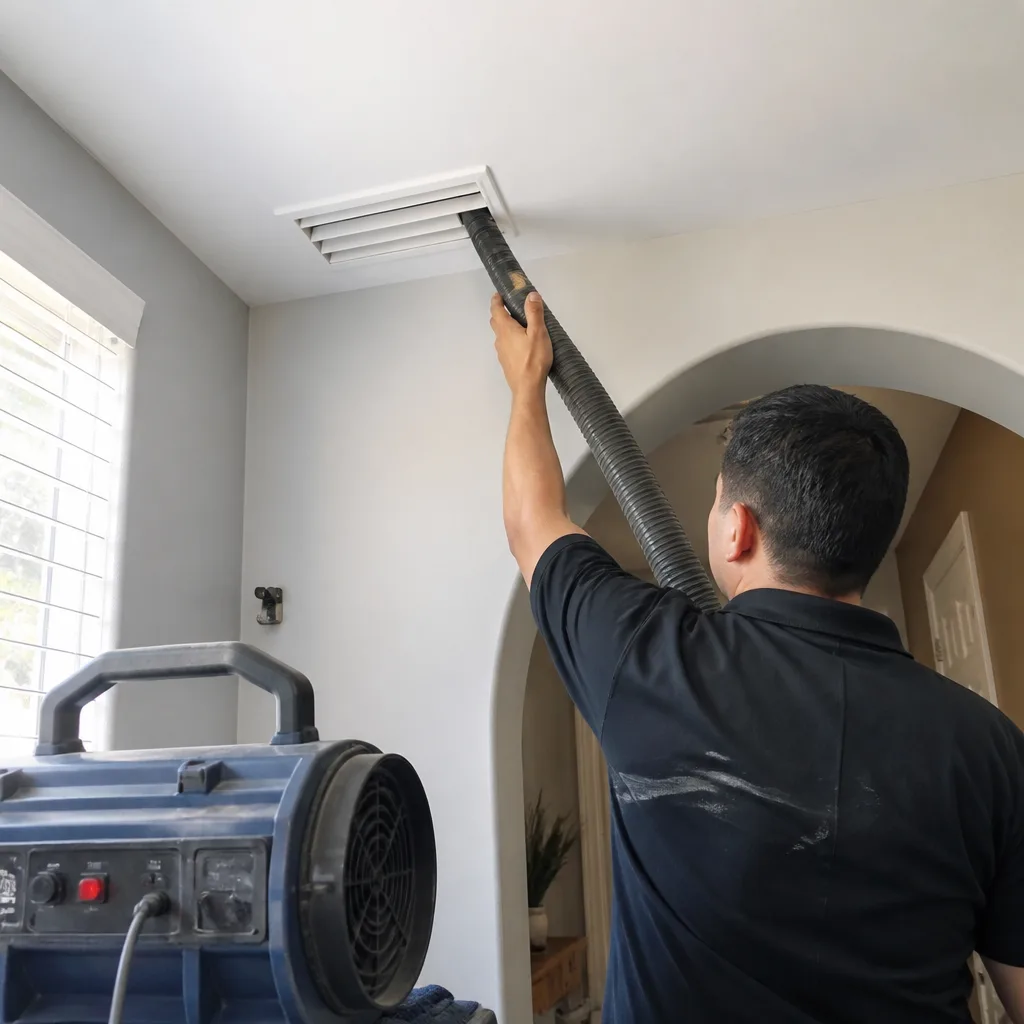
- Source removal, not just air movement. NADCA defines cleaning as removing the debris from the duct surfaces, not blowing it around. This is why the negative-air machine matters. A Nikro HEPA negative-air machine maintains the duct system under negative pressure during cleaning, so dislodged particulate is captured and exhausted outside or through HEPA filtration, not recirculated into the living space.
- Mechanical agitation. The standard expects tools that physically contact and dislodge debris. Contact brushes, compressed air nozzles used correctly, and inspection tools. A vacuum attached to a hole in the plenum, with no mechanical agitation, does not meet the standard.
- Full system coverage. Supply ducts, return ducts, the air handler, the coil, the blower, the plenum, and the registers. If a company only cleans the supply side and ignores the return, the job is incomplete. Return ducts are often the dirtiest part of the system.
- Containment. The work area around the furnace or air handler should be protected from dust, and the system should maintain negative pressure throughout the job. Nikro equipment is built specifically for this containment role.
- Post-cleaning inspection. A professional crew should be able to show you the inside of a duct run after cleaning, not just hand you a before-and-after photo of one register. We use inspection cameras so the homeowner sees what we see.
Negative-air CFM matters. Real NADCA-aligned equipment pulls 2,000 to 5,000 CFM through the system. A portable shop-vac pulls a few hundred CFM at best, and loses even that through a long hose. That difference is the difference between removing debris and just moving it around. If the company’s entire setup fits in the back of a sedan, it’s not a professional duct cleaning rig.
This is why our approach uses contractor-grade Rotobrush contact-cleaning technology paired with Nikro HEPA negative-air machines. The contact brush scrubs the duct walls, and the negative-air system ensures what gets dislodged leaves the house. In Oceanside’s humid conditions, where debris is stuck fast, this combination is the difference between cleaning and pretending to clean.
How to Read Your Own Ducts: Normal Results vs. Problems Cleaning Won’t Fix
A proper duct cleaning removes the accumulation that shouldn’t be there. But some things the cleaning process reveals are not cleaning problems. They’re repair problems. Here’s how to tell the difference.
What Normal Looks Like After a Proper Cleaning
- Registers and grilles are free of visible dust and lint.
- When the system first turns on after the job, there’s no visible dust plume from the vents.
- Airflow from each register feels noticeably stronger, especially in rooms that were weak before.
- That stale or musty odor that lingered when the AC kicked on is gone.
- Inside the duct runs (viewable with a camera), the metal or flex liner is visible again, not coated with a layer of gray film.
Signs of Mold That Cleaning Alone Won’t Fix
If you see what looks like black or greenish staining on the inside of the ducts, on the register grilles, or around the air handler, that’s not dust. It’s microbial growth. Coastal humidity feeds it. Duct cleaning can remove surface contamination, but if the source of moisture isn’t fixed, the growth returns. In our experience in Oceanside beach neighborhoods, the most common culprits are oversized air conditioners that short-cycle and never remove enough humidity, leaking duct joints pulling in moist attic air, and bathroom exhaust fans venting into the attic rather than outside.
For remediation-grade situations, we use Abatement Technologies equipment. This is gear built for air quality work beyond routine cleaning: post-construction dust, contamination events, and serious microbial remediation. Most Oceanside duct cleaners do not own this level of equipment. If you have a genuine mold situation, you need someone who does.
Signs of Failed or Disconnected Ducts
Cleaning won’t fix these, but a good company will find them and should be able to fix them on the spot:
- Rooms that are always warmer or colder than the rest of the house. Often a disconnected flex run in the attic, pumping conditioned air into dead space.
- Dust appearing around a specific register faster than others. Usually a leak at the boot connection, pulling unfiltered attic air into the supply stream.
- Crushed or kinked flex duct visible in the attic. Insulation can’t fix a duct that’s bent at a 90-degree angle.
- Higher energy bills with no change in usage. The system is working harder to push air through compromised ductwork, or losing air entirely.
When our cleaning process reveals issues like these, we don’t just point at them and leave. We run an in-house Air Duct Repair service in Oceanside precisely because cleaning is only valuable if the system is intact. A clean broken system is still broken.
How Often Should You Really Clean Your Ducts in Oceanside?
There’s no single answer that fits every house, but Oceanside conditions allow us to be more specific than the generic “every 3 to 5 years” advice you’ll find elsewhere. Here’s a realistic calibration based on what we see in homes across the city.
Every 2 to 3 Years: High-Load Households
- Homes within 1 mile of the coast, where marine-layer humidity compacts debris faster
- Homes with 2 or more indoor pets, especially dogs and cats that shed heavily
- Homes with smokers or frequent candle/incense burning
- Homes near Camp Pendleton’s dust corridors, particularly along Vandegrift Boulevard or in the northeastern parts of the city where training activity and seasonal winds stir particulate
- Homes with residents managing serious allergies or asthma
Every 3 to 4 Years: Moderate-Load Households
- Homes 2 to 5 miles inland, in neighborhoods like Rancho del Oro or Ivey Ranch
- Homes with one pet, or low-shedding pets
- Homes with good filtration systems maintained regularly (more on that below)
- Homes without carpet, since hard flooring reduces the circulating dust load
Every 4 to 5 Years: Low-Load Households
- Homes in newer construction (post-2010) with well-sealed ductwork
- Homes with no pets, no smokers, and occupants who rarely open windows during wildfire season
- Homes with premium whole-home filtration that is serviced on schedule
Wildfire smoke changes the math. After a bad fire season, even low-load homes can accumulate a fine ash film inside the duct system in weeks. If you’ve been running your central air during a smoke event, the system pulls that particulate through the filter and distributes some of it into the ductwork. After heavy smoke years, an inspection is warranted even if you’re not “due.”
One honest note: cleaning more often than every 2 years is almost never necessary unless a specific event occurred, like a construction project inside the home, a rodent infestation, or a flood. A reputable company will tell you when you don’t need the service. If a company pushes for annual cleanings regardless of conditions, that’s a sales script, not an assessment.
Step by Step: What a Proper Cleaning Looks Like
If you’ve never hired a duct cleaner before, here’s what a legitimate, NADCA-aligned job should look like from start to finish. This is the process we follow for every air duct cleaning in Oceanside.
- System inspection. The technician should inspect the air handler, coil, plenum, and accessible duct runs before any equipment is brought in. They should look at your returns (often the dirtiest part) and check for obvious repair issues.
- Containment setup. Floor protection around the work area. The negative-air machine is connected to the system and started before any duct access is cut. This creates negative pressure so dislodged debris is pulled outside, not pushed into your living room.
- Access point creation. Depending on your system layout, one or more access holes are cut in the ductwork or plenum. These are sealed with permanent caps and mastic tape when the job is done.
- Mechanical cleaning of supply and return ducts. The Rotobrush contact-cleaning head is run through each accessible run, physically scrubbing the duct walls from the register all the way back to the plenum. This is the step that separates contact cleaning from blow-and-vacuum work.
- Component cleaning. The blower motor, evaporator coil, drain pan, and plenum are cleaned. The register grilles are washed or replaced. This is where most shortcuts happen; ask specifically whether the coil and blower are included.
- Repair identification and repair. If the cleaning reveals damaged sections, the technician should show you what they found. Because we do air duct repair in Oceanside in-house, our crews fix what they can during the same visit.
- Final system check. The system is run through a full cycle. Airflow from each register is checked. The technician walks you through a final inspection camera view of the cleaned ducts.
The entire process takes 3 to 6 hours for a typical single-family Oceanside home. If a company tells you they’ll be done in 45 minutes, they’re not doing the job described above. No legitimate NADCA-aligned cleaning can be completed that quickly.
Dryer Vents and Fire Risk: The Part Most Guides Leave Out
Most duct cleaning guides treat dryer vents as an afterthought, a small add-on service. That’s a mistake. According to the U.S. Fire Administration, clothes dryers are involved in roughly 2,900 home fires each year, and the leading cause is failure to clean the dryer vent. This is not an air quality issue. It’s a fire safety issue.
Oceanside homes with longer dryer vent runs are at particular risk. Older beach cottages and slab homes often have vents routed through walls or under floors with multiple bends, and every bend is a spot where lint accumulates. Lint is highly combustible. A blocked vent also forces your dryer to work longer and hotter, which accelerates the buildup and increases the fire risk in a compounding loop.
Our dryer vent cleaning in Oceanside service addresses this directly. We clean the full vent run from the dryer connection to the exterior termination point, not just the first few feet behind the machine. Then we verify airflow at the exterior vent. You should be able to hold a tissue at the outside vent and see it flutter strongly when the dryer runs. If it barely moves, the vent is still restricted.
How often should you clean your dryer vent in Oceanside? If you use the dryer daily and you’re inland with a short, straight vent run, every 18 to 24 months is reasonable. If you’re near the coast and the marine air adds moisture to the lint, making it pack tighter, or if your vent runs through a long or convoluted path, every 12 months is safer. If drying times are getting longer, it’s overdue now.
Filtration and Whole-Home Air Quality: What Your Ducts Connect To
Your duct system is one part of a larger air quality picture. The return side pulls air through a filter before it enters the air handler and gets pushed through the supply ducts. That filter choice matters as much as the cleanliness of the ducts themselves.
Many Oceanside homes use basic fiberglass filters, which catch big particles and let nearly everything else through. Upgrading to a media filter cabinet, or a whole-home filtration system from brands like Honeywell or Aprilaire, changes what reaches your ducts in the first place. These systems are designed to integrate with central HVAC and capture the fine particulate that coastal homes struggle with.
What should you expect from a duct cleaning company regarding your filtration? At minimum, they should respect it. Wear panels and media filter cabinets are not disposable in the same way as single filters. A technician should know how to work around a Honeywell media cabinet without damaging the housing or dislodging the seal. We work with Honeywell, Aprilaire, and Guardsman filtration installations regularly, and we treat them as part of the system, not as an obstacle. If the maintenance panel is warped or the media is overdue for replacement, we’ll tell you.
Duct cleaning for your Oceanside home should operate on a simple premise: the service should make the whole system work better. That includes the ducts, the registers, the coil, the blower, the filter, and everything the family breathes. A company that only cleans the visible parts is missing the point.
Common Mistakes to Avoid
- Hiring a company that quotes a price before looking at your system. Square footage alone tells a technician almost nothing about what’s actually in your ducts. A legitimate quote requires knowing your housing type, access points, and whether there’s damage. Blow-and-vacuum is often the only service offered by companies that quote sight-unseen.
- Choosing the cheapest quote. In Oceanside, low-price duct cleaning almost always means portable equipment, no containment, no contact cleaning, and a 45-minute job. The result is a system that looks clean at the registers and is still caked inside. You cannot physically clean a whole-home duct system for $99.
- Accepting before-and-after photos of a single register as proof. One register shot proves nothing. The technician should be willing to show you inspection camera footage of the actual duct runs, from inside the system, after the job is done.
- Cleaning ducts in a home with unresolved mold or water damage. If there’s active moisture in the system, cleaning will be temporary. The moisture source has to be fixed first. Ask the company to check for condensation issues and leaks before they start scrubbing.
- Ignoring the return side. Your returns pull air from the living space into the system. If they’re caked with years of dust and pet hair, the system re-contaminates the supply side as soon as the fan runs. A proper cleaning addresses both sides.
- Skipping the dryer vent because it’s a “separate service.” It’s not. A clogged dryer vent is one of the most dangerous maintenance failures in a home. If the company offers it, bundle it. If they don’t offer it, find one that does.
- Forgetting to ask about repairs. If the cleaning reveals a disconnected run or collapsed flex duct, most Oceanside duct cleaners will finish and leave. You’ll have clean ducts and a 30% airflow loss you don’t know about. Ask up front whether the company repairs what they find, or find a company where air duct repair is an in-house service.
See the difference
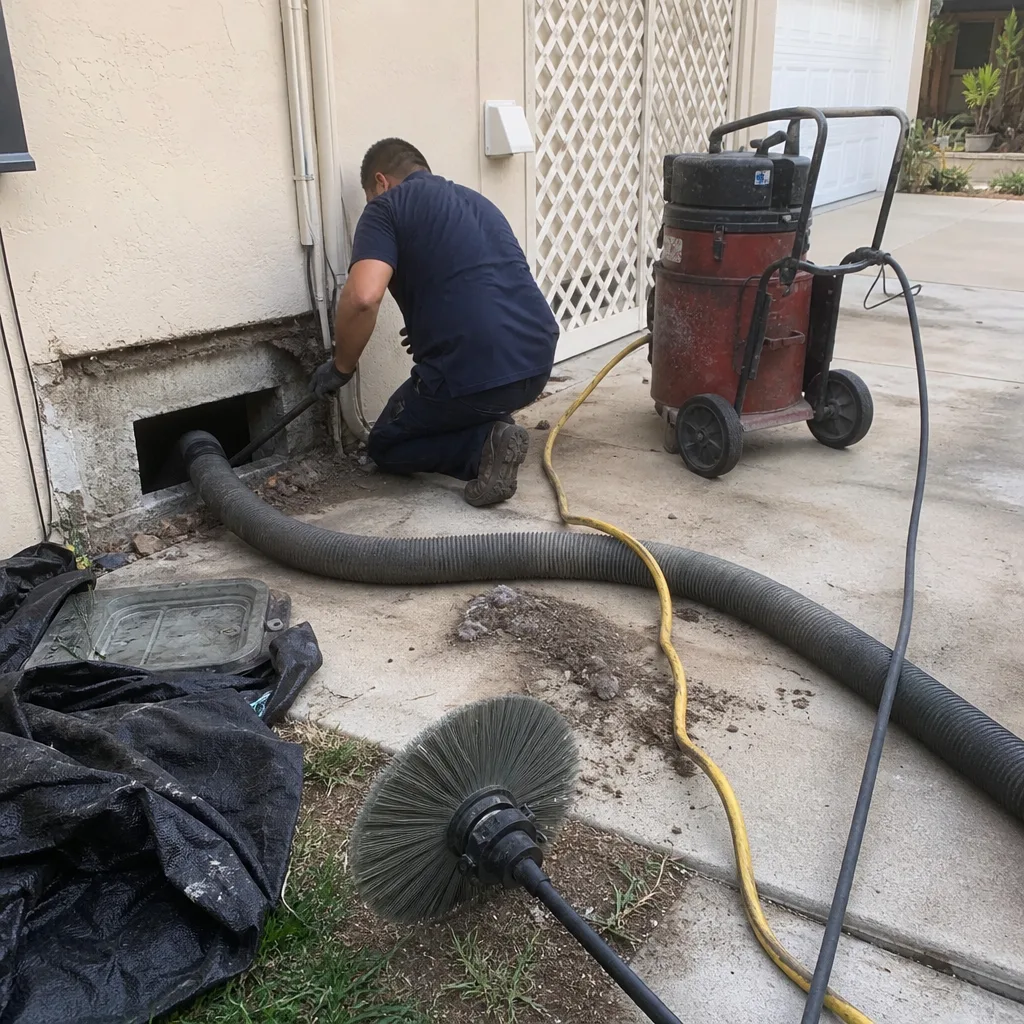 Before
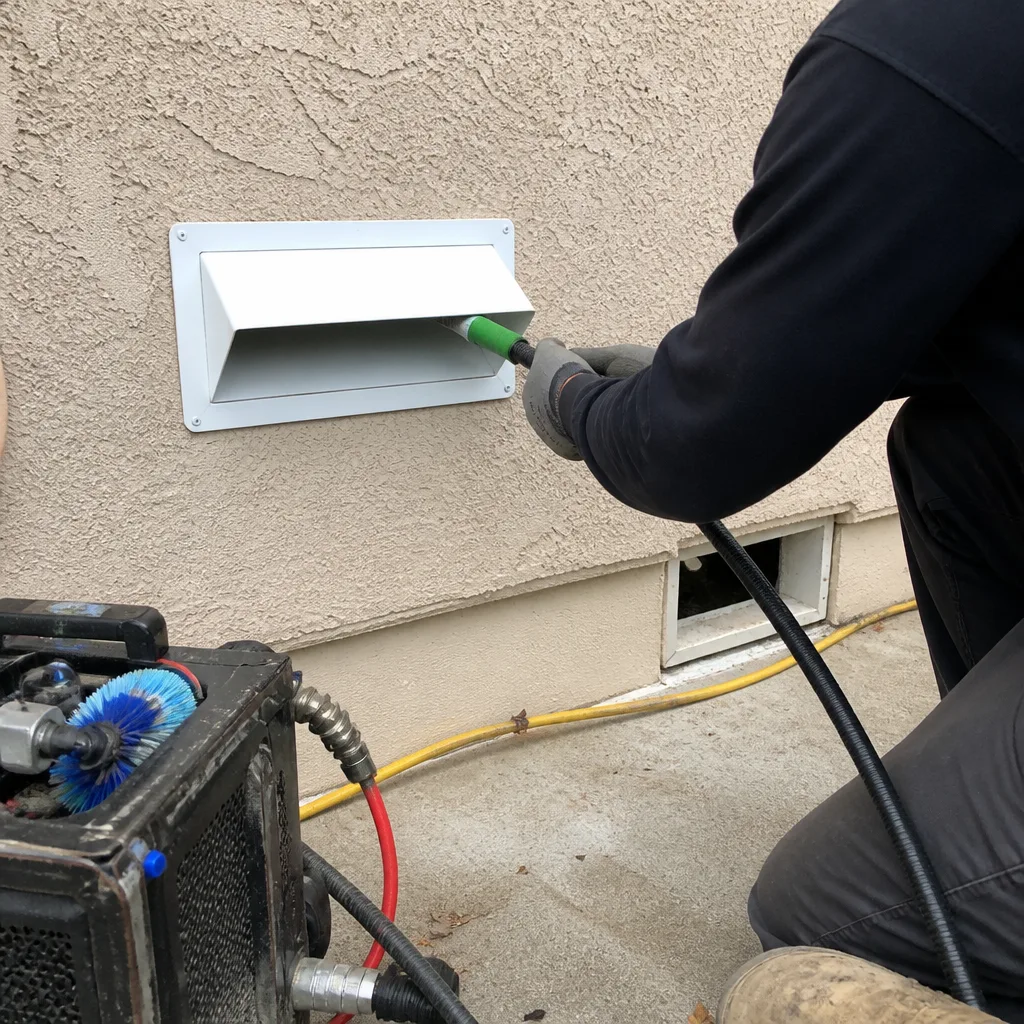 After
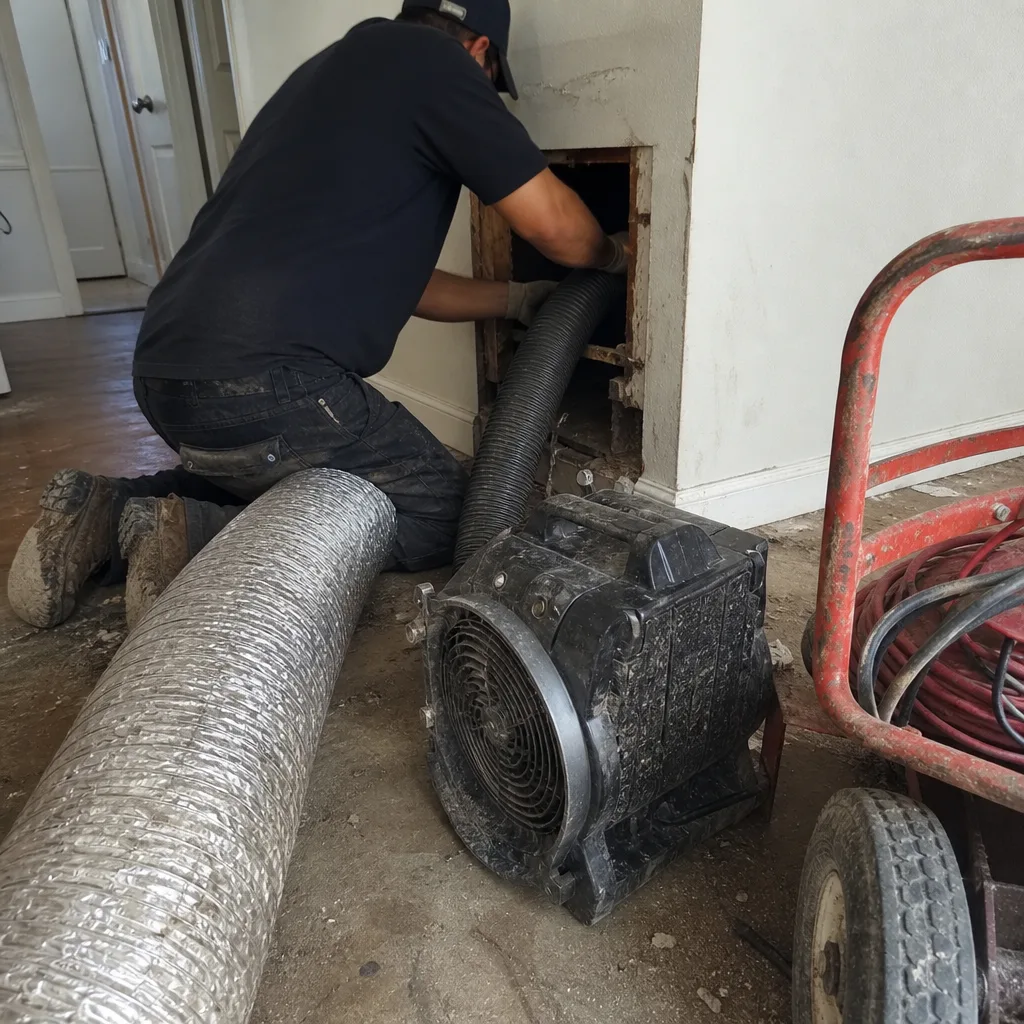 Before
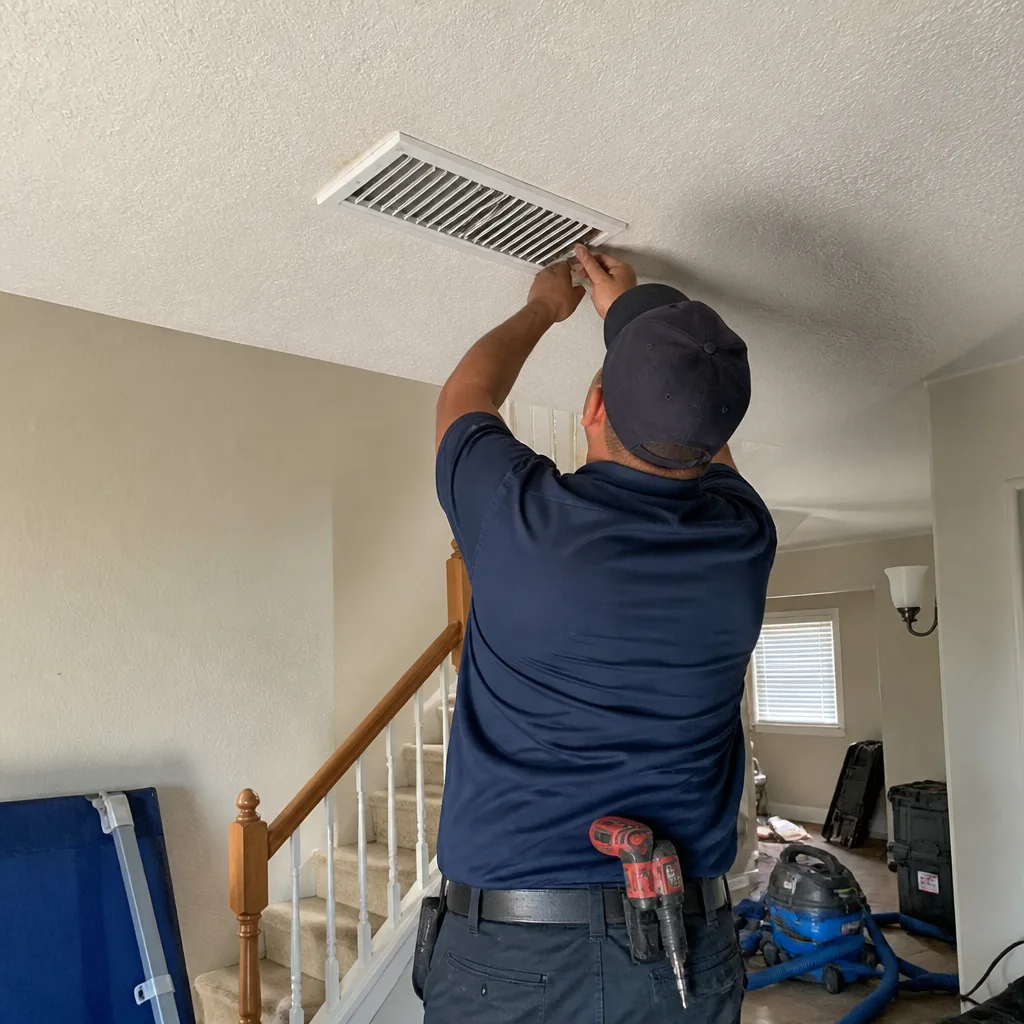 After
 Before
 After
When to Call a Professional
Call a professional duct cleaner in Oceanside if you’ve noticed dust accumulating on surfaces within days of cleaning, if certain rooms never seem to reach the right temperature, if your energy bills have climbed without explanation, or if you’ve recently purchased a home and have no record of the ducts ever being cleaned. Musty odor from the vents when the system cycles on is another clear signal. And if your dryer takes more than one full cycle to dry towels, the vent is restricted and that’s a fire hazard, not an inconvenience. Duct Cleaning Oceanside offers free estimates throughout Oceanside and the surrounding coastal communities. Call (855) 382-4811 to schedule an inspection.
Frequently Asked Questions
Whole-home air duct cleaning in Oceanside typically runs between $450 and $950, depending on the size of the system, the number of access points required, and how long the ducts have gone uncleaned. Homes with extensive flex duct runs or slab-embedded ducts may cost more due to access limitations. Be wary of quotes under $200; at that price, the company cannot be running proper negative-air equipment or contact-cleaning tools. Call (855) 382-4811 for a free estimate on your specific system.
Look for visible dust buildup on register grilles, dark streaks around the edges of vent covers, dust appearing on furniture within days of cleaning the house, weak or inconsistent airflow from room to room, and a musty or stale odor when the system starts. If you’ve recently completed construction or renovation, or if you moved into a home with no cleaning history, an inspection is the fastest way to know for certain.
Duct cleaning removes accumulated particulate from the system, which can reduce the volume of allergens circulating through the home. That said, duct cleaning is not a medical treatment and should not be positioned as one. In our experience, the most significant improvements come when cleaning is paired with better filtration, such as a Honeywell or Aprilaire media filter. A dirty system pushing air through a cheap fiberglass filter will not improve anything, no matter how well it’s cleaned.
Cheap quotes typically reflect portable equipment: a small vacuum and a basic brush, with no negative-air containment. The job takes under an hour, and the interior of the duct runs is never actually touched. In Oceanside’s humidity, those compacted deposits stay in place. The homeowner pays for air movement, not cleaning. That’s the bait-and-switch that gives the whole industry a bad reputation. A legitimate cleaning takes 3 to 6 hours with contractor-grade equipment, and the price reflects that.
Once a year for most coastal households, and every 18 to 24 months for inland homes with short, straight vent runs. Oceanside’s marine layer adds moisture to lint, making it pack tighter and clog faster than in dry inland climates. If drying times are getting longer, don’t wait for the calendar. Call (855) 382-4811.
Duct cleaning removes debris from the interior surfaces of the duct system. Duct repair fixes what’s broken: disconnected joints, collapsed flex runs, kinked sections, and damaged insulation. The two often go together in older Oceanside homes. A good cleaning reveals repair issues, and a company that can do both in-house saves you from hiring two contractors for the same problem. We perform both services.
The Bottom Line
Oceanside homes face a specific combination of coastal humidity, varied housing stock, and environmental factors like Camp Pendleton dust and wildfire smoke that makes generic duct cleaning advice inadequate. The right approach starts with an inspection, uses contact-cleaning methods like Rotobrush to physically remove compacted debris, maintains negative-air containment with equipment like Nikro systems, and addresses repairs rather than cleaning around them. When the job is done, you should be able to see the difference inside the ducts, not just at the registers. For a straight answer on what your system actually needs, call Duct Cleaning Oceanside at (855) 382-4811.
Written by the team at Duct Cleaning Oceanside, serving Oceanside since 2011.