
Last updated November 2, 2026
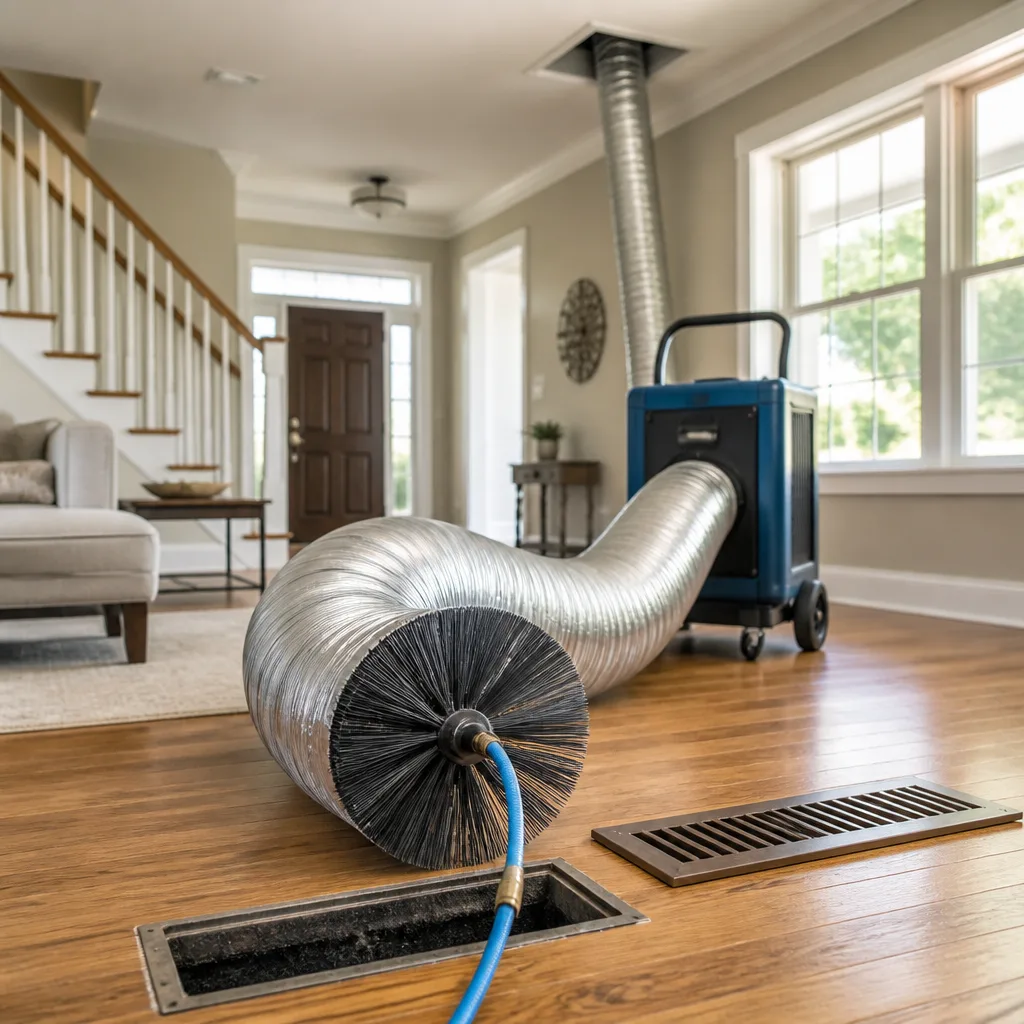 Whole-home duct cleaning
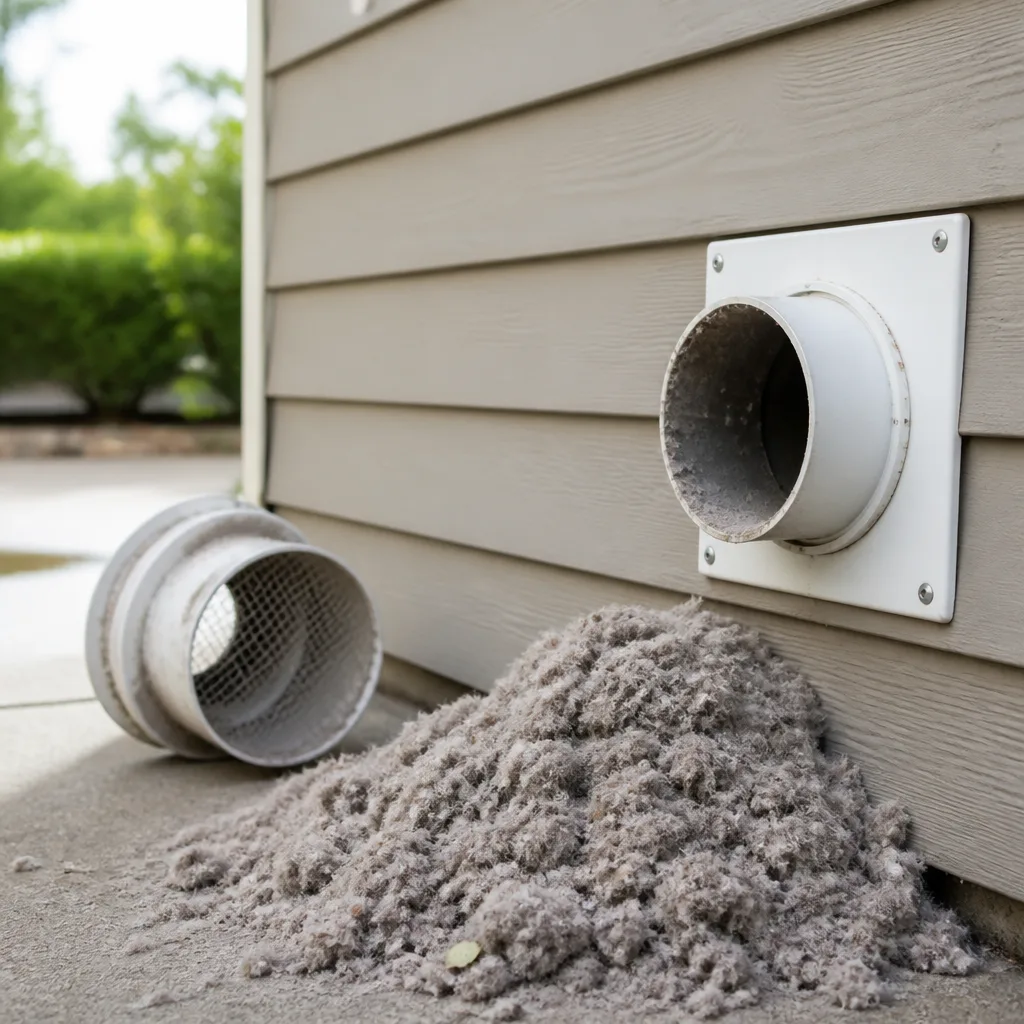 Dryer vent cleaning
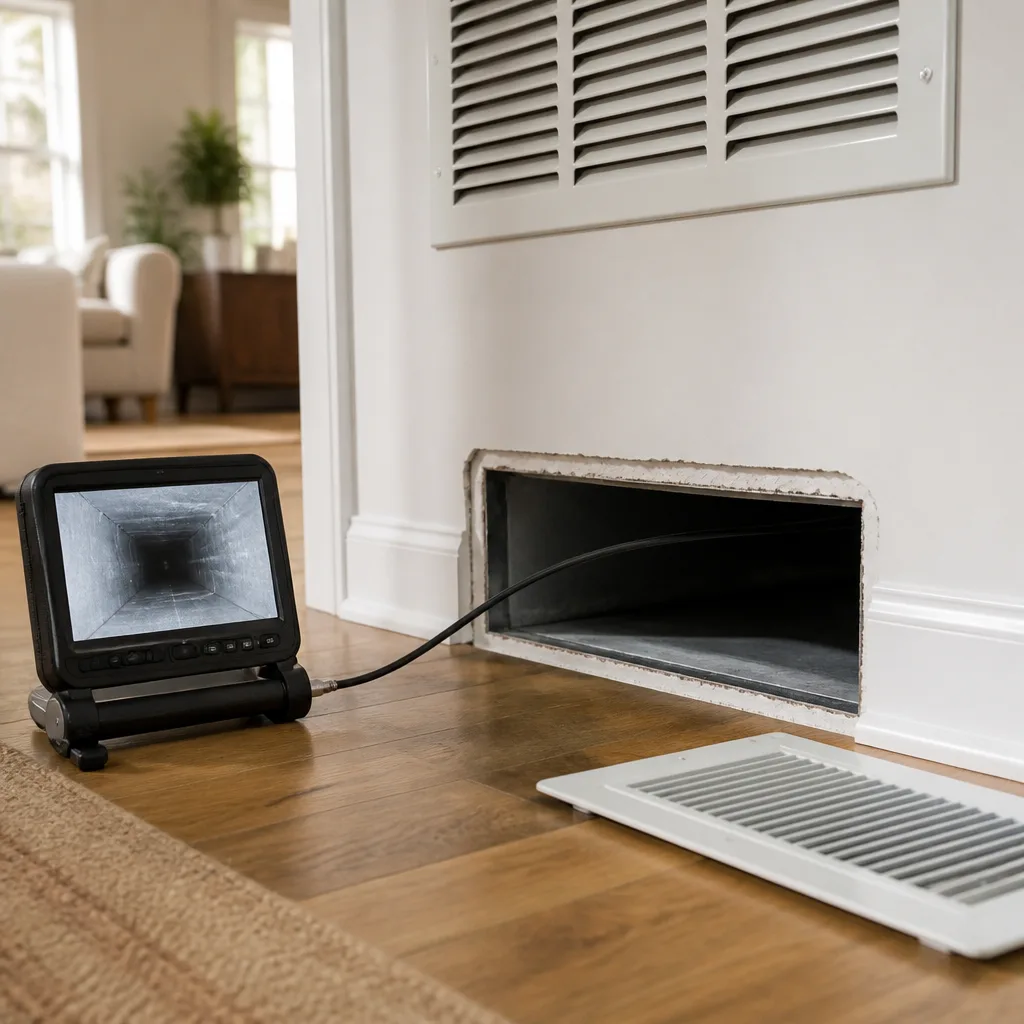 Camera inspection
 Sanitizing & deodorizing
Whole-system duct and dryer vent check with before-and-after photos - you see exactly what came out of your vents
That "$99 whole-house special" is a bait ad - the real number appears once they are in your hallway, or the "clean" is a shop-vac at the register. We photograph the inside of your ducts before and after instead.
Air Duct Cleaning Maintenance Checklist for Oceanside Homeowners
A checklist that says “change your filter every 90 days” ignores the fact that a single Santa Ana wind event can load a filter in 72 hours. That’s the reality of living in Oceanside, where coastal humidity, wildfire smoke, and offshore winds create a ductwork environment unlike anything inland. This guide gives you a season-by-season inspection routine built for this city’s actual conditions, plus the specific things to look for before you pick up the phone to schedule Air Duct Cleaning services. By the end, you’ll know what you can check yourself, what needs contractor-grade equipment, and when a filter change alone won’t fix what’s happening inside your ducts.
Styles & brands we work with
- Whole-home duct cleaning
- Dryer vent cleaning
- Camera inspection
- Sanitizing & deodorizing
Quick Answer
An air duct maintenance checklist for Oceanside homeowners should follow a seasonal inspection rhythm: check filters monthly during May through October (June Gloom humidity and wildfire smoke load them fast), inspect registers and returns visually every 60 days, schedule professional air duct cleaning in Oceanside every 3 to 5 years, and add an immediate inspection after any major wildfire event or home renovation. Focus on airflow changes, visible dust accumulation at registers, and musty odors when the system runs.
Table of Contents
- Filter Replacement: Why Oceanside Breaks the 90-Day Rule
- Seasonal Maintenance Checklists for Oceanside’s Climate
- Visual and Sensory Checks at Registers and Returns
- Filter Selection for Coastal Air: Salt, Sand, and Smoke
- Documenting Duct Condition: Phone Photos as a Baseline
- Duct Integrity Checks: What to Look for at Accessible Joints
- What Professional-Grade Cleaning Actually Removes
- Common Mistakes to Avoid
- When to Call a Professional
- Frequently Asked Questions
- The Bottom Line
Filter Replacement: Why Oceanside Breaks the 90-Day Rule
The standard advice to swap your HVAC filter every 90 days wasn’t written for coastal North County. Between May and September, Oceanside’s marine layer pushes relative humidity above 80% on many mornings, which makes dust particles heavier and stickier. Filters clog faster in humid air because particulates bind together instead of passing through. Then comes August through October, when Santa Ana winds reverse the flow and carry fine desert dust, agricultural particulate from inland valleys, and sometimes wildfire ash straight across the coastal mesas.
We’ve pulled filters in Oceanside homes after a single Santa Ana event that looked like they’d been in place for six months. The 90-day rule fails here because it assumes a stable particulate load. Here’s what actually works:
- May through October: Check filters every 30 days. Replace when visible dust accumulation covers more than 50% of the filter surface area, regardless of calendar time.
- November through April: Check every 60 days. Coastal winter air is cleaner, but holiday cooking, closed windows, and heating system use introduce their own particulate load.
- After any wildfire event within 50 miles: Replace the filter immediately, even if it looks clean. Smoke particles are sub-micron and often invisible, but they coat filter media and destroy its effectiveness.
- During home renovation: Check weekly. Drywall dust, sawdust, and construction debris will overwhelm any filter in days, not weeks. Run the fan constantly during active work and seal off return vents in the work area if possible.
The filter is your first line of defense, not your last. If you’re finding filters loaded beyond 50% every month during summer, that’s not a filter problem. It’s a signal that your ducts are carrying more particulate than the system was designed for, and a professional assessment is warranted – see our guide to Air Duct Cleaning Troubleshooting: Common Problems and How to Fix Them.
Seasonal Maintenance Checklists for Oceanside’s Climate
Oceanside doesn’t have four seasons. It has marine layer season, Santa Ana season, and the transitional months in between. Each one produces a different ductwork challenge. Here’s a month-by-month trigger calendar built around what actually happens in this city’s air.
May through July: June Gloom Humidity Season
The marine layer sits over the coast for weeks at a time, pushing morning humidity past 80% and keeping afternoon temperatures moderate. This is the season when musty odors emerge in ductwork. The cause is simple: condensation forms inside cool ducts when warm, humid air passes through the system, and that moisture binds with dust to create a damp, organic layer on duct walls. It doesn’t dry out because the marine layer returns every night.
- Run your hand along the exterior of visible ductwork in the garage or attic early in the morning. If it feels damp or clammy, you have a condensation issue that needs attention.
- Sniff the air coming from registers during the first 30 seconds of system startup. A musty or earthy smell that fades is trapped moisture in the ducts. A smell that persists means mold or mildew may already be present.
- Check for visible condensation on register grilles. Water beads on metal registers indicate the air inside the ducts is colder than the dew point, which always leads to moisture accumulation inside the system.
- If you see any of these signs, schedule a professional inspection. Humidity-related duct contamination doesn’t resolve itself, and by August it will be baked into a crust that’s harder to remove.
August through October: Santa Ana and Fire Season
Santa Ana winds reverse the normal offshore flow, carrying fine desert particulate, agricultural dust from inland farms, and during fire years, ash and smoke particles into coastal communities. These particles are smaller than typical household dust, which means they penetrate deeper into filters and settle further into ductwork. A single sustained Santa Ana event can deposit more particulate in your ducts than the previous six months combined.
- Replace your filter after every significant Santa Ana event, defined as winds over 25 mph sustained for more than 24 hours.
- Check registers in rooms that face east or northeast. These rooms catch the brunt of wind-driven particulate and often show dust accumulation first.
- If you have a whole-home filtration system like those from Honeywell or Aprilaire, check the pre-filter and media status. These systems do significant work during Santa Ana season, but they need to be maintained to function.
- After wildfire smoke events, even distant ones, consider a professional duct assessment. Smoke particles are acidic and can corrode metal duct surfaces if left in place over the winter.
November through April: Heating and Closed-House Season
Oceanside homes shift to heating mode in the cooler months, which changes the way air moves through the system. Warm air holds more moisture, and the temperature differential between supply and return ducts changes. Homes are also closed up more, reducing natural air exchange and concentrating whatever particulate is already in the system.
- Check for dust accumulation around return grilles. Returns pull air from the room, so dust building up on the grille face means the return path is doing significant work capturing airborne particulate.
- Listen for changes in airflow sound. A system that’s getting louder or producing whistling sounds at registers may indicate restrictions building up inside the ductwork.
- If you use a portable humidifier in bedrooms during winter, check registers in those rooms more frequently. Added humidity plus warm air increases particulate adhesion to duct surfaces.
Visual and Sensory Checks at Registers and Returns
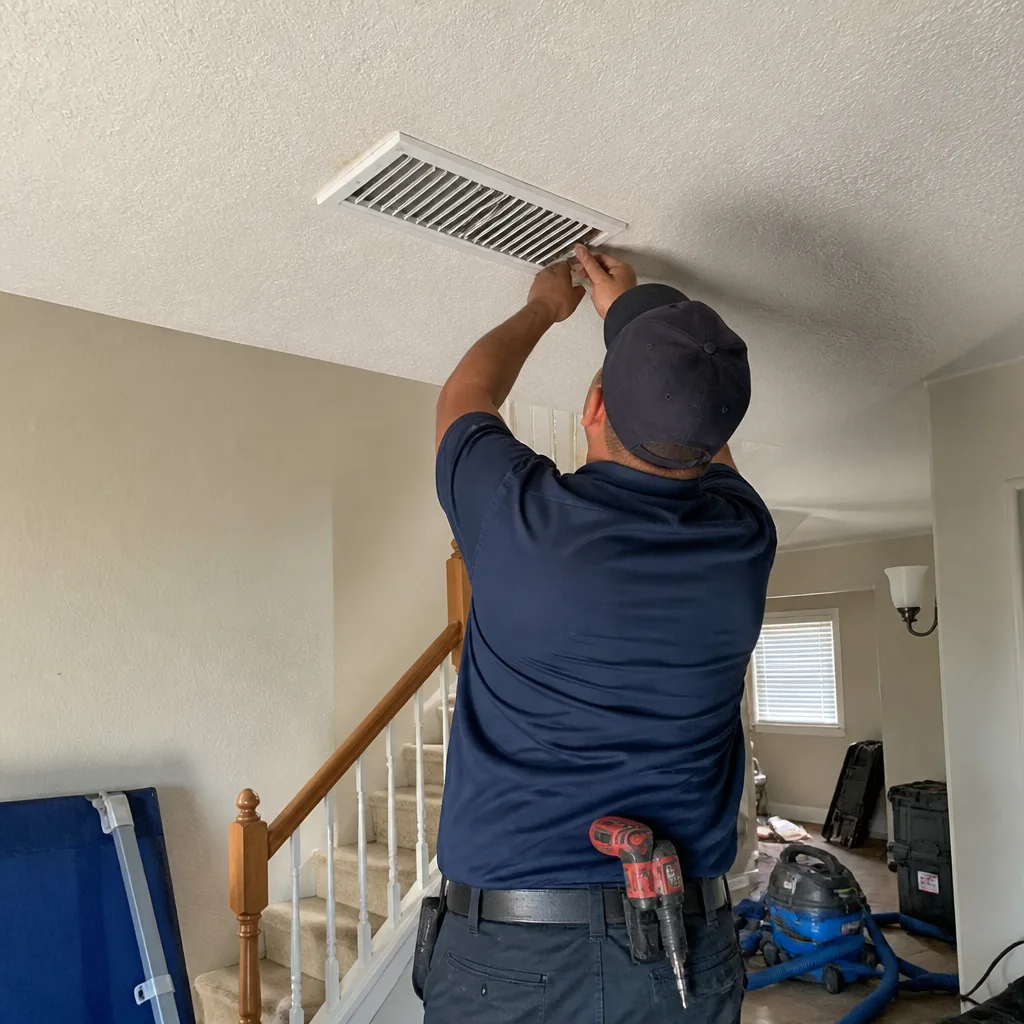
You don’t need tools to perform a meaningful duct inspection. You need a flashlight, your phone camera, and about ten minutes per floor. Here’s what to check at every register and return in your Oceanside home, and what each finding actually means.
Dust streaking on register louvers: Remove the register cover (most pop off with gentle pressure from a flathead screwdriver) and look at the inside face. Dust streaking outward from the louvers means the system is pushing particulate into the room. Dust accumulated on the back side of the register, where air enters the room, means the filter isn’t catching what it should, or the filter is bypassing air around its edges. Both are signs the duct system is moving more particulate than it should.
Dark or grey dust specifically: Dust that appears grey or black, particularly if it’s sticky or greasy rather than fluffy, is a sign of particulate from combustion sources. In Oceanside, this most commonly comes from wildfire smoke, but it can also come from vehicle exhaust if your home is near Highway 78 or the 5. This type of particulate has different chemical properties than household dust and adheres more strongly to duct surfaces.
Visible fiber accumulation on register grilles: If you see fine, hair-like fibers collecting on register faces, especially in rooms where you run a humidifier or where the marine layer is most noticeable, that’s often insulation from the duct system itself. Return ducts in particular can pull loose insulation from unconditioned spaces when seals fail. This is a repair issue, not just a cleaning issue.
Airflow changes you can feel: Walk through each room on the same system setting and hold your hand in front of each register. Rooms that used to get strong airflow and now get weak airflow suggest a restriction somewhere in that branch line. Common causes in Oceanside homes include collapsed flex duct in attics (the plastic liner degrades faster in coastal humidity), disconnected duct joints, or accumulated debris reducing the interior diameter of the duct.
Sound changes: A whistling register usually means the louver is partially closed or the register face is obstructing airflow, but if you remove the register and still hear whistling, that’s a restriction deeper in the duct. A rattling sound that changes with system speed often indicates a loose damper or a section of duct that has come unfastened. Both require professional attention.
Filter Selection for Coastal Air: Salt, Sand, and Smoke
Oceanside’s coastal air creates a filter challenge that inland homeowners don’t face. You’re dealing with three distinct particulate types simultaneously: salt aerosol from the ocean, fine sand and dust from beaches and bluffs, and seasonal smoke particulate from fires. Each requires different filtration characteristics, and the wrong filter choice can actually make things worse.
The MERV tradeoff in coastal conditions: MERV ratings run from 1 to 20, with higher numbers indicating finer filtration. Most residential systems in Oceanside were installed with MERV 7 or MERV 8 filters, which catch larger particulate but allow fine particles through. The temptation is to jump to MERV 11 or MERV 13 for better filtration, but that creates a new problem: airflow restriction. Higher MERV filters are denser, and in a system that wasn’t designed for them, that density reduces airflow, which increases energy consumption, reduces heating and cooling capacity, and can cause the evaporator coil to freeze in summer.
What we recommend for most Oceanside homes: MERV 8 to MERV 11 is the practical sweet spot. MERV 8 handles beach sand, pollen, and typical household dust. MERV 11 adds significant capture of finer particulate including some smoke particles. If you have a whole-home filtration system from Honeywell or Aprilaire, those systems typically use MERV 11 to MERV 16 media, and they’re engineered to handle the associated airflow restriction. In a standard 1-inch filter slot, MERV 13 is usually too restrictive unless the system was specifically designed for it.
Salt aerosol considerations: Salt is hygroscopic, meaning it attracts and holds moisture. In coastal homes, salt particulate that passes through a filter and settles on a coil or in a duct holds dampness against metal surfaces, accelerating corrosion. The practical response is more frequent filter changes, not necessarily a higher MERV rating. Salt particles are large enough for a MERV 8 filter to catch, but only if the filter is changed before it becomes loaded. A saturated filter releases what it’s already captured.
Pleated vs. fiberglass: Skip fiberglass filters entirely. They catch only the largest particles, and in Oceanside’s humid air, they don’t provide meaningful protection for your ducts. A quality pleated filter with a MERV 8 or 11 rating is the minimum for protecting your system. Change frequency matters more than the specific brand.
Documenting Duct Condition: Phone Photos as a Baseline
Most homeowners call a duct cleaning company with no baseline information. They suspect their ducts are dirty, but they can’t show anyone what they looked like a year ago or six months ago. That puts you at a disadvantage when you’re trying to determine whether a problem is new, worsening, or stable. Your phone camera solves this.
What to photograph: Take photos of the inside of each register opening, pointing the camera into the duct at a shallow angle so the flash illuminates the duct walls. Do this with the system off. Photograph the return grille from both sides. Photograph any visible ductwork in the garage, attic, or crawl space. Take the photos from a consistent distance and angle so you can compare them over time.
When to photograph: Do a full baseline photo set now. Then repeat it every six months. If you’re in the middle of Santa Ana season or dealing with wildfire smoke, photograph monthly. The key is consistency. A photo from March that shows moderate dust accumulation and a photo from September that shows significant accumulation tells a story that a single photo can’t.
How to use the photos: When you call a professional for an assessment, show them the baseline photos. This gives them information about how quickly your ducts are accumulating particulate, which helps them determine whether the issue is normal accumulation or a system problem like a disconnected return or a punctured duct pulling dirty air from the attic. It also gives you a reference point if someone tells you your ducts need cleaning but your photos show they looked the same a year ago; for regulatory context, read Air Duct Cleaning Permits, Codes & Inspections in CA: What You Need to Know.
Duct Integrity Checks: What to Look for at Accessible Joints
Duct cleaning removes what’s inside the ducts, but in a meaningful number of Oceanside homes, the dirty ducts are a symptom of a bigger problem: the duct system itself is compromised. Damaged, disconnected, or collapsed ductwork pulls unfiltered air from attics, crawl spaces, and wall cavities, then distributes it through the house. No amount of cleaning fixes that. Here’s what a homeowner can check at accessible joints without special tools.
Where to look: The most accessible ductwork in most Oceanside homes is in the garage, where ducts often run along the ceiling, and in attic access areas if you have a pull-down ladder. Crawl spaces under raised-foundation homes also offer access, though you’ll need a headlamp and possibly some courage. Focus on joints where two duct sections connect, where ducts connect to the main trunk line, and where ducts attach to register boots.
What breach indicators look like: At any accessible joint, look for gaps between the duct and the fitting. A properly sealed joint shows tape or mastic compound around the full circumference. Duct tape (the grey fabric tape, despite its name) fails in coastal humidity and peels away within a few years. Look for silver foil tape that’s loose, peeling, or missing entirely. That’s a leak point.
Dust patterns that signal leaks: The most reliable breach indicator is dust accumulation that doesn’t match the surrounding area. If you see a patch of insulation or framing near a duct joint that’s noticeably dustier than nearby surfaces, that joint is leaking. The system is blowing conditioned air, and the particulate in that air, into the attic or garage instead of the living space. In returns, a leak pulls dirty, unfiltered air into the system, which then distributes it throughout the house. Either way, the fix is the same: proper sealing with mastic and foil tape, which is part of what a professional air duct repair in Oceanside addresses.
Flex duct in coastal conditions: Most Oceanside homes built in the last 30 years use flexible duct with a plastic liner and wire spiral. That plastic liner becomes brittle in coastal conditions, especially in attics where temperatures swing from the 50s on winter nights to well over 120 degrees on summer afternoons. Brittle liner cracks. The wire spiral can then puncture the liner from the inside, creating small tears that leak air. If you can see flex duct, gently squeeze it. A duct that feels stiff or makes crackling sounds has degraded liner and is near the end of its service life. If it feels soft and pliable, it’s likely still sound.
What Professional-Grade Cleaning Actually Removes
There’s a meaningful difference between what a homeowner can maintain and what professional equipment removes. Understanding this difference helps you make a clear decision about when to handle something yourself and when to call a contractor. It also helps you evaluate whether the company you’re considering has the equipment to actually do the job.
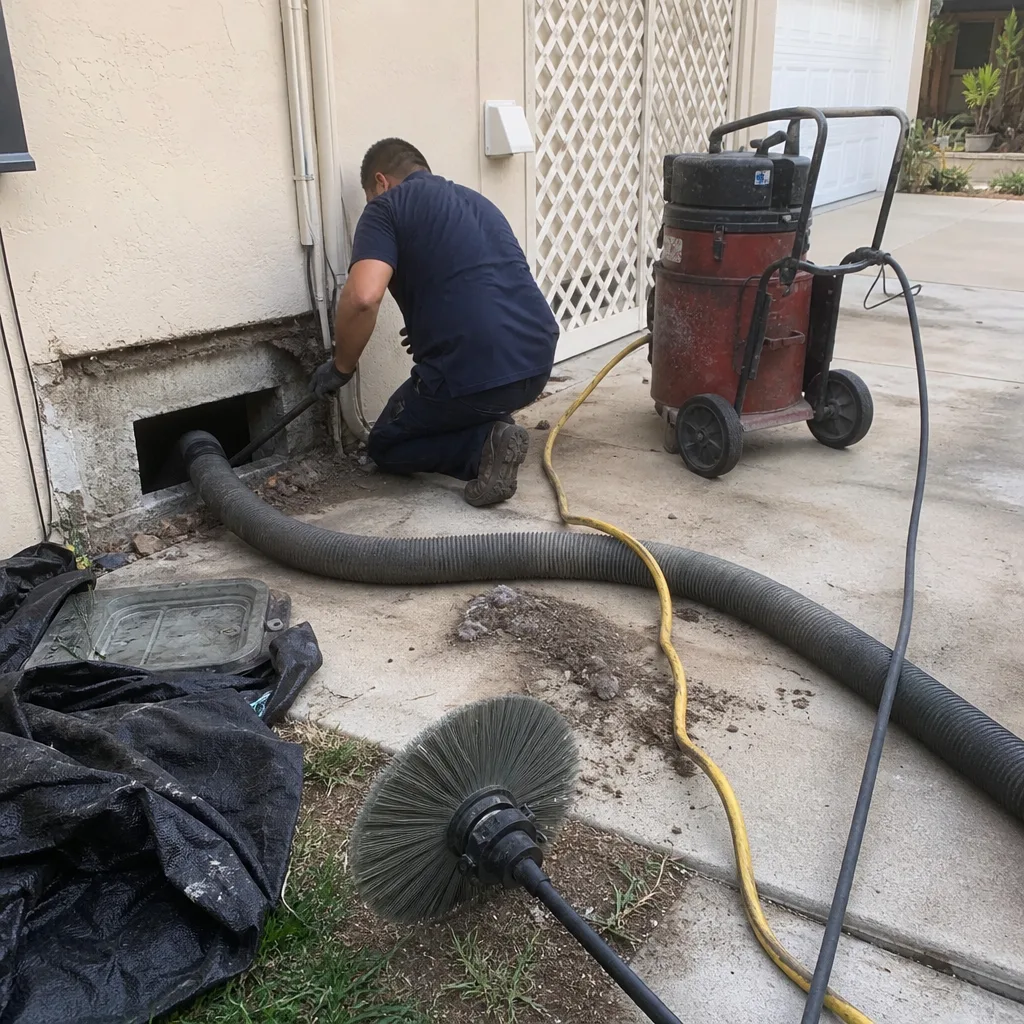
A portable shop vac with a brush attachment reaches about 18 inches into a duct from the register opening. It removes loose dust that’s within reach. It does not remove the compacted layer that builds on duct walls over years, especially in Oceanside’s humid conditions where dust binds into a crust. It also doesn’t contain what it dislodges. Much of the particulate knocked loose during the process simply recirculates into the room, settles back into the ducts, and resets the clock on your next cleaning.
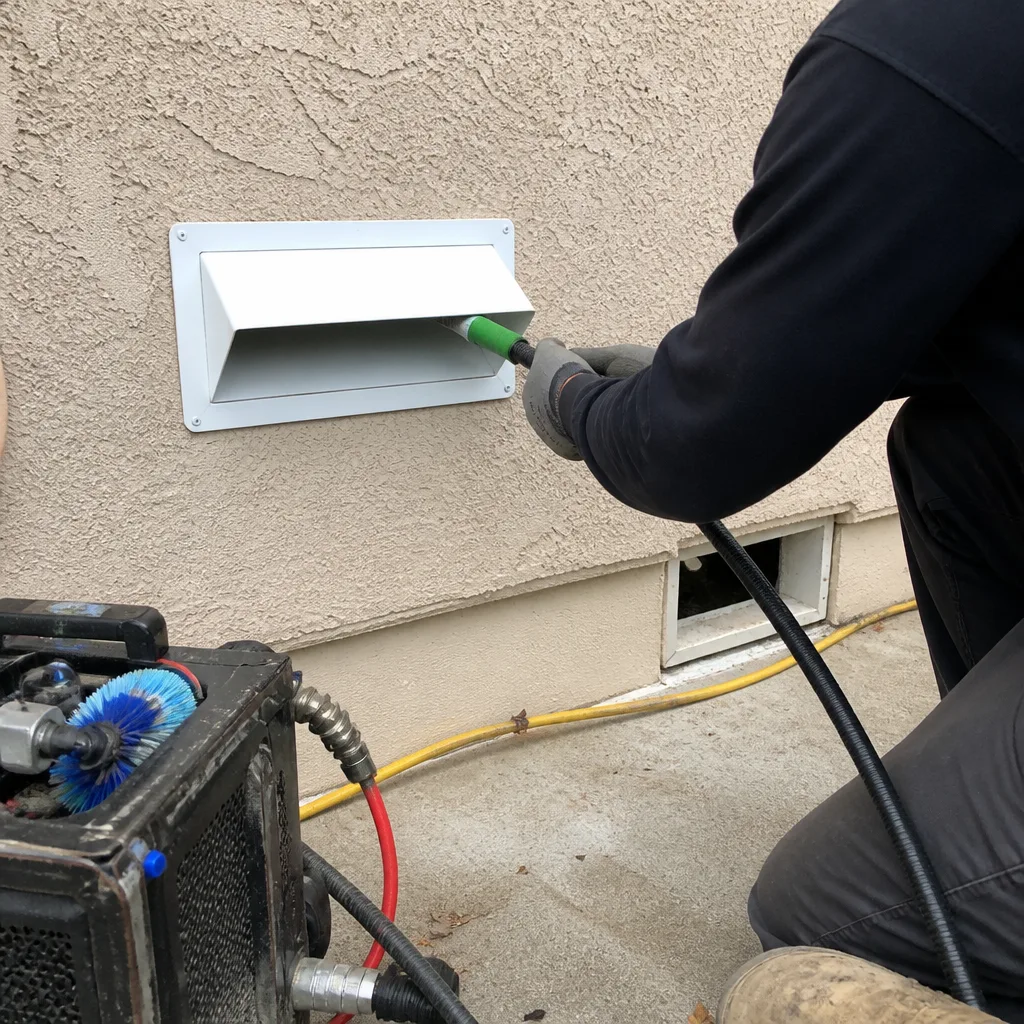
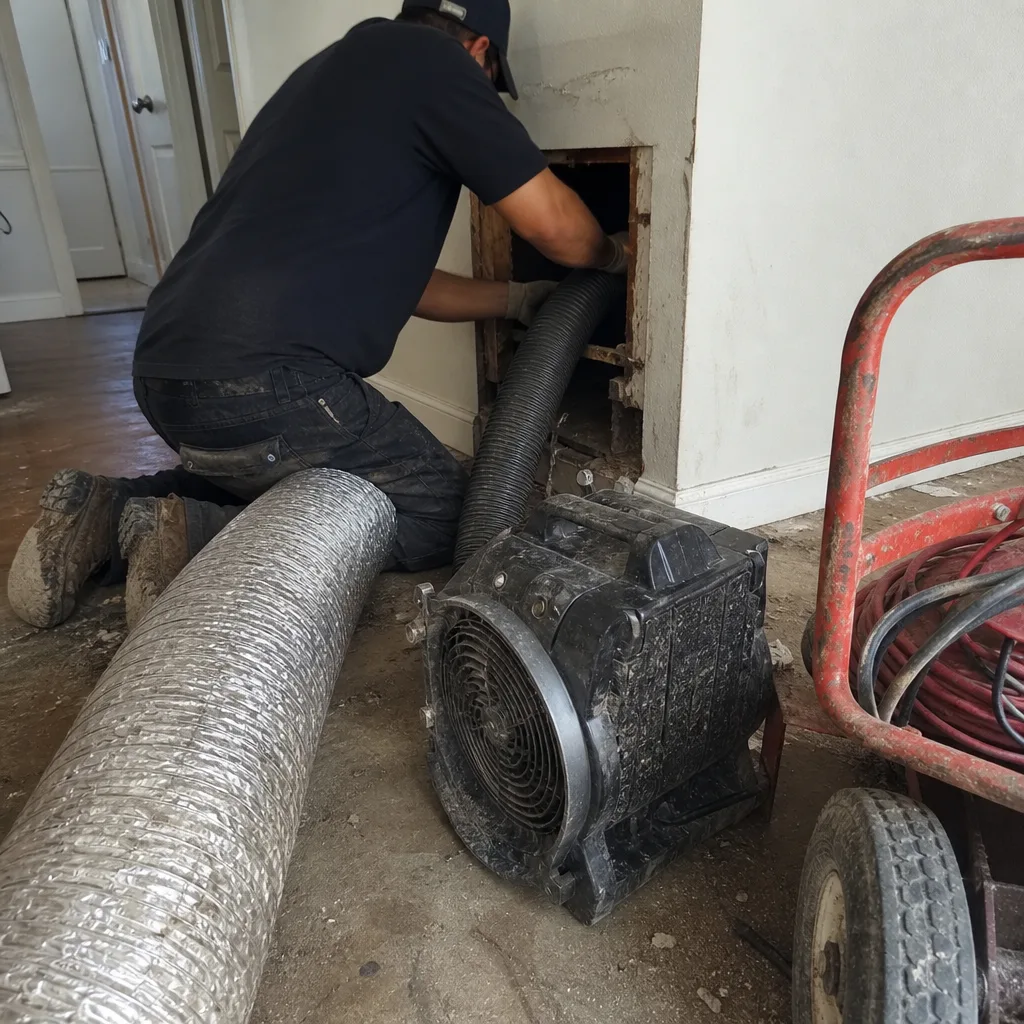
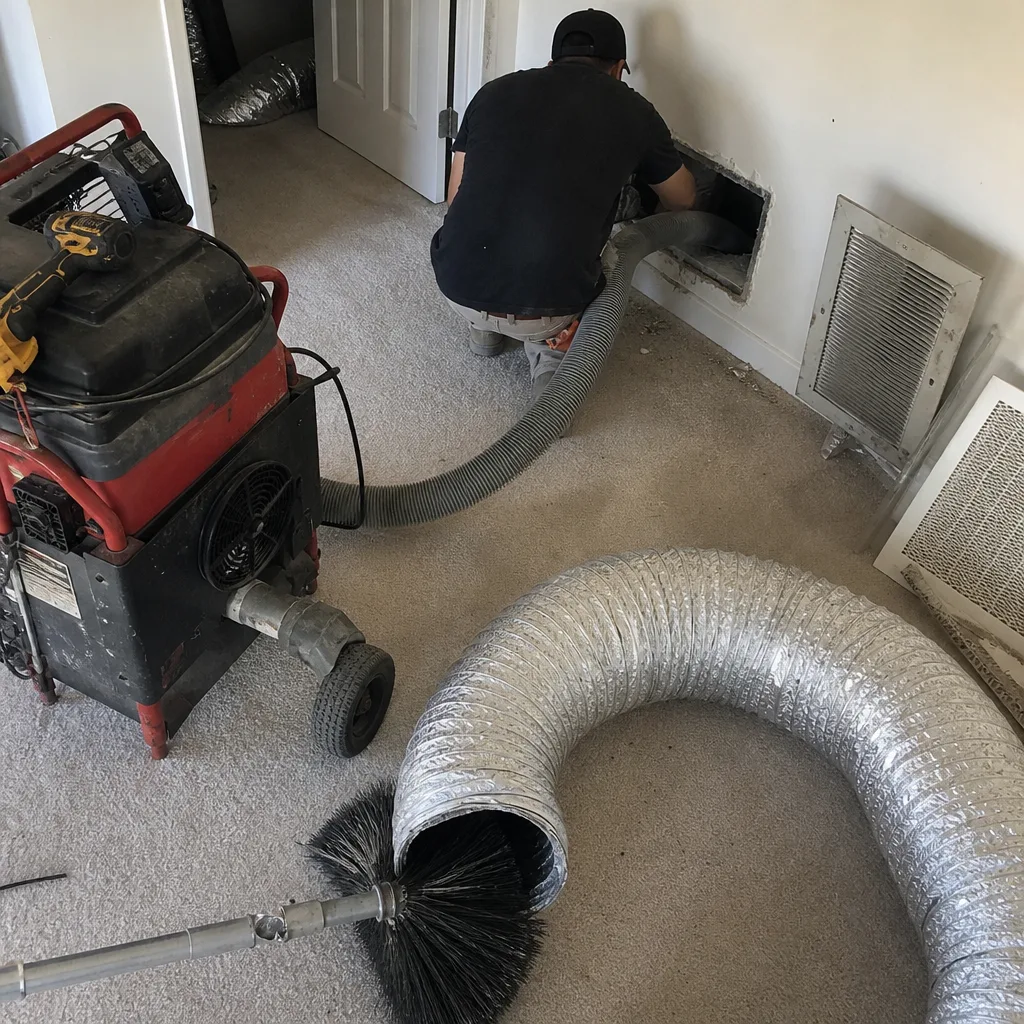
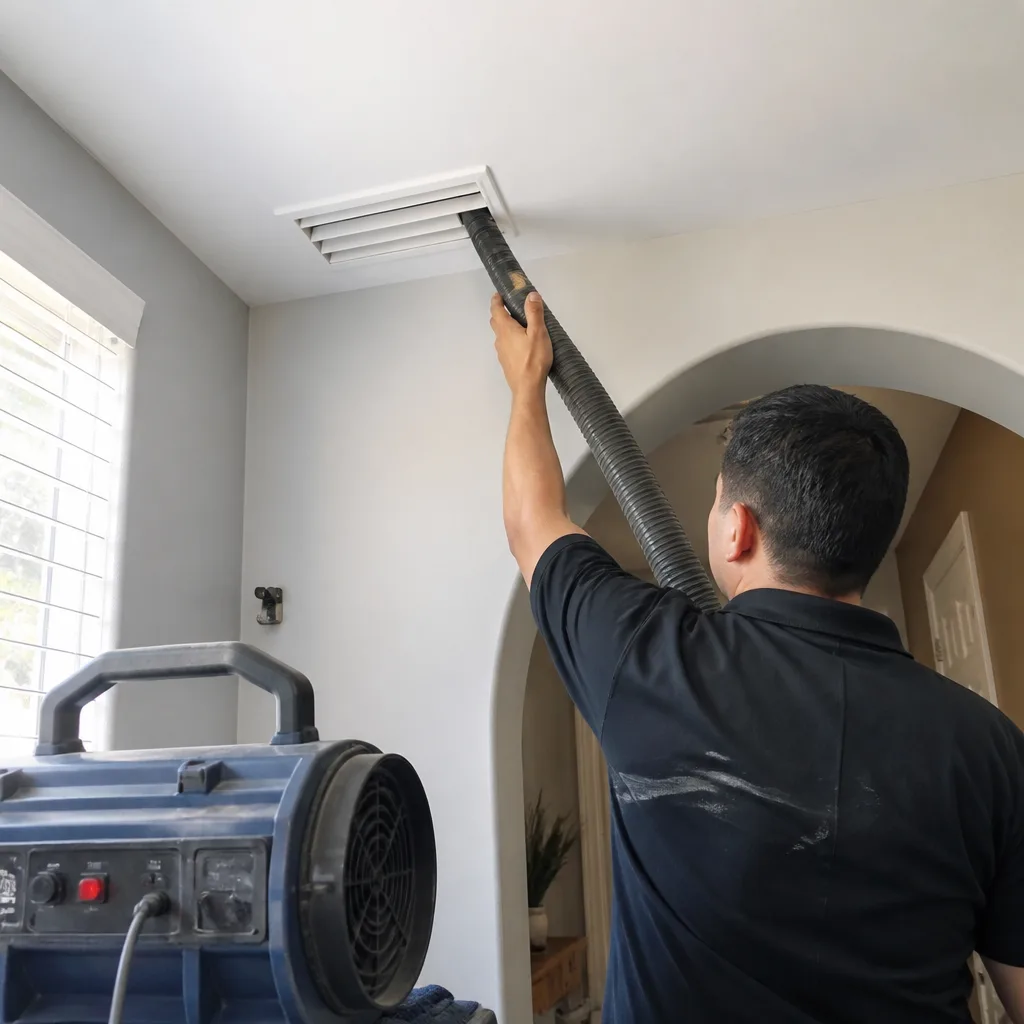
Professional systems like the Rotobrush contact-cleaning equipment work differently. A rotating brush head makes physical contact with the duct walls, scrubbing away the adhered layer rather than just blowing air past it. The brush is driven through the duct from the register opening, and a vacuum system simultaneously captures what’s dislodged. The result is removal of material that a brush-and-shop-vac approach leaves behind. When paired with a Nikro HEPA-rated negative-air machine, the system maintains negative pressure inside the ducts during cleaning. That means particulates loosened during the process are pulled out of the system and captured in HEPA filtration, not blown into your living space. This containment matters, particularly in homes where you’re cleaning because of allergy issues or wildfire smoke residue rather than routine maintenance.
Some situations go beyond routine cleaning, which is where remediation-grade equipment like Abatement Technologies systems come in. Post-construction cleanup, after-fire smoke remediation, and severe mold situations require equipment that handles higher contaminant loads safely. Not every project needs that level of capability, but when the situation calls for it, a company with that equipment can handle it without referring you elsewhere.
Common Mistakes to Avoid
- Trusting the 90-day filter rule: In Oceanside, summer humidity and Santa Ana winds change filter-loading dynamics significantly. Check monthly from May through October and replace based on visual inspection, not calendar time.
- Sealing registers in unused rooms to save energy: Your system was designed and balanced for a specific airflow pattern. Closing registers increases static pressure in the system, which can push more air through existing duct leaks and actually increase energy use while reducing comfort.
- Using high-MERV filters in systems not designed for them: A MERV 13 filter in a standard 1-inch slot can reduce airflow enough to freeze coils in summer and strain the blower motor year-round. Unless your system was designed for high-filtration media, MERV 8 to 11 is the right range.
- Ignoring duct leaks because “the system works fine”: A disconnected return duct in the attic can pull insulation fibers, rodent droppings, and 130-degree attic air into your home for years without any obvious symptom beyond dusty rooms and high cooling bills.
- Running the fan continuously during high-humidity periods to “keep air moving”: During June Gloom, continuous fan operation pulls humid air through the ducts constantly, which increases condensation and can worsen moisture problems. Use the fan in auto mode during humid periods.
- Assuming visible dust on registers means ducts are the only problem: If your ducts are dirty enough that dust is accumulating on register faces, check the filter, check for duct leaks, and check the return path. Ducts don’t create dust. They distribute what enters them.
- Waiting for a problem to appear before documenting duct condition: Taking baseline photos now gives you a reference point for comparison later. Without a baseline, you can’t tell whether whatever you find is new, worsening, or has been there for years.
When to Call a Professional
Some findings from your inspection routine are signals to call a professional rather than continue monitoring. Visible mold growth on register faces or duct interiors is one. Persistent musty odors that don’t resolve after the marine layer season ends is another. If you find disconnected ductwork, gaps at joints, or collapsed flex duct in accessible areas, that’s a repair issue that requires attention. After a major wildfire event, even a distant one, a professional assessment can tell you whether smoke particulate has penetrated the system beyond what a filter change addresses. If you own a home that’s never had a duct cleaning and you’ve lived in it for more than five years, you’re past due for at least an assessment. For Oceanside homeowners who want a professional evaluation of their duct condition, Duct Cleaning Oceanside offers free estimates. Call (855) 382-4811 to schedule an inspection.
Frequently Asked Questions
Every 3 to 5 years is the appropriate interval for most Oceanside homes, but the real answer depends on what your inspection routine shows. Homes near the coast with visible dust accumulation at registers, homes that experienced wildfire smoke events, and homes with pets that shed heavily may need cleaning more frequently. The NADCA standard is to clean when visible accumulation is present, not on a fixed schedule. If your seasonal checks show dust returning quickly after cleaning, that’s a signal to look for duct leaks or filter issues rather than simply scheduling more frequent cleanings.
The difference usually comes down to equipment and scope. A $99 or $149 duct cleaning uses portable equipment that reaches a few feet into each register and doesn’t contain what it dislodges. Contractor-grade systems like Rotobrush contact-cleaning equipment and Nikro HEPA negative-air machines cost tens of thousands of dollars and require trained operators. The result genuinely is different: physical scrubbing of duct walls versus blowing air through a partially-accessible system. No matter who you hire, ask what equipment they use and whether they maintain negative pressure during cleaning. If they can’t answer that question specifically, keep looking. Call (855) 382-4811 to discuss what’s included in a full-system cleaning.
A reputable company in Oceanside should provide before-and-after photos of the inside of your ducts, taken with a camera system that reaches into the ductwork. Ask for this before you book. If they don’t have inspection camera capability, that’s a red flag. You should also notice reduced dust accumulation at registers in the weeks following the cleaning, and any musty odors should resolve. If a company can’t show you what they removed or what the ducts look like afterward, you’re taking their word without evidence. Access to dryer vent cleaning in Oceanside standards is similar: documentation matters.
Duct cleaning removes accumulated particulate that the system distributes through your home, including pollen, dust mite debris, and mold spores that have settled in the ductwork. In Oceanside’s coastal environment, where outdoor allergen loads are high year-round and windows are often open to catch the ocean breeze, reducing the indoor reservoir makes a difference. That said, cleaning alone doesn’t solve allergy issues. The full picture includes filtration quality, duct integrity (leaks pull attic or crawl space air into the system), and humidity control. A proper assessment addresses all three, not just the cleaning.
You can vacuum what you can reach from register openings and keep filters changed, but you cannot clean the full duct system without professional equipment. Duct runs in most Oceanside homes stretch 20 to 40 feet from the register to the main trunk, with bends that block access. Portable equipment doesn’t reach the full run, doesn’t scrub adhered material, and doesn’t contain what it dislodges. The danger with amateur cleaning is partial dislodgement, which knocks material loose to redistribute through the system. If you’re considering equipment rental, compare the cost and the genuine risk of DIY work against a professional cleaning that includes containment and before-and-after documentation.
Duct cleaning removes accumulated particulate from the inside of the ductwork. Air duct repair in Oceanside addresses physical damage: disconnected joints, collapsed flex duct, punctured liner, leaking connections, and degraded seals. The two services are related because cleaning often reveals damage that was hidden under accumulated dust. A company that offers both can handle what they find during cleaning without referring you to another contractor. That’s a meaningful difference when you’re trying to resolve an air quality issue completely rather than partially.
The Bottom Line
An air duct maintenance checklist for Oceanside homeowners has to account for what actually happens in this city’s air. June Gloom humidity binds dust to duct walls. Santa Ana winds push fine particulate through filters faster than inland schedules anticipate. Coastal salt and sand create unique filter demands. The checklist that works here is seasonal, not calendar-based: check filters monthly in summer, inspect registers every 60 days, document baseline condition with photos, and call a professional when visual checks show accumulation, odors persist, or accessible ductwork shows damage. That routine protects your system, your air quality, and your energy bills. When you need a professional assessment, Duct Cleaning Oceanside offers free estimates. Call (855) 382-4811 to schedule yours.
Written by the team at Duct Cleaning Oceanside, serving Oceanside since 2011. Explore more guides & resources.
See the difference
 Before
 After
 Before
 After
 Before
 After