
Last updated November 2, 2026
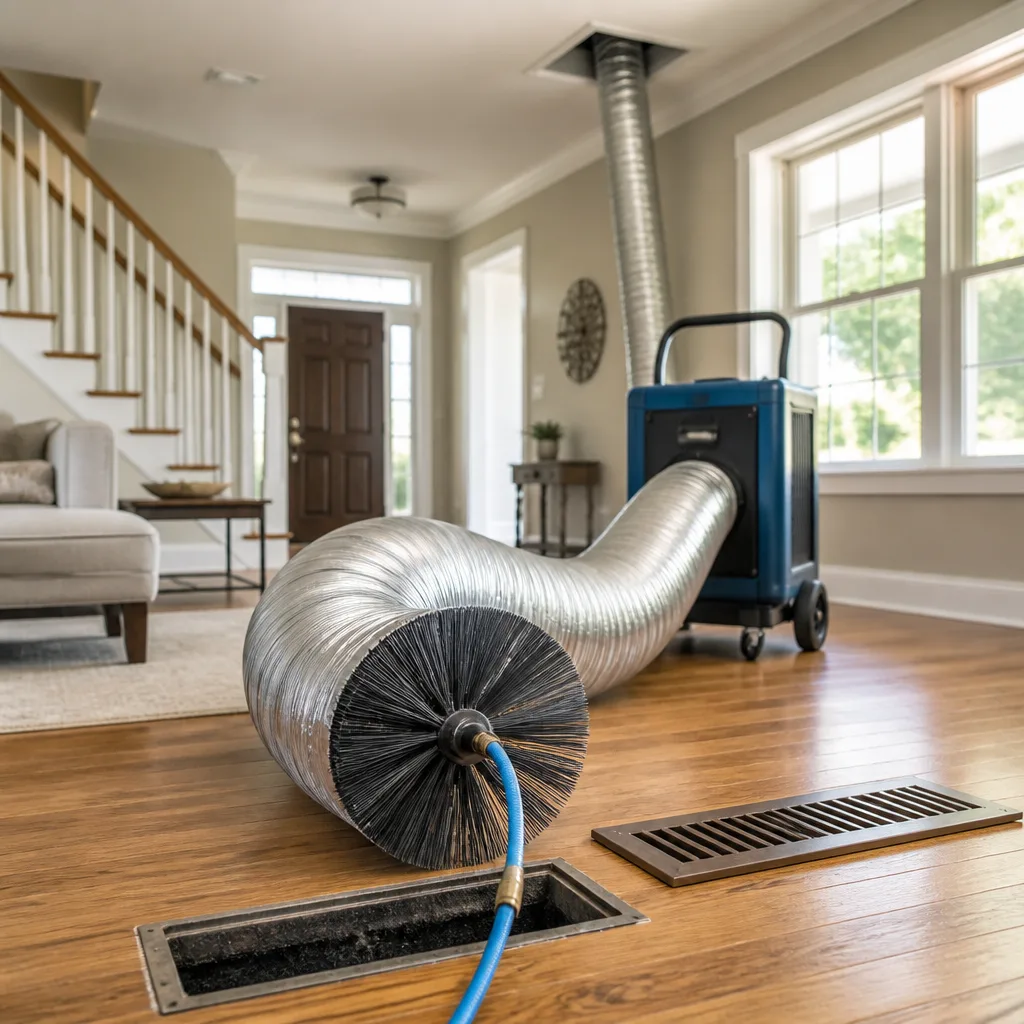 Whole-home duct cleaning
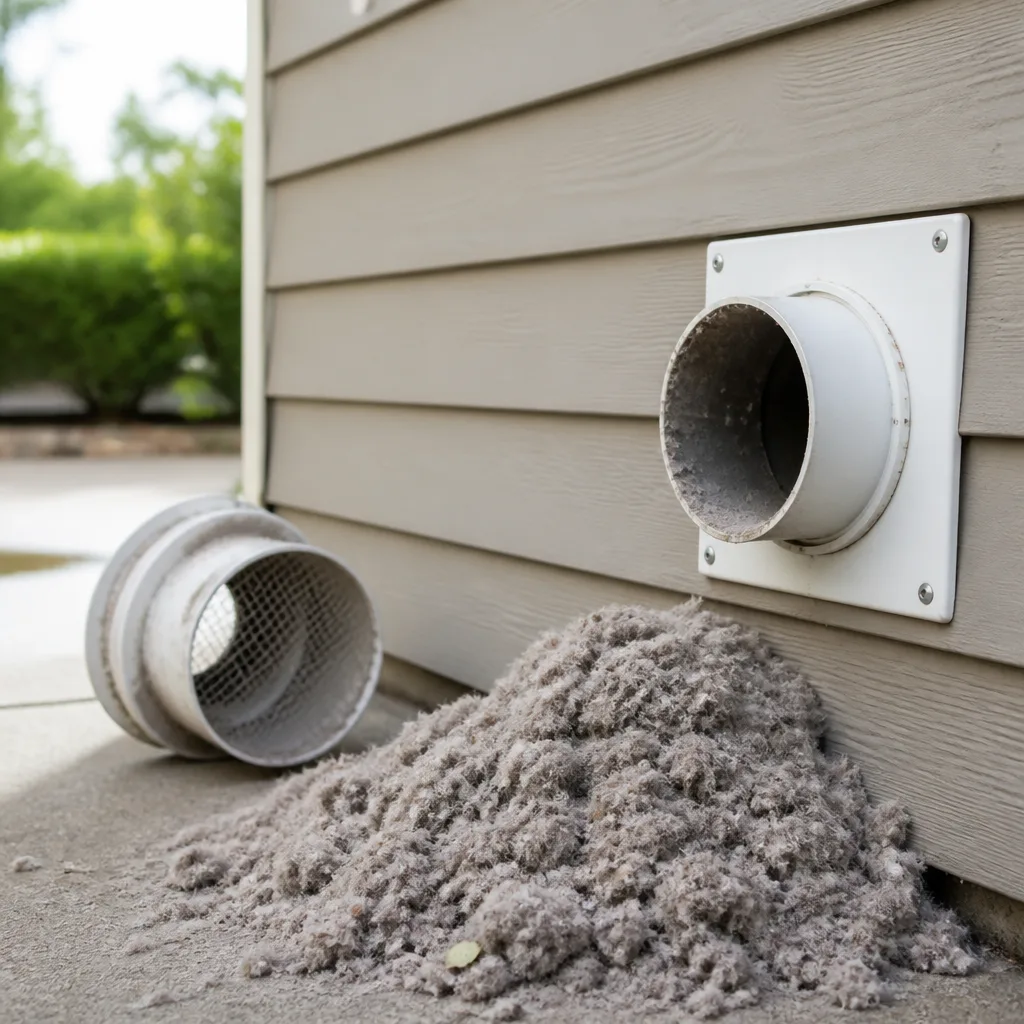 Dryer vent cleaning
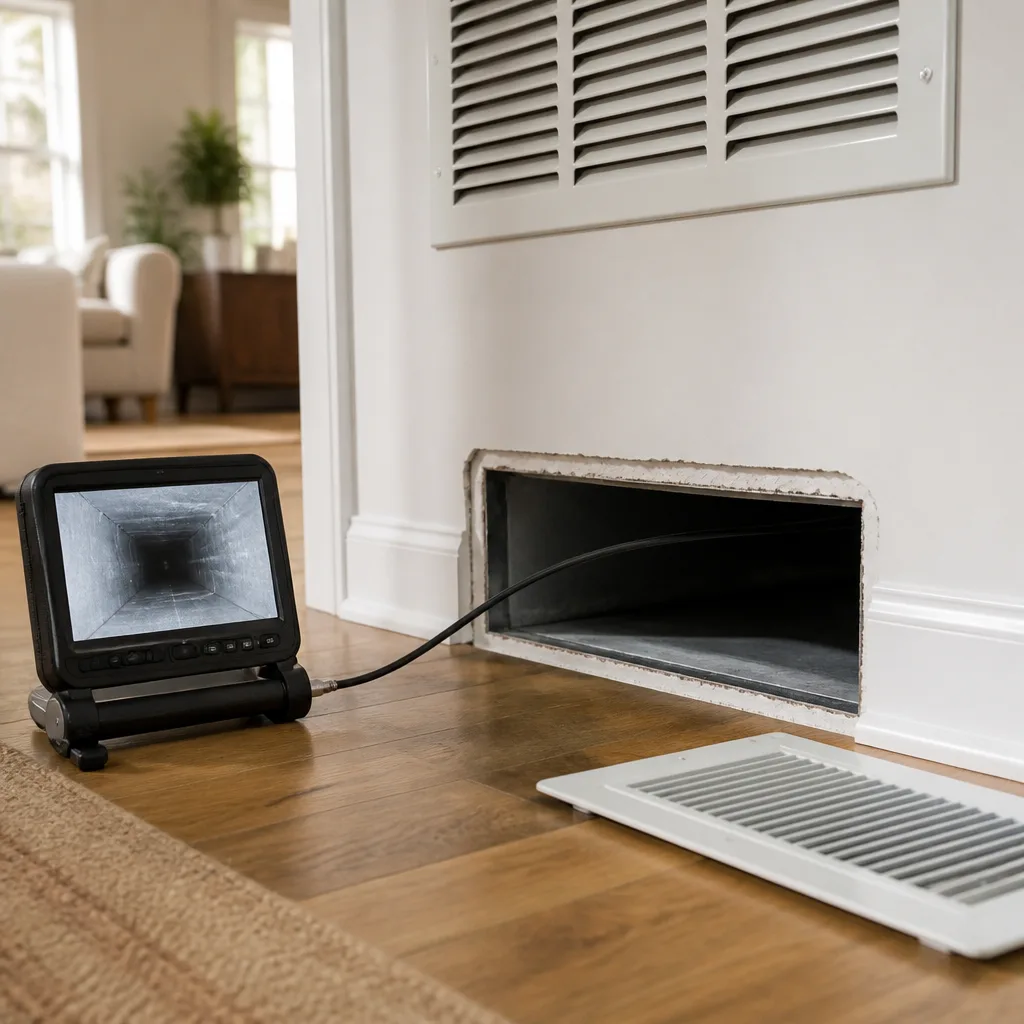 Camera inspection
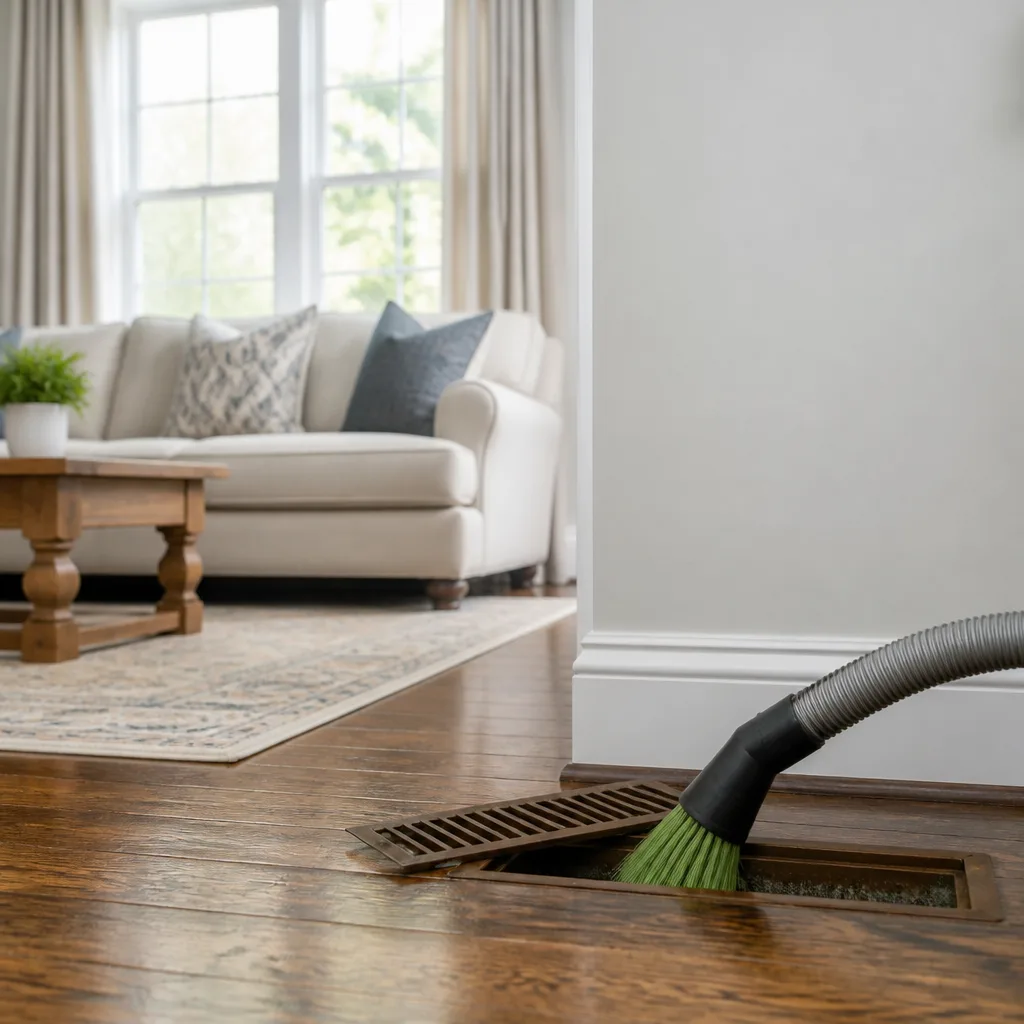 Sanitizing & deodorizing
Whole-system duct and dryer vent check with before-and-after photos - you see exactly what came out of your vents
That "$99 whole-house special" is a bait ad - the real number appears once they are in your hallway, or the "clean" is a shop-vac at the register. We photograph the inside of your ducts before and after instead.
Air Duct Cleaning Warning Signs: An Oceanside Homeowner’s Reference Guide
Here’s something most duct cleaning articles won’t tell you: the visible dust collecting on your supply registers usually has almost nothing to do with whether your ducts need cleaning. It’s a filter issue, and no amount of duct work will fix a bad filter. Meanwhile, a musty odor that appears only during the first five minutes of system runtime, then fades, points to something entirely different: microbial growth inside the ductwork itself, thriving on condensation that forms when cold air hits Oceanside’s humid coastal mornings. This complete air duct cleaning guide for Oceanside homeowners will teach you how to separate the real warning signs from the false alarms, understand what each sign actually means mechanically, and know when to call a professional who uses contractor-grade equipment rather than a rented vacuum. We’ll cover the specific failure modes we see in Oceanside homes every week, from Fire Mountain to South Oceanside, and explain why the standard advice online gets so much wrong.
Quick Answer
The clearest signs your air ducts genuinely need professional attention are: a musty or acrid odor that appears only when the HVAC system starts running, visible mold growth on or inside duct openings, dust that reappears within 48 hours of cleaning despite a fresh filter, and unexplained spikes in energy bills paired with weak airflow from specific rooms. Dust alone at a register is rarely a duct problem. If you’re seeing the four signs above, call (855) 382-4811 for an honest assessment in Oceanside.
Styles & brands we work with
- Whole-home duct cleaning
- Dryer vent cleaning
- Camera inspection
- Sanitizing & deodorizing
Table of Contents
- Register Dust vs. Duct Contamination: Two Different Problems
- The Three Smell Profiles That Actually Matter
- Uneven Room Temperatures: When Ducts Are the Culprit
- Allergy Symptoms That Track With HVAC Runtime
- What a Post-Cleaning Camera Inspection Should Look Like
- Why Oceanside’s Coastal Climate Accelerates Duct Problems
- Common Mistakes to Avoid
- When to Call a Professional
Register Dust vs. Duct Contamination: Two Different Problems
We get this call at least twice a week in Oceanside: a homeowner sees gray dust streaking across the white ceiling near a bedroom register and assumes their ducts are filthy. Sometimes they are, but usually they aren’t. The mechanism matters because misdiagnosis costs money. When your return air filter is undersized, damaged, or installed incorrectly, or your system has gaps around the filter slot, unfiltered air bypasses the filter entirely. That air carries household dust, pet hair, and particulate that gets deposited on the blower wheel and evaporator coil. The supply registers become particle guns, streaking dust across the ceiling directly above them. It’s a filter delivery problem, not a duct contamination problem.
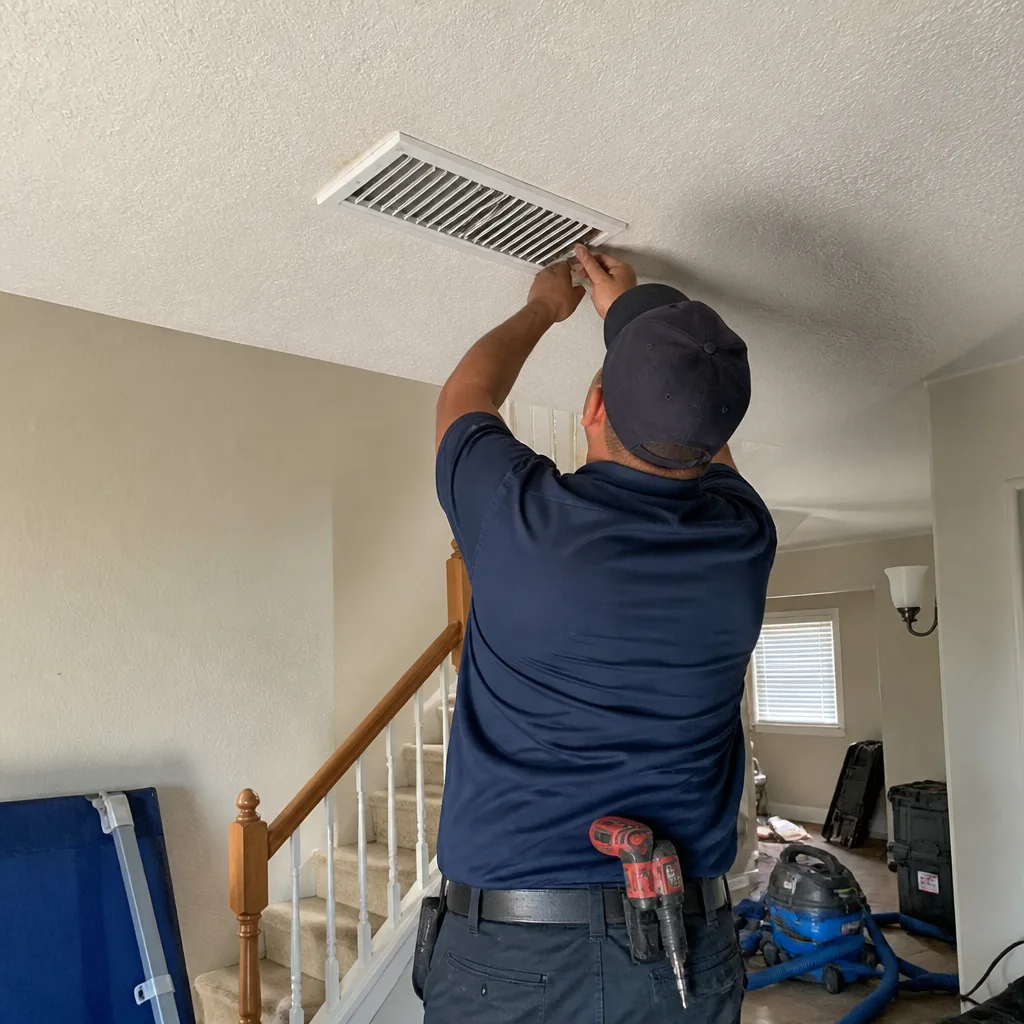
True duct contamination presents differently. Instead of localized streaking near registers, you’ll see even, gradual dust settlement on all horizontal surfaces across multiple rooms, often accompanied by reduced airflow from registers furthest from the blower. Dust inside the return register (the louvers you replace the filter behind) is also more indicative of duct involvement. Here’s the practical test: replace your filter with a high-MERV pleated filter, mark the date, and check the streaking two weeks later. If the ceiling streak patterns don’t change, the air is bypassing the filter. If dust settles evenly everywhere, you likely have years of accumulated debris inside the supply trunk lines. Our Air Duct Cleaning in Oceanside service begins with exactly this diagnostic distinction, because cleaning ducts when the filter is bypassing won’t solve the problem.
Oceanside’s climate makes this distinction even more important. Coastal humidity means dust that enters the duct system can bond to condensation rather than staying loose and dry. What starts as a filter issue in January can become embedded, compacted duct contamination by August. If you’re not sure which problem you have, a camera inspection from the register boot gives us the answer without removing duct panels.
The Three Smell Profiles That Actually Matter
Smell is the most reliable warning sign homeowners tend to dismiss. Odors that appear only during HVAC operation, or only during the first minutes of a cycle, point to something happening inside the ductwork. But not all smells are the same, and they don’t all mean the same thing. Here are the three profiles we’ve learned to recognize in Oceanside homes.
Musty or biological: This is the smell of microbial growth, and it’s the one that should prompt an immediate call. In Oceanside’s coastal zone, warm humid air enters return ducts during the summer, especially in unconditioned attics and crawlspaces. When the AC kicks on, cold air flows through those same ducts. The temperature differential creates condensation on the duct interior. If there’s any accumulated organic dust, hair, or debris, that moisture creates conditions where mold can establish. You’ll typically notice this smell strongly in the first five minutes of system startup, then it fades. That’s because the air movement dries the surface temporarily. If you smell this, do not wait. Mold inside ducts needs mechanical removal with containment, not a spray or fog.
Acrid or burned electrical: This smell that appears only when the blower is running can indicate a failing capacitor, an overheating blower motor, or hot wiring. It’s more commonly an HVAC unit problem than a duct problem, but the ducts deliver the smell throughout the house, which is why homeowners think they need cleaning. If this smell is persistent, shut the system off and call an HVAC technician first. We flag this specifically because a duct cleaner showing up with a vacuum won’t fix an electrical fault.
Dusty or stale: This is the smell of years of accumulated fine particulate, skin cells, pet dander, and construction debris from when the house was built. It’s not an immediate health emergency like the musty smell, but it’s telling you the ducts have become a reservoir. Every system startup sends a puff of this air through the home. Homes built during Oceanside’s rapid expansion in the early 2000s, especially in neighborhoods like Rancho del Oro and Ocean Hills, often have original ducts with this profile. If the smell returns within an hour of opening windows and airing out, the source is in the ducts, not in the living space.
Uneven Room Temperatures: When Ducts Are the Culprit
Every Oceanside homeowner knows that the west-facing room runs warmer in the afternoon. That’s normal solar gain. But when a room that used to hold temperature starts varying by 5 degrees or more from the thermostat setting, or when one specific bedroom is always the outlier in both summer and winter, the duct system needs a closer look. Here’s the diagnostic sequence we use, and you can apply it before calling anyone.
- Confirm the thermostat location. If the thermostat is in a hallway that gets direct afternoon sun, the whole system may be running too short. Move a portable thermometer to the problem room and record the temperature at 3pm for three days. Document what you find.
- Check the register damper. Look inside the register for a metal plate with a wing nut. Is it fully open? Closed dampers are the cause of roughly 20% of temperature complaints we see.
- Feel the airflow. Hold a piece of tissue at the register with the system running. Compare the deflection to a room that’s comfortable. If the tissue barely moves in the problem room, the airflow is restricted.
- If airflow is weak, consider blockage or disconnection. A disconnected flex duct in the attic or crawlspace will dump conditioned air into an unconditioned space, starving the register. Animal intrusion, crushed flex runs, or separating joints cause this pattern. Debris compaction inside rigid ducts can also restrict airflow without fully disconnecting.
- If airflow is strong but the room is still off, it’s likely an insulation or HVAC sizing issue, not a duct problem. Don’t clean ducts to fix this; it won’t help.
Blockages from years of neglect are one thing. Breaches and disconnections are another. In Oceanside homes, the flex duct runs through attics that reach extreme temperatures; the adhesive on older duct tape fails, joints separate, and conditioned air escapes. We regularly find runs that have pulled apart entirely. If you suspect disconnection, our Air Duct Repair in Oceanside service handles exactly this scenario: we inspect, locate the breach, and repair it during the same visit, not a week later through a subcontractor.
Allergy Symptoms That Track With HVAC Runtime
Allergies are tricky to attribute to ducts because Oceanside’s coastal environment itself carries pollen, salt particles, and seasonal allergens. But there’s a pattern you can observe that helps distinguish an outdoor allergen response from a duct-related one. It requires a week of attention, and the data you gather will make any contractor’s visit more useful.
Step 1: Pick a symptom you can objectively track. Itchy eyes, sneezing, congestion, or scratchy throat. Write down severity on a 1-5 scale each morning and evening.
Step 2: Note when the HVAC system cycles. Most Oceanside homes use AC in the afternoon and evening during summer, heat during winter mornings. Note when symptoms worsen or improve relative to system runtime.
Step 3: Look for the “evening load” pattern. Duct-related symptoms typically worsen in the evening after the AC has been running for hours, not in the morning. Outdoor allergens usually peak in the early morning. If symptoms build through the day and peak at night while the system is running, that’s a meaningful signal.
Step 4: If you have pets, note grooming days. Pet dander is a massive contributor to duct contamination, and symptoms spiking after vacuuming or grooming can indicate the return side is pulling dander into the ducts and recirculating it.
The reason most guides don’t explain this is that it takes days of observation, and most people want an answer in one afternoon. But the pattern you document is extremely useful to us. We can tell you before we even open a register whether your symptom pattern matches what we typically see in duct-related contamination cases. Remember that even the best Duct Cleaning Oceanside home service can’t remove allergens that are coming through open windows. The pattern is what tells them apart.
What a Post-Cleaning Camera Inspection Should Look Like
If a duct cleaning company cannot show you live camera footage of the duct interior after they finish, don’t pay. It’s that simple. But even when a company does provide post-cleaning images, most homeowners don’t know what they’re looking at. Here’s what to look for.
What a clean duct looks like: The interior surface should be uniformly gray or silver metal (for rigid ducts) or clean plastic (for flex). The surface should be visibly smooth, not crusted. There should be no visible dust trails, no crumbs of debris in corners, and no visible fibers hanging from joints. The camera should not kick up dust as it moves through the duct. If the image looks hazy at all, ask for a second pass.
What a duct that needs attention looks like: Thick, even gray or brown coating on all surfaces. Visible balls or clumps of material in corners. Debris settled in the bottom of horizontal runs. Rust-colored staining (often indicates condensation damage or a leak). Black spotting (possible mold, requires testing). Disconnected sections where the camera shows unconditioned attic space instead of duct interior. Crushed or collapsed flex duct.
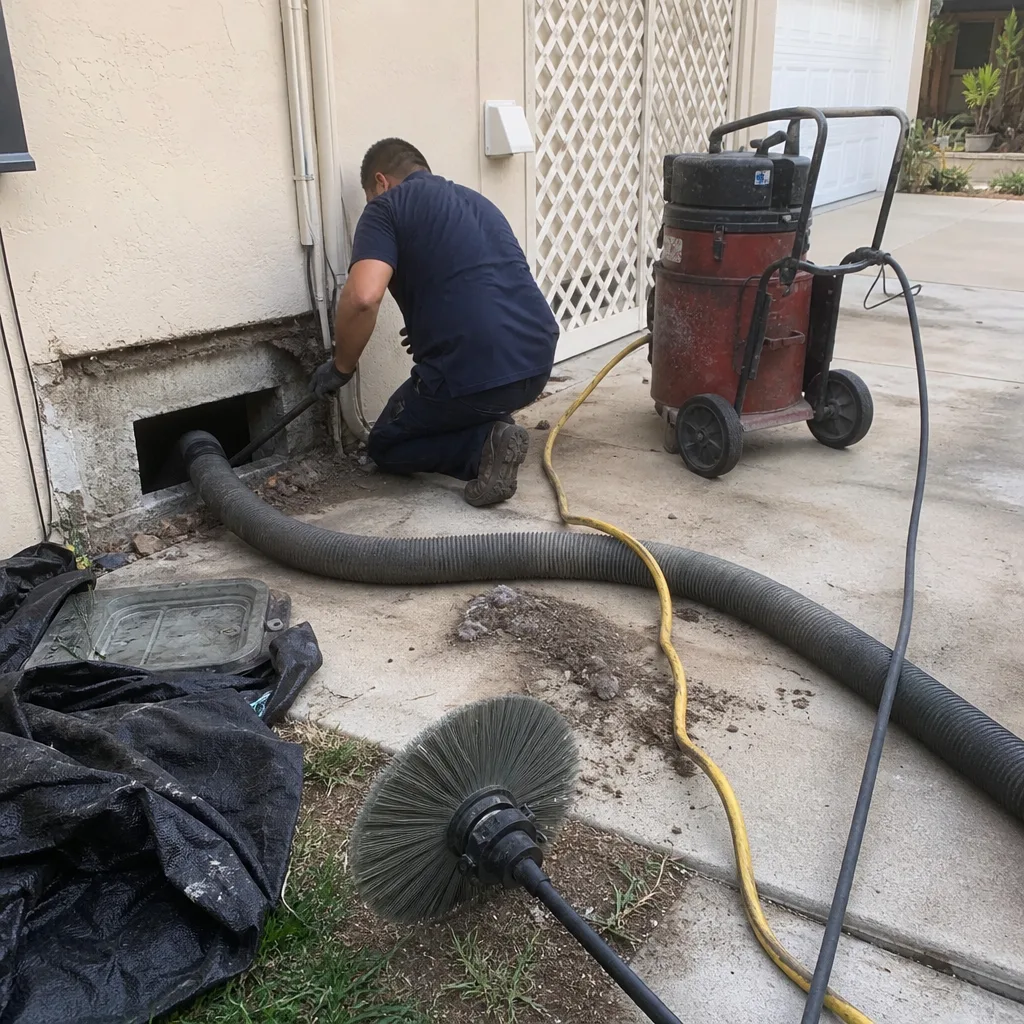
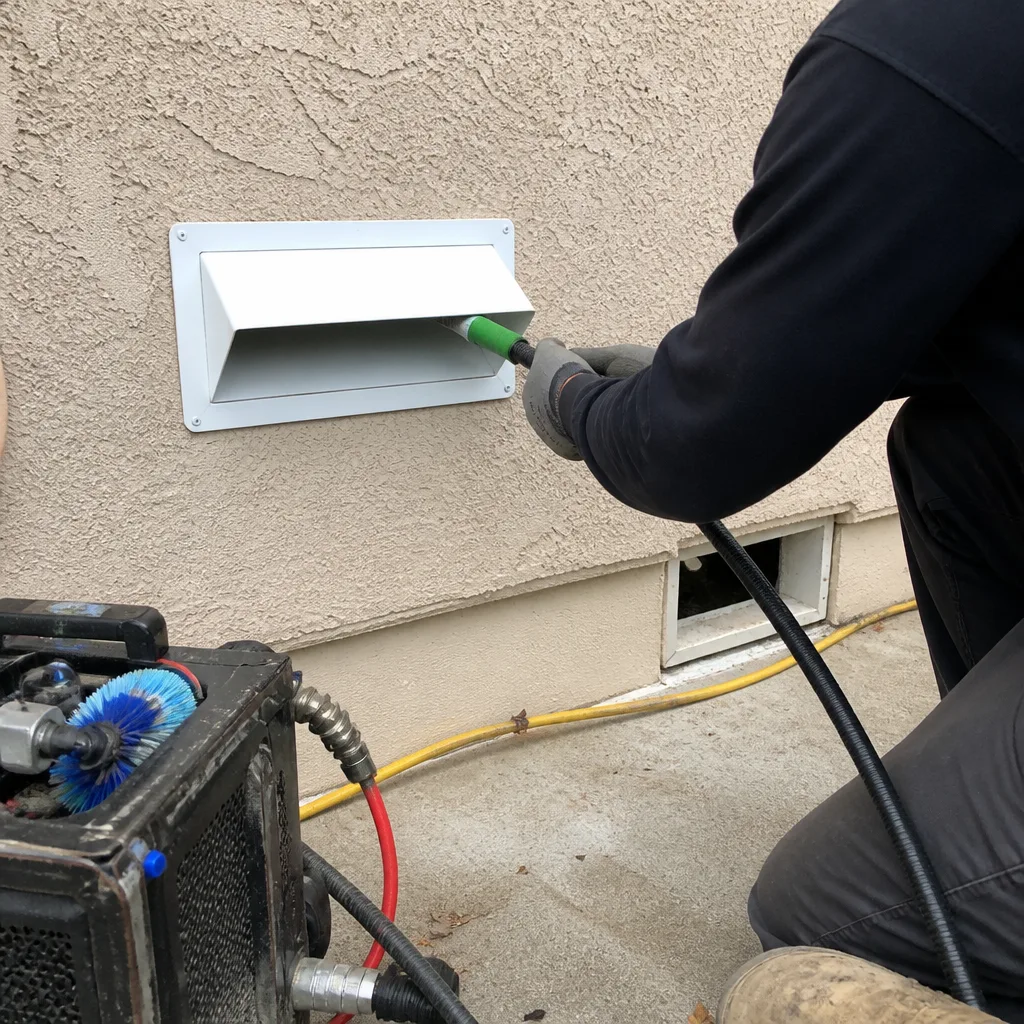
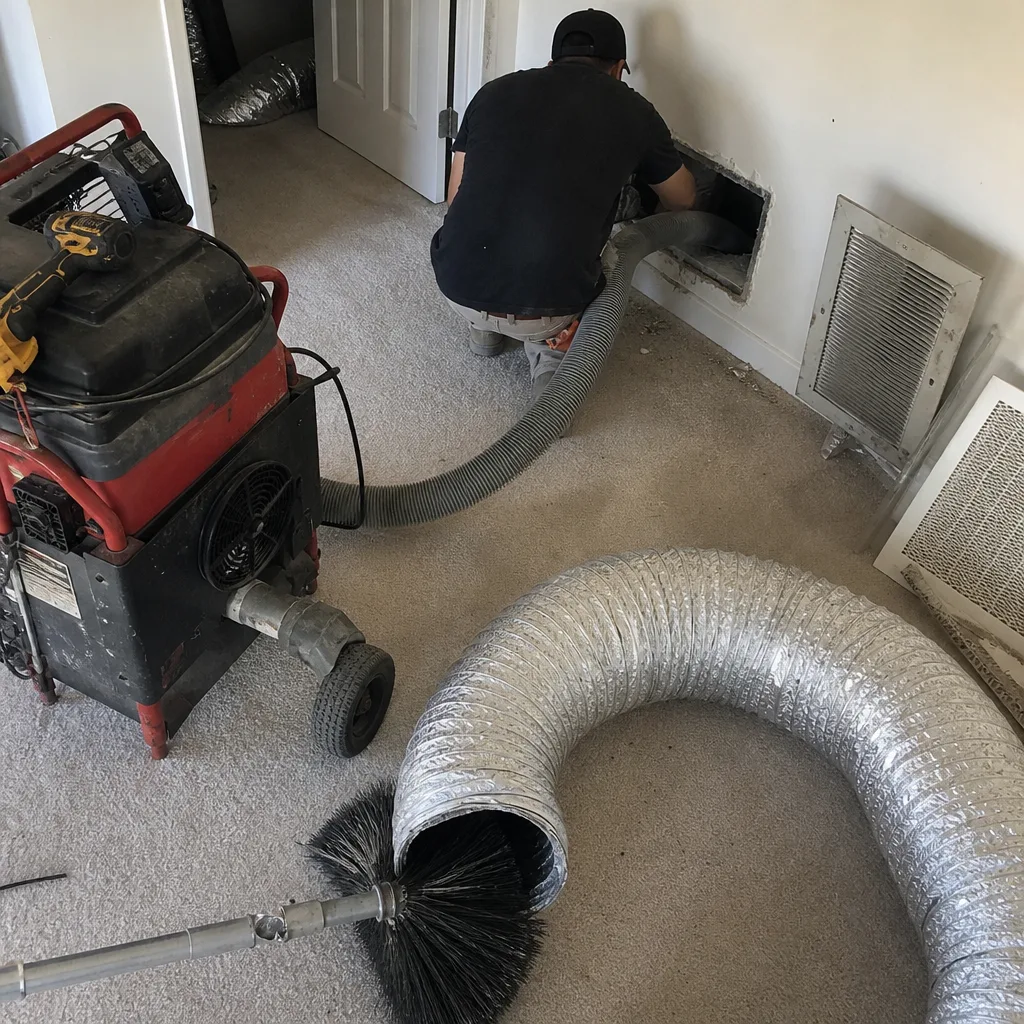
What a duct that was “cleaned” by an incompetent technician looks like: The bottom third of the duct looks clean, but the top two-thirds still have a visible coating. This is the classic signature of a weak vacuum and brush pass that knocked loose debris off the floor of the duct but couldn’t generate enough airflow to remove material from the walls. It’s the tell that the job was cosmetic, not actual. This is why we use Rotobrush contact-cleaning equipment: the rotating brushes physically scrub the duct walls. Air alone doesn’t remove compacted layers. When we finish, the camera shows bare metal or plastic, not a shadow of the old coating.
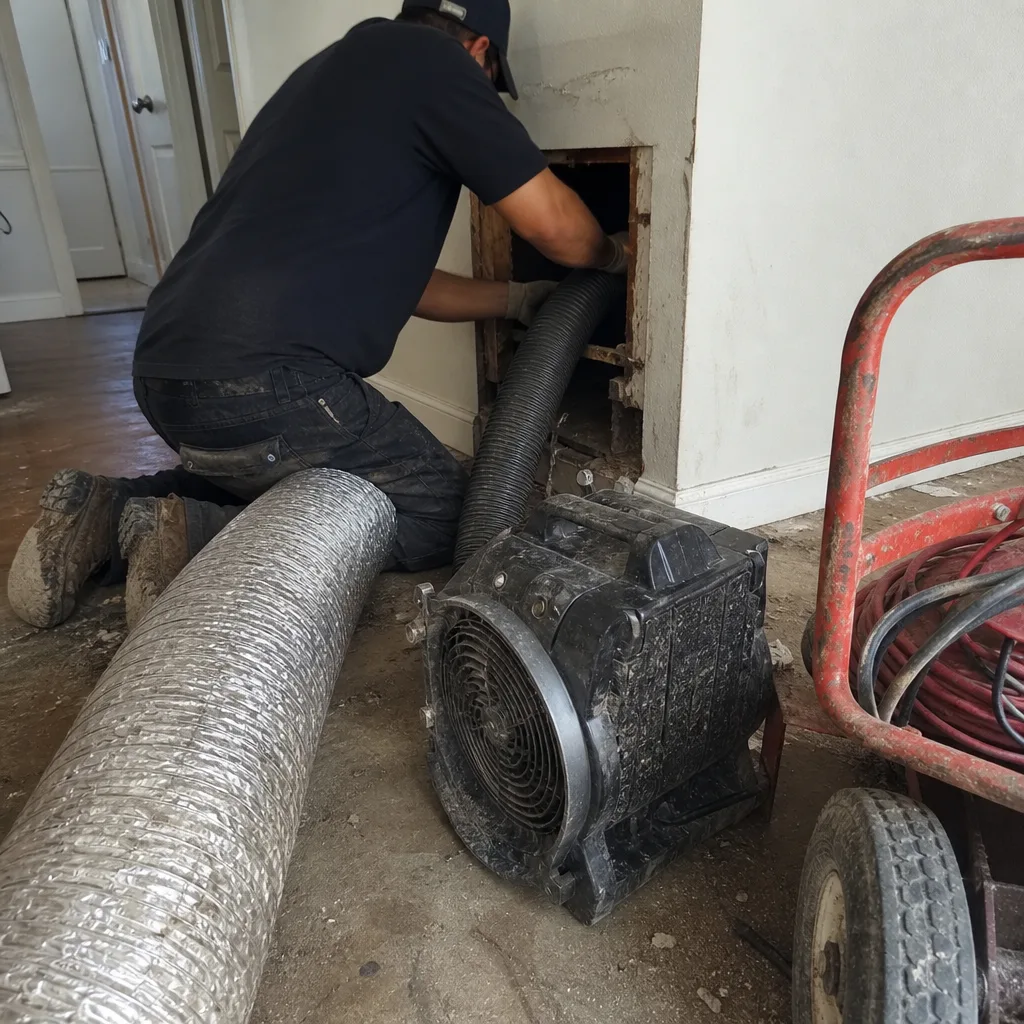
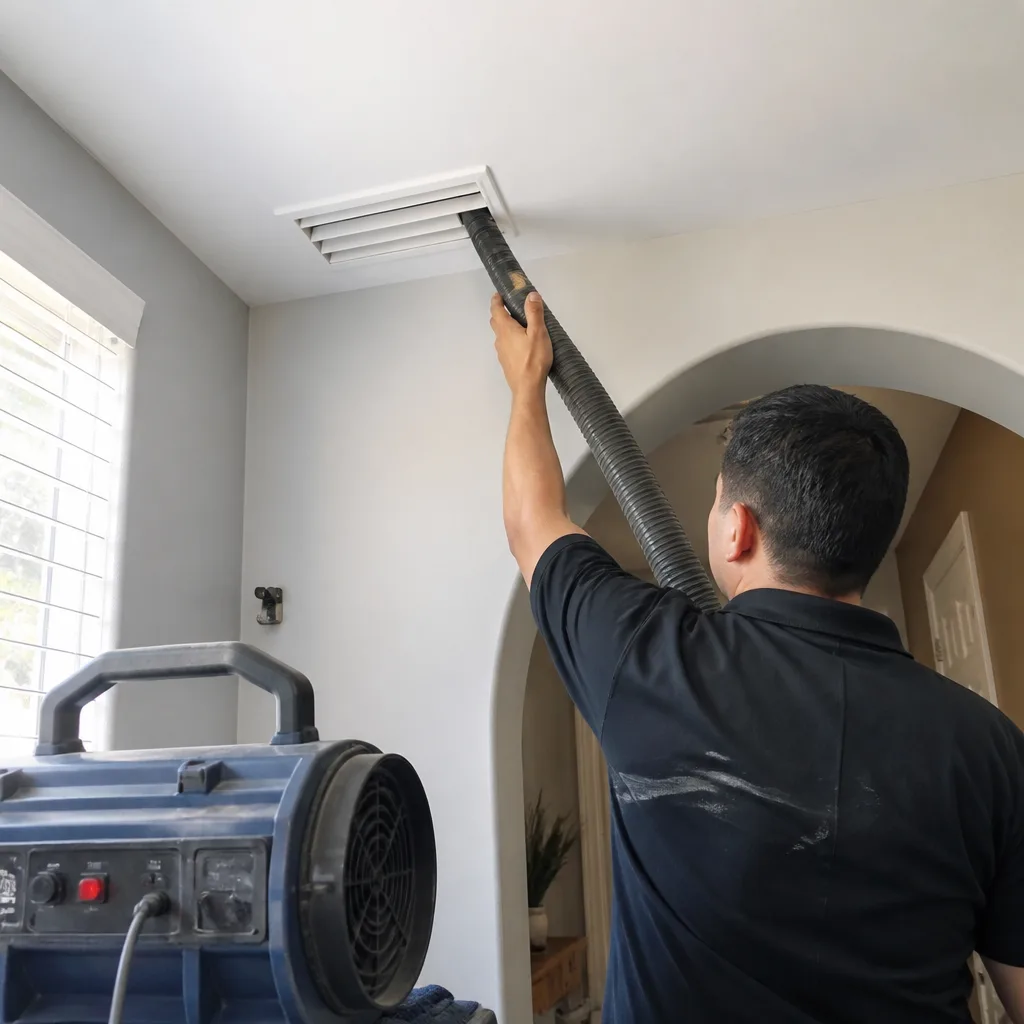
We also use Nikro HEPA negative-air machines during every cleaning to maintain containment. That means the particulates we dislodge are captured into the HEPA filter system, not blown into your living room through the return. If you’re comparing companies, ask what containment system they use. If the answer is “we open a window,” keep calling.
Why Oceanside’s Coastal Climate Accelerates Duct Problems
Oceanside sits in a unique microclimate within San Diego County. We’re far enough north to get marine layer mornings that inland cities like Vista or San Marcos don’t always share, and close enough to the coast that indoor relative humidity remains elevated through most of the summer. This matters for your ducts in three specific ways.
Condensation cycling: During summer, the temperature differential between cold air in the supply ducts and warm, humid attic air causes condensation. Over time, this moisture cycle bonds dust and debris into a hardened coating that’s extremely difficult to remove without mechanical agitation. This is why homeowners who’ve had their ducts “cleaned” by a rotating-brush-free company see the dust return within months: the compacted layer was never actually removed.
Salt air exposure: Homes within a mile of the beach in South Oceanside have salt particles entering the return air. Salt is abrasive and corrosive. It accelerates the deterioration of older metal ducts and corrodes duct tape seals faster than inland. If your home was built before 1990 and you’re within walking distance of the surf, your duct joints are more likely to be compromised than the same age home in Ivey Ranch.
Construction debris legacy: Oceanside experienced multiple building booms. Homes built during the 1970s expansion in neighborhoods like Mission Meadows, the 1990s in Fire Mountain, and the 2000s in Rancho del Oro often still have original duct systems. Drywall dust, sawdust, and even food wrappers from the construction crews are common finds during first-time cleanings. If you bought a home built in these eras and have no record of a previous duct cleaning, the system has likely never been cleaned.
Common Mistakes to Avoid
- Assuming visible dust means dirty ducts. As covered earlier, register streaking is usually a filter bypass issue. Replace the filter, seal the gap, and observe before spending money on duct cleaning.
- Using a “whole house fan” instead of addressing the duct issue. Whole house fans pull outside air through the home, but if the ducts are contaminated, the fan doesn’t remove the source. It just moves more air past it.
- Waiting to see if the musty smell goes away. It might fade temporarily, but mold inside ducts doesn’t self-resolve. Delaying allows the colony to expand, and remediation becomes more involved.
- Hiring based on the lowest per-vent price. Duct cleaning is not a commodity. Equipment quality and containment methods differ dramatically. A $99 coupon that doesn’t include actual HEPA containment typically means the dislodged particulate ends up back in your air.
- Ignoring inconsistent room temperatures because “the house is just like that.” It wasn’t always like that. A new imbalance is a physical change in the duct system, and it rarely fixes itself.
- Cleaning ducts without addressing the filter situation. If the filter bypasses air, you’ll be re-contaminating the ducts within weeks of a cleaning.
- Confusing dryer vent lint with air duct dust. These are entirely separate systems. Your dryer vent is a fire risk that needs its own service; see our Dryer Vent Cleaning in Oceanside page for how to assess that risk properly.
When to Call a Professional
Call a duct professional for air duct cleaning when you have: a musty odor on system startup that persists for more than a week; visible mold on register covers or inside visible duct sections; a documented allergy pattern that tracks with system runtime; temperature imbalance that developed recently and isn’t explained by weather; or a home you purchased with no record of prior duct maintenance. In any of these cases, an inspection gives you a definitive answer. Duct Cleaning Oceanside offers free estimates in the Oceanside area and we’ll show you camera footage of whatever we find, good or bad. Call (855) 382-4811 and we’ll tell you honestly whether the ducts are the problem or the filter is.
See the difference
 Before
 After
 Before
 After
 Before
 After
Frequently Asked Questions
Most Oceanside homes range from $350 to $600 for a complete system cleaning, depending on home size and the number of systems. Homes with two HVAC units or exceptionally long duct runs run higher. The price should be a flat system price agreed before work starts, not a per-vent fee that can multiply on the estimate. Call (855) 382-4811 for a specific quote; estimates in Oceanside are free.
Cheaper quotes almost always mean less powerful equipment and no HEPA containment. A portable vacuum with a rotating brush can remove loose dust from the bottom of ducts but cannot dislodge the compacted coating that forms in Oceanside’s humid climate. Some companies also use per-vent pricing that looks cheap on paper but adds up to more than a flat system price. The right comparison is equipment capability plus containment method, not the coupon number.
Insist on live camera footage of the duct interior after cleaning, not just a verbal summary. Look for uniform clean surfaces with no remaining coating, no debris, and no visible dust clouds when the camera moves. A company that uses Rotobrush contact-cleaning equipment and Nikro HEPA negative-air containment can show you exactly what was removed because the process is mechanical, not air movement alone.
Most Oceanside homes need a professional cleaning every 4 to 6 years. Older homes close to the coast with original ducts may need it more frequently because salt air and condensation accelerate buildup. Homes with multiple pets or recent renovation work also trend shorter. If you’ve never cleaned the ducts and the home is 15+ years old, you’re overdue.
Yes, and the pattern is specific: symptoms that build through the day and peak in the evening when the AC has been running for hours point to recirculated particulate from the ducts. Morning-heavy symptoms more often indicate outdoor allergens. Document your symptom pattern for a week before calling so we can tell you whether the ducts are the likely source.
Routine duct cleaning is not typically covered by insurance. However, duct damage from a covered event, such as a fire or water intrusion, may fall under your policy’s remediation provisions. If you’ve had water damage or a roof leak that affected your ducts, contact your insurer. In many cases we can document the contamination with camera footage to support your claim.
The Bottom Line
Most duct warning signs are real, but they’re not all created equal. Visible register dust is usually a filter issue. A musty smell on startup is a serious duct problem. Uneven temperatures can mean disconnected ducts, not just a warm room. Allergy symptoms that track with system runtime are a meaningful signal worth documenting. And when you do call a professional in Oceanside, insist on camera footage, mechanical contact cleaning, and HEPA containment. These three standards separate a real cleaning from a cosmetic pass. If your home is showing any of the five warning signs in this guide, we’ll inspect it honestly and show you exactly what the camera sees. Call (855) 382-4811 for a free estimate.
Written by the team at Duct Cleaning Oceanside, serving Oceanside since 2011.