
Last updated November 2, 2026
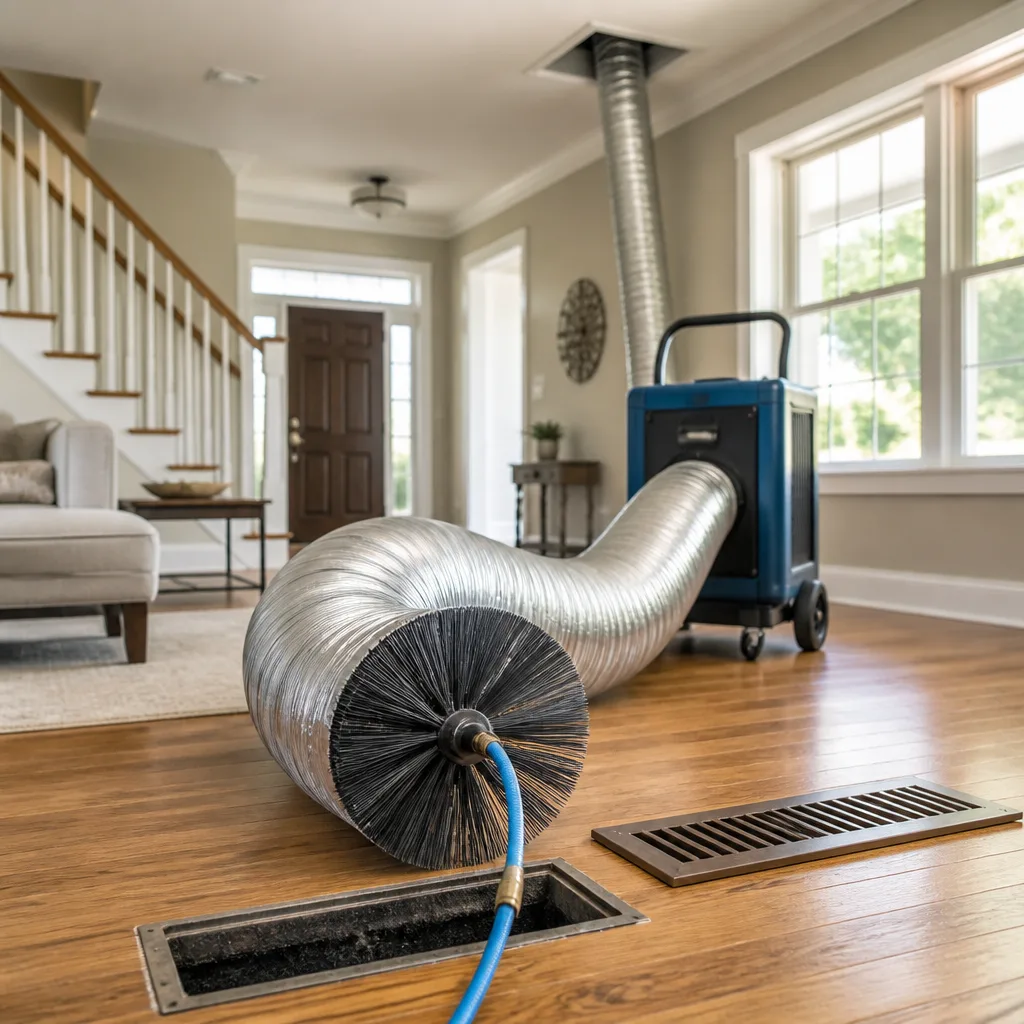 Whole-home duct cleaning
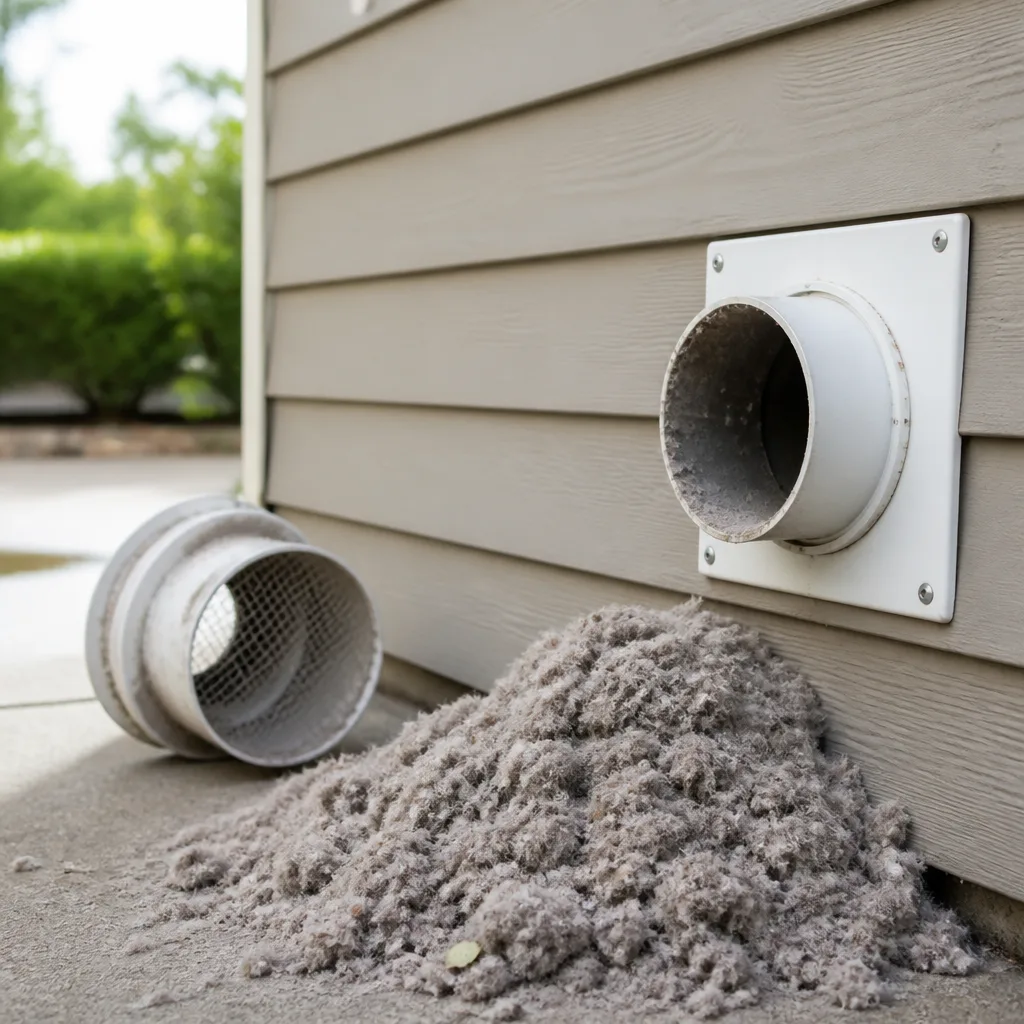 Dryer vent cleaning
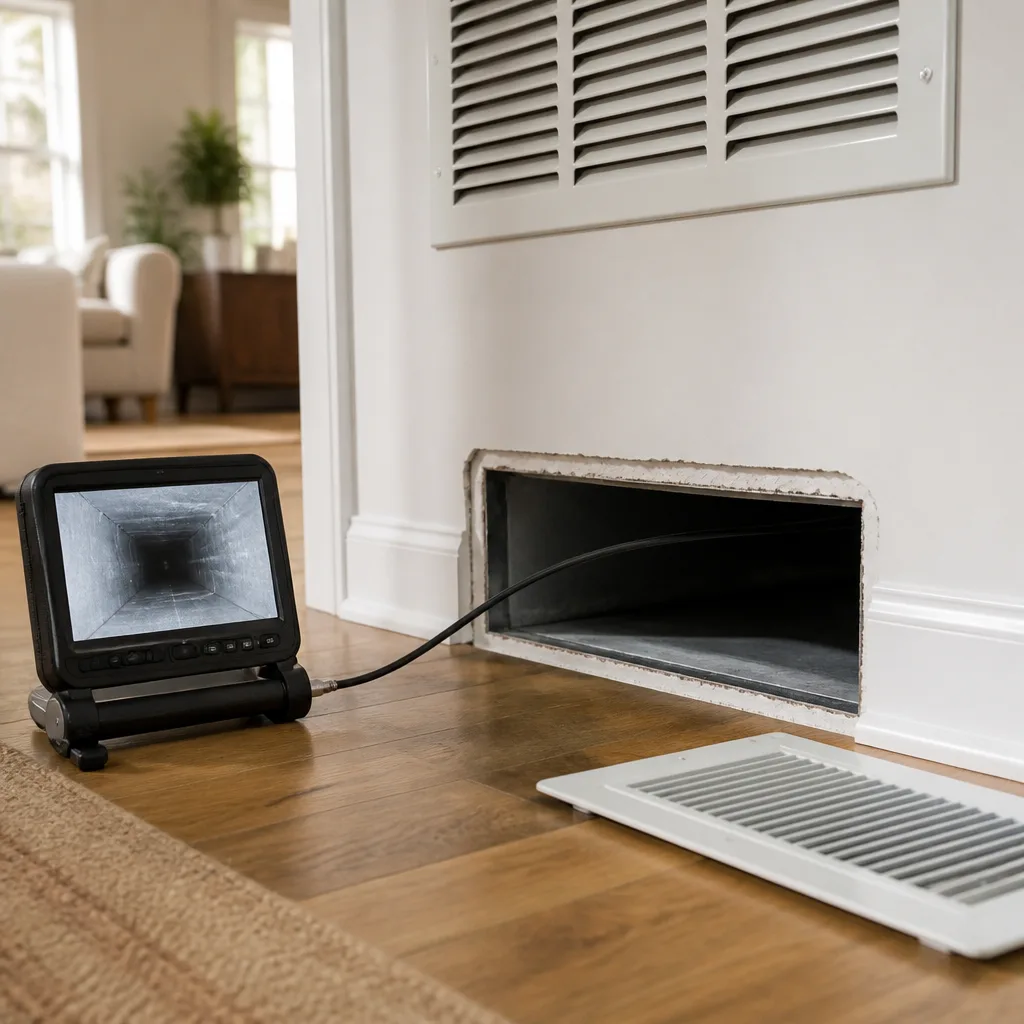 Camera inspection
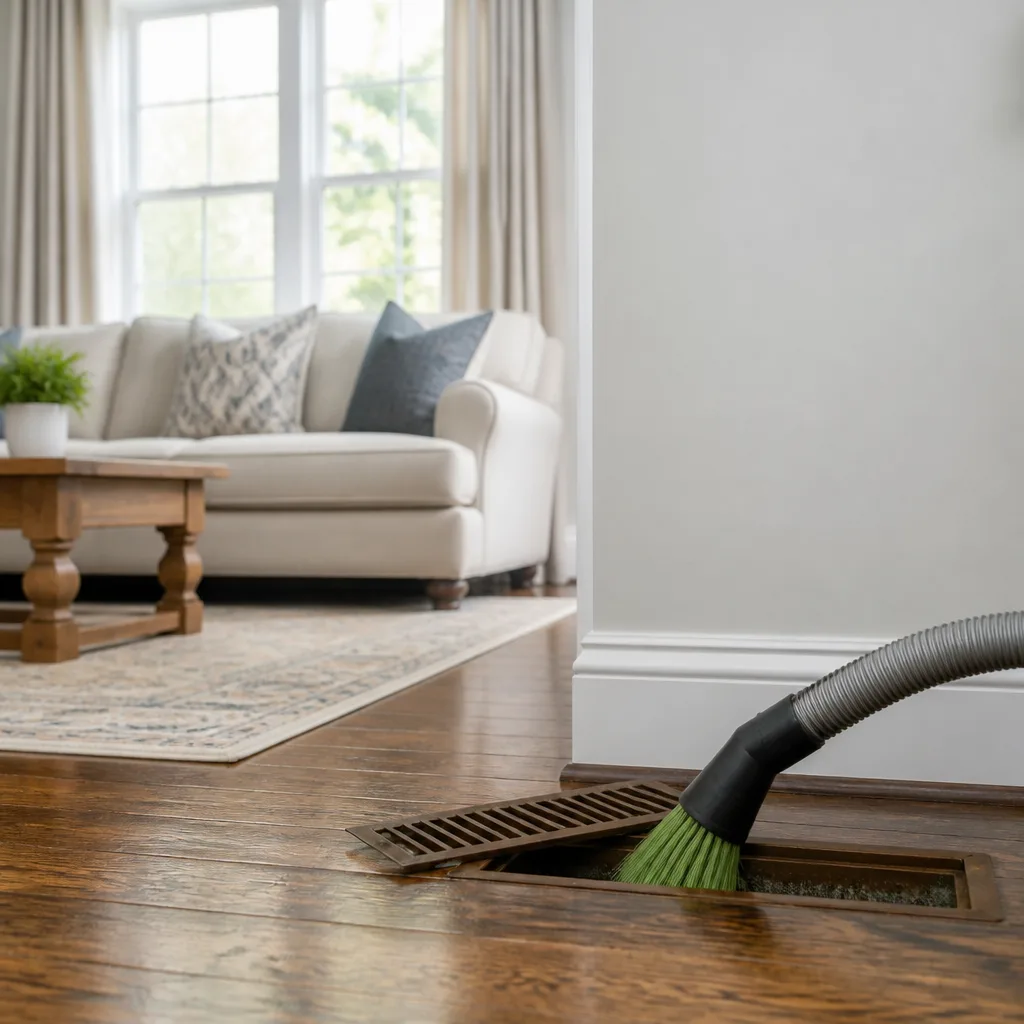 Sanitizing & deodorizing
Whole-system duct and dryer vent check with before-and-after photos - you see exactly what came out of your vents
That "$99 whole-house special" is a bait ad - the real number appears once they are in your hallway, or the "clean" is a shop-vac at the register. We photograph the inside of your ducts before and after instead.
Air Duct Cleaning Permits, Codes & Inspections in CA: What You Need to Know
Here’s something that surprises most Oceanside homeowners: the act of cleaning your air ducts requires no permit anywhere in California. But the moment a technician cuts into a duct to install an access panel, patches a separated plenum connection, or replaces a rusted section of sheet metal, they may have just crossed into territory governed by the California Mechanical Code and Title 24 energy standards. A repair performed without proper documentation may never show up on a home inspection report, but it also won’t have a paper trail if it fails later. This guide breaks down exactly where the maintenance-versus-modification line sits, how San Diego County and the City of Oceanside apply it, and what documentation you should keep from any contractor who opens up your ductwork. For related reading, see our Air Duct Cleaning Warning Signs: An Oceanside Homeowner’s Reference Guide.
Styles & brands we work with
- Whole-home duct cleaning
- Dryer vent cleaning
- Camera inspection
- Sanitizing & deodorizing
Quick Answer
Routine air duct cleaning does not require a permit in California. However, any modification to the duct system itself, including cutting new access ports, replacing duct sections, resealing plenum connections, or altering airflow design, falls under California Mechanical Code Section 604 and may require a permit from your local building department. The distinction hinges on whether the technician is maintaining the existing system or changing it.
Table of Contents
- Maintenance vs. Modification: Where California Draws the Line
- California Mechanical Code Section 604: What It Actually Governs
- Title 24 and Duct Sealing: The Energy Code Connection
- How San Diego County and Oceanside Apply the Code Locally
- When Mold Remediation Crosses into CDPH Notification Territory
- Cutting Access Panels: The Most Common Overlooked Trigger
- What Documentation You Should Keep from Any Duct Work
- Contractor Licensing Tiers: What to Ask Before Work Begins
- Common Mistakes to Avoid
- When to Call a Professional
- Frequently Asked Questions
- The Bottom Line
Maintenance vs. Modification: Where California Draws the Line
The single most important concept in this entire guide is the distinction between maintenance and modification. California’s building code framework is built on this line, and understanding it tells you exactly when a permit conversation needs to happen.
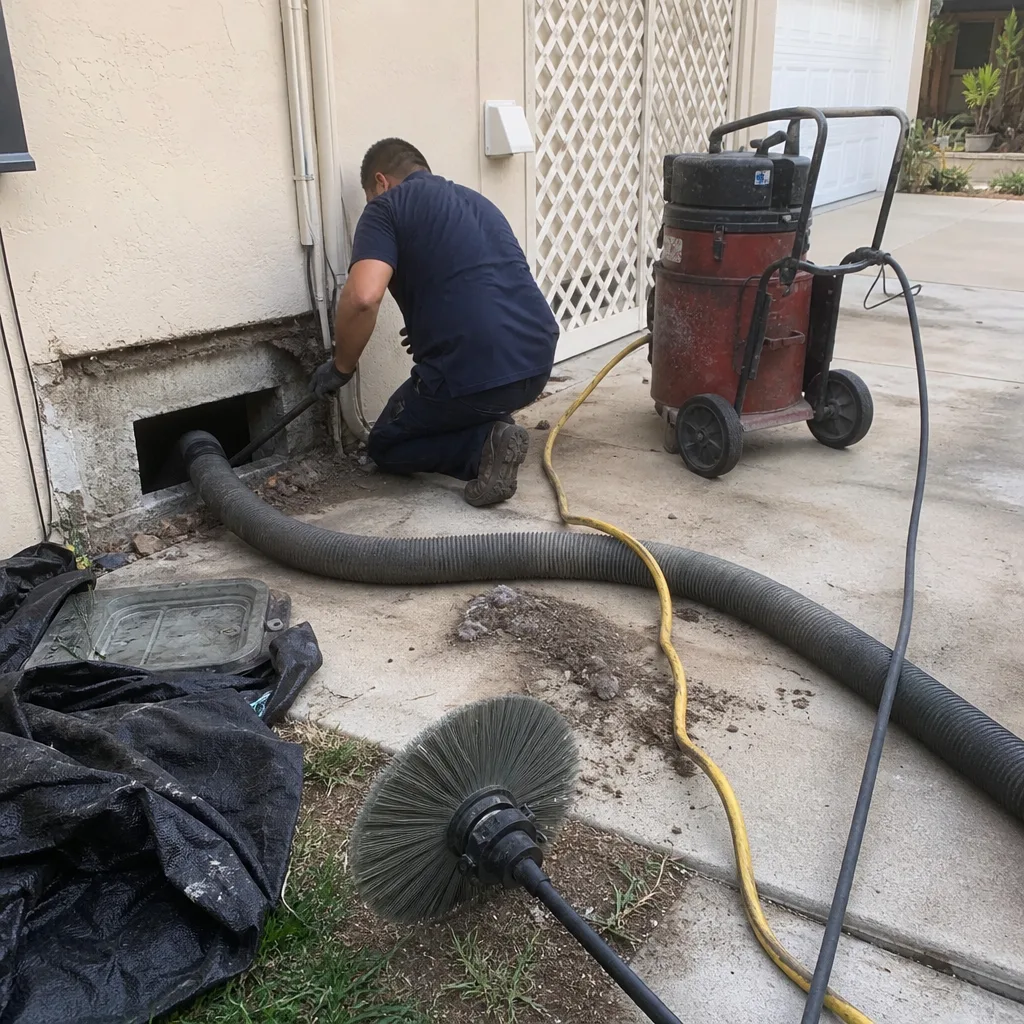
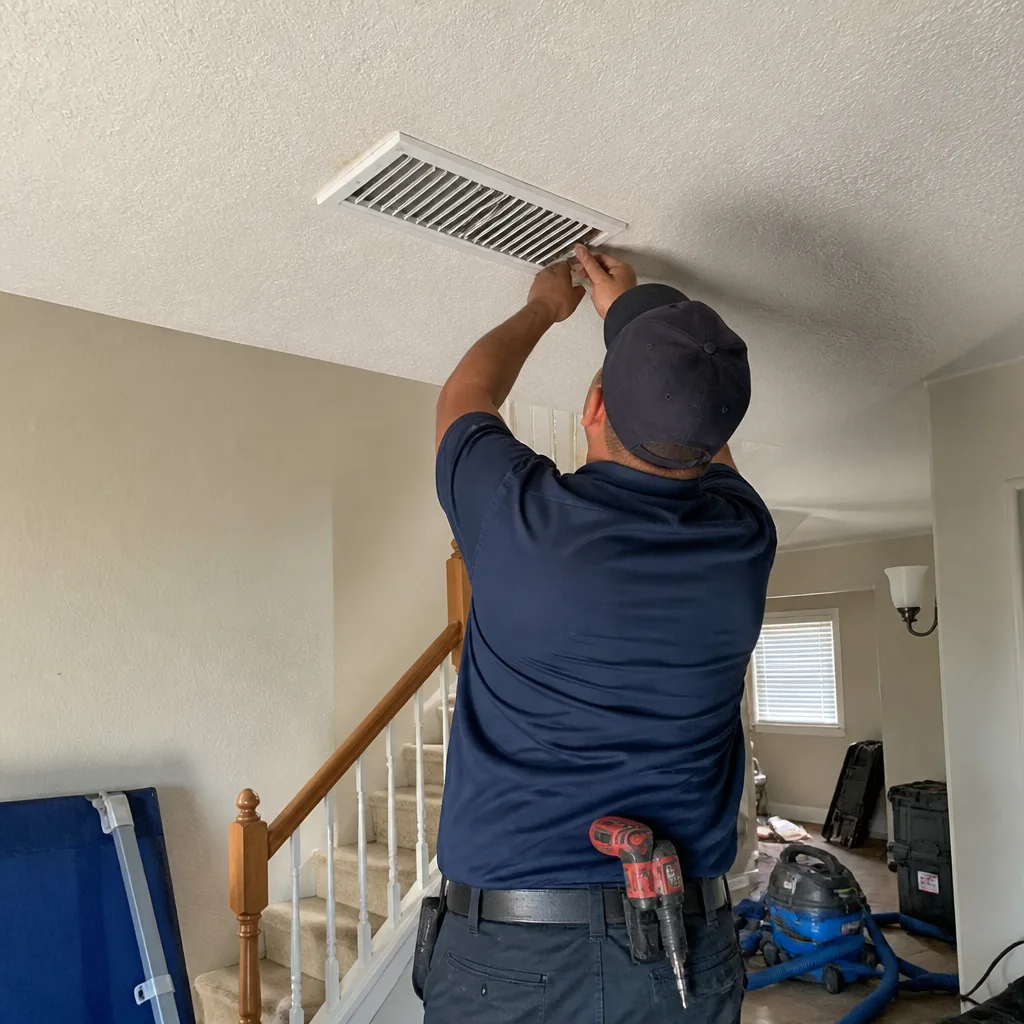
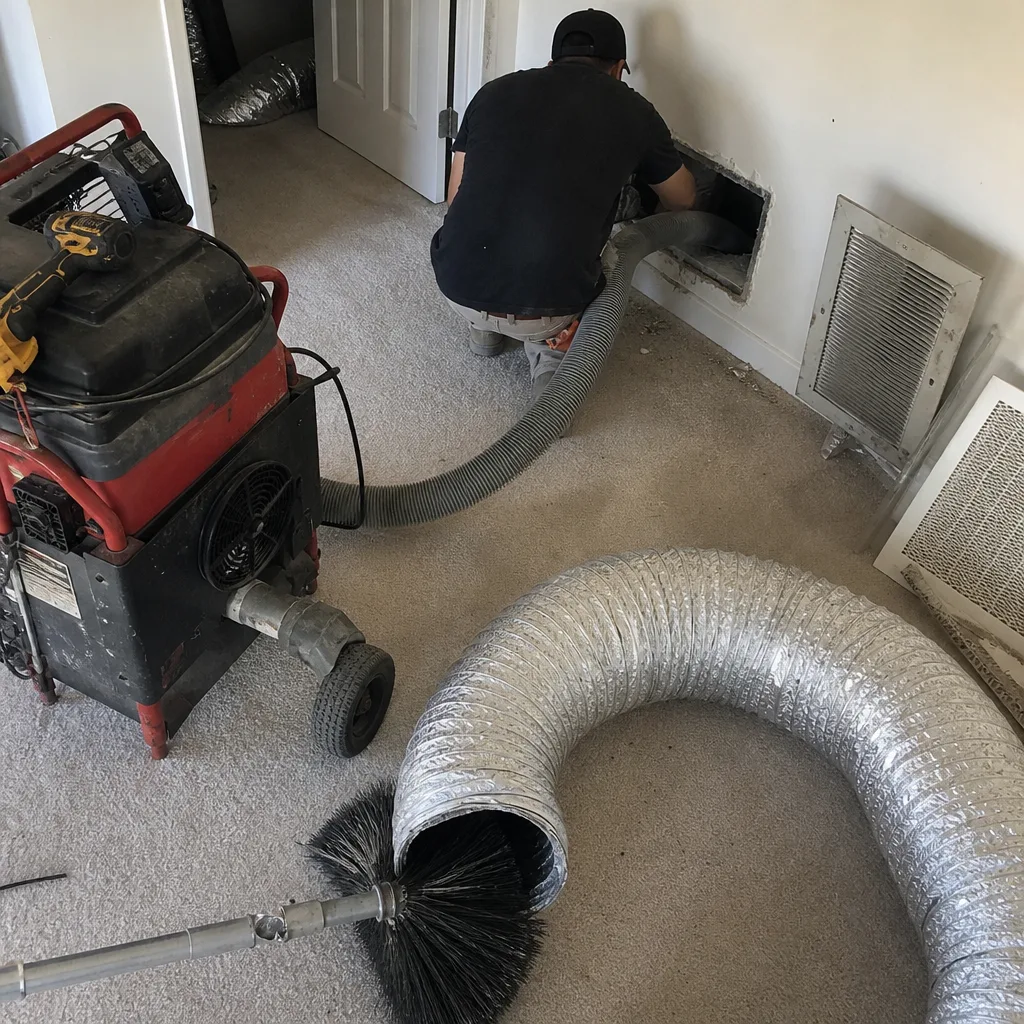
Maintenance is any activity that restores a system to its original operating condition without changing its configuration. When we clean ducts in Oceanside homes using Rotobrush contact-cleaning technology, the brushes physically scrub the interior walls of the ductwork, dislodging compacted debris. The ducts remain exactly as they were, just cleaner. No new holes are cut. No sections are replaced. No connections are altered. This is maintenance, pure and simple, and no permit is required anywhere in California.
Modification is different. Modification means changing the physical configuration of the system. Here are concrete examples of each:
- Maintenance (no permit): Vacuuming debris from duct interiors, scrubbing duct walls with rotating brushes, cleaning registers and grilles, replacing a standard air filter, cleaning the blower motor housing.
- Modification (potentially permitted): Cutting a new access hole into a duct to reach a clogged section, replacing a rusted or crushed duct segment with new sheet metal, disconnecting and reconnecting a supply branch at the plenum, adding a new supply register to an existing trunk line, relocating a return air opening, sealing duct joints with mastic as part of an energy retrofit.
The practical takeaway: if the technician’s tool touches the inside of the duct to remove debris, you’re in maintenance territory. If their tool cuts, replaces, or reconfigures the duct itself, you’re in modification territory, and the permit question becomes real.
In our experience serving Oceanside, we’ve seen plenty of homes where a previous contractor cut an access panel into a trunk line to reach debris and then patched it with foil tape. That patch is technically a modification. It may hold for years. It may also separate, and when it does, conditioned air leaks into the attic. Homeowners who don’t have documentation of that work have no recourse beyond calling someone to fix it properly.
California Mechanical Code Section 604: What It Actually Governs
The California Mechanical Code (CMC) is Part 4 of Title 24 of the California Code of Regulations. Section 604 specifically addresses duct systems and plenums, and it’s the section that governs when duct work must meet certain construction and installation standards.
Here’s what Section 604 covers in practical terms:
- Approved materials: Ducts must be constructed of materials approved for the application. Galvanized sheet steel, rigid aluminum, certain flex duct products, and factory-made duct board are all addressed in this section.
- Installation standards: Ducts must be installed so they maintain structural integrity, resist crushing, and avoid contact with sharp objects or hot surfaces.
- Joint and seam requirements: Connections between duct sections must be mechanically fastened and sealed with approved materials. This is why that foil-tape patch in the attic is a code problem, not just a workmanship problem.
- Access requirements: When access panels are installed, they must comply with CMC specifications for size, location, and closure. A panel cut too small to allow proper inspection doesn’t meet code.
- Fire and smoke dampers: Ducts passing through fire-rated assemblies must have dampers that meet specific testing standards.
The key point for Oceanside homeowners: Section 604 sets the standard for what a compliant duct modification looks like. When a repair is done without a permit, there’s no inspection to verify the work actually meets that standard. A permit isn’t just paperwork, it’s the mechanism that triggers a third-party review of the work by a city inspector who knows the code. Skipping the permit skips the verification.
We should also be clear about something important: cleaning equipment itself doesn’t fall under CMC jurisdiction. The use of a Nikro HEPA negative-air machine during a cleaning job is not a code-regulated activity. But if that cleaning reveals a disconnected duct branch, and the contractor reconnects it, that reconnection is now subject to Section 604 standards. The repair must be mechanically fastened and sealed correctly, not just taped back together.
Title 24 and Duct Sealing: The Energy Code Connection
California’s Title 24 energy standards have a direct and often overlooked relationship with duct work. Part 6 of Title 24 sets specific requirements for duct sealing and insulation, and these requirements apply when duct systems are altered, not just when they’re newly installed.
Here’s the scenario that trips up homeowners and contractors alike: during a cleaning, a technician discovers that a duct joint has separated. The homeowner authorizes a repair. That repair falls under Title 24’s requirement that duct connections be sealed with mastic, fiberglass mesh, or UL-listed tape that meets specific standards. Basic foil tape does not qualify. The repair must also be tested for leakage in certain circumstances, particularly on larger systems or when the alteration exceeds a threshold of total duct surface area.
The practical impact: a properly documented duct repair in San Diego County should include sealing materials that meet Title 24 requirements. If a contractor shows up with a roll of standard hardware-store duct tape, that repair is not Title 24 compliant, and it will fail over time. This is one of the reasons we recommend asking any contractor about the materials they use for sealing work before authorizing a repair.
Title 24 also governs insulation requirements for ducts in unconditioned spaces. In Oceanside’s coastal climate, most duct work runs through attics that get very hot in summer. If a duct section is replaced, the new section must meet current insulation requirements, which are more stringent than what many older homes have installed. A contractor who replaces a duct section with bare sheet metal has just created a Title 24 violation and a condensation problem waiting to happen.
How San Diego County and Oceanside Apply the Code Locally
California’s building codes are statewide, but local building departments apply them with specific interpretations and administrative requirements. The City of Oceanside operates its own building division, and homeowners inside city limits deal directly with city inspectors. Unincorporated areas of northern San Diego County, including parts of Bonsall, Fallbrook, and some areas east of Oceanside, fall under San Diego County jurisdiction instead.
Here’s what we see in practice across Oceanside:
- Cleaning inspections: The Oceanside building division does not inspect or regulate air duct cleaning. There is no permit type for this activity, and no city inspector will ever ask to see documentation of a cleaning job.
- Repair permits: When a duct modification occurs, the relevant permit type is typically a mechanical permit. Oceanside’s building division issues mechanical permits for HVAC alterations, and the permit process includes a plan review for more extensive work and an inspection after the work is complete.
- Contractor verification: Oceanside requires contractors performing permitted work within city limits to be licensed by the California Contractors State License Board (CSLB) and to register with the city. Homeowners can verify license status through the CSLB website before any work begins.
One community-specific factor worth noting: Oceanside has a substantial inventory of homes built in the 1960s through 1980s, particularly in neighborhoods like Fire Mountain, South Oceanside, and the areas around Camp Pendleton. Many of these homes have original duct systems that have never been modified. When cleaning reveals problems in these older systems, the repair conversation in Oceanside tends to be more involved because the original materials may not meet current code standards, meaning a simple patch may not be compliant.
For homes in coastal neighborhoods like South O, the salt air environment accelerates corrosion on exposed metal components. We’ve seen duct boots rusted through in beach-adjacent homes. Replacing a rusted boot is a modification, and in Oceanside, that replacement should go through the proper mechanical permit process if the scope exceeds minor repair thresholds.
When Mold Remediation Crosses into CDPH Notification Territory
Here’s an area where homeowners genuinely need clear guidance: mold. Regular duct cleaning and mold remediation are not the same thing, and they’re regulated differently in California.
The California Department of Public Health (CDPH) has specific requirements around mold remediation activities. While a routine cleaning that removes surface dust and debris is not a regulated activity, remediation of visible mold growth inside duct work can trigger documentation and notification requirements under California’s health and safety code. This is particularly relevant when the mold growth area exceeds certain square footage thresholds.
What this means practically for an Oceanside homeowner:
- If a cleaning technician discovers visible mold growth inside your ducts, the appropriate response is not to simply scrub it away and move on. The mold issue needs to be documented, and the underlying moisture problem that’s feeding it needs to be identified and addressed.
- Large-scale mold remediation projects in California may require a certified mold remediation contractor, specific containment protocols, and documentation that demonstrates clearance testing was performed after the work.
- For smaller-scale mold findings inside duct work, the key is documentation. You should receive written documentation of what was found, where it was found, and what was done to address it.
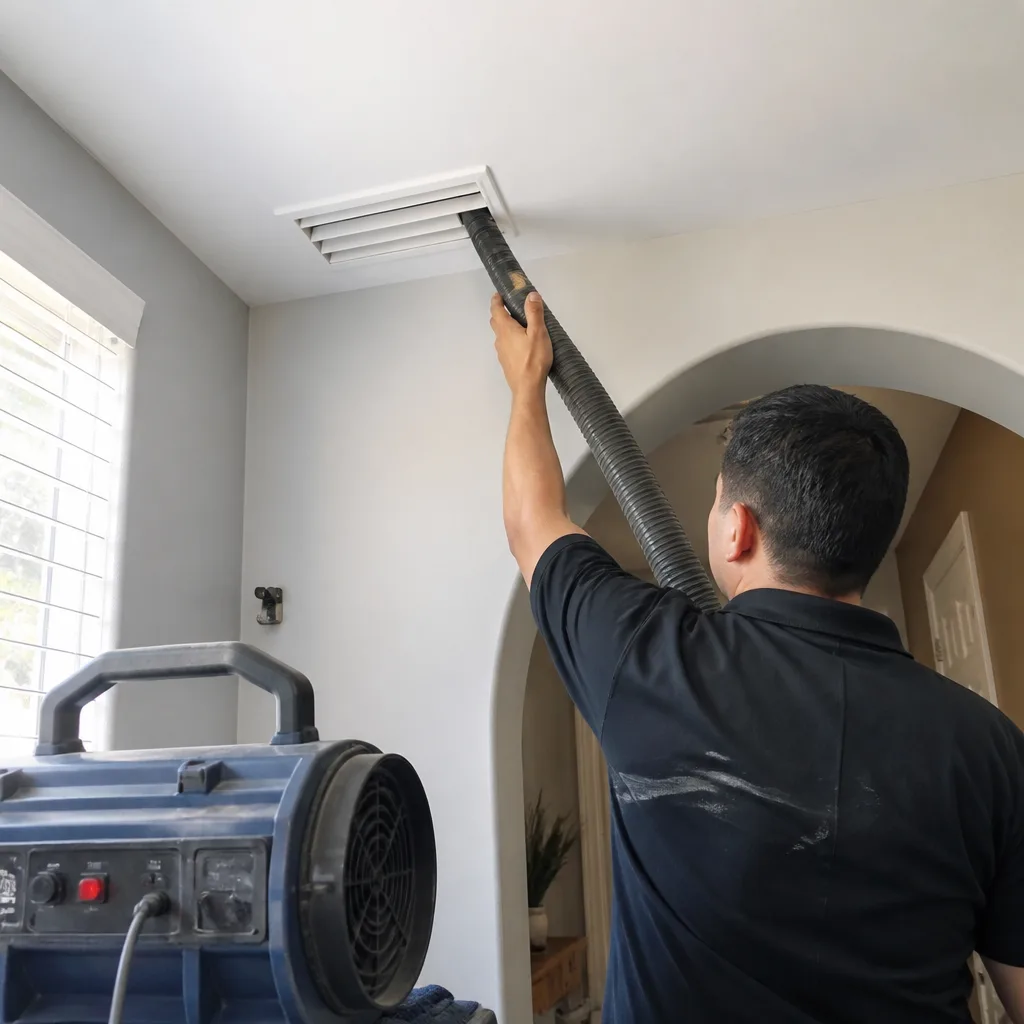
This is where equipment matters. Our Duct Cleaning Oceanside home approach includes Abatement Technologies equipment for situations that cross into remediation-level air quality concerns. When mold is present, you don’t want a shop vac recirculating spores through your living space. You want HEPA filtration that captures particulates at the point of collection. A Nikro HEPA negative-air machine maintains proper containment during cleaning, preventing dislodged particles from recirculating into the home itself.
If you’re dealing with a mold discovery, your documentation file should include photos, a written description of the affected area, the remediation approach used, and any post-treatment verification. This documentation matters if you ever sell the home, because California requires specific mold-related disclosures in real estate transactions.
Cutting Access Panels: The Most Common Overlooked Trigger
Let’s talk about the single most common way a routine cleaning crosses into permit territory: the access panel. Here’s the scenario we see frequently in Oceanside homes.
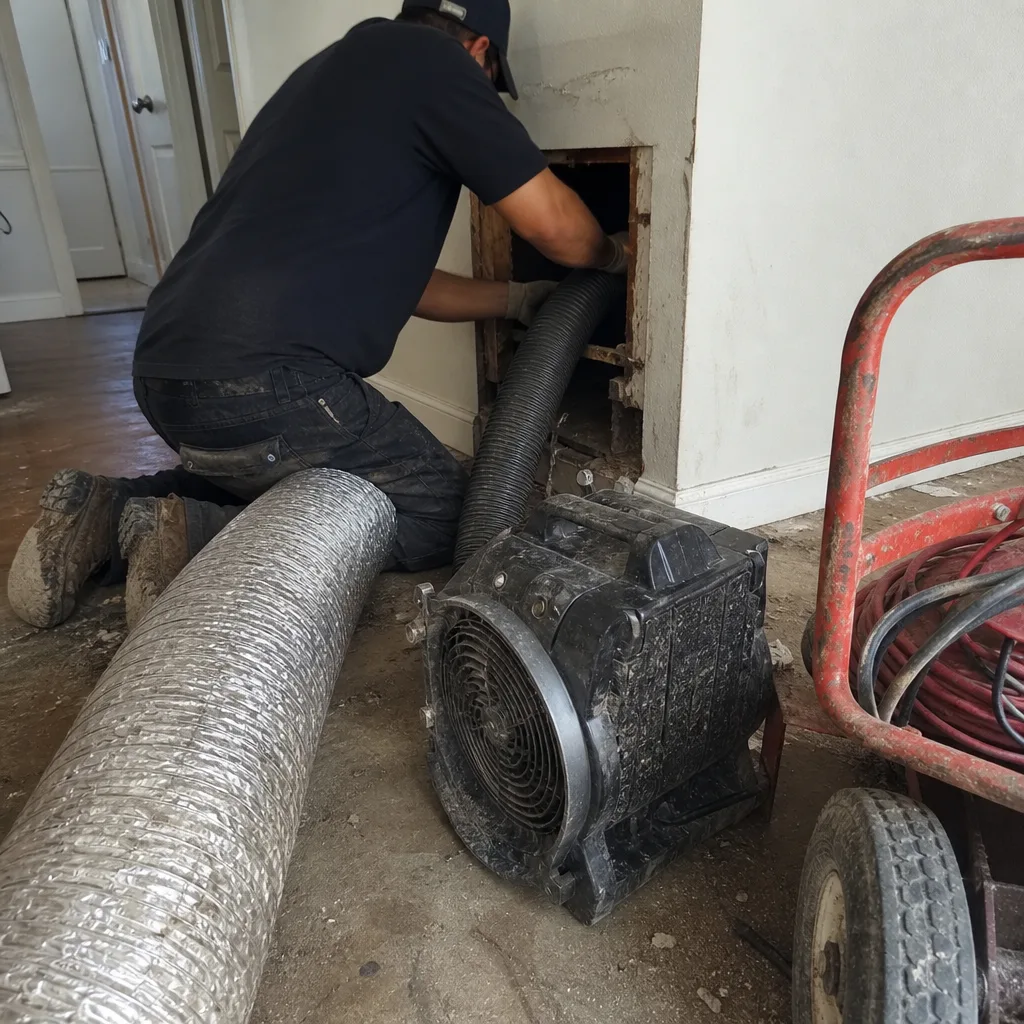
A technician opens up the registers and runs cleaning equipment through the system. But in many homes, the duct layout makes it impossible to reach every part of the system from the register openings alone. The technician needs additional entry points. So they cut a hole in the duct work, insert their cleaning tools, and then patch the hole when they’re done.
That hole is a modification. The patch is now part of your duct system, and in California, that patch must meet CMC Section 604 standards for access panel construction and sealing. A properly done access panel includes a manufactured panel assembly with a gasketed closure, not just a piece of sheet metal screwed over a hole and wrapped in tape.
Here’s the thing: we’ve seen plenty of access panel patches in Oceanside attics that were done with whatever materials were on hand. They leak. They separate. They allow attic insulation into the duct stream. And because there was no permit and no inspection, the homeowner has no idea the work doesn’t meet code until something goes wrong.
If a cleaning contractor tells you they need to cut access panels into your duct work, ask the following questions:
- How many panels are you cutting, and where?
- What type of panel assembly will you be installing?
- How will the panels be sealed?
- Will the work be documented and photographed?
- Is the panel installation subject to a mechanical permit under Oceanside’s requirements?
A contractor who can’t answer these questions clearly is not treating your duct work as a building system subject to code. A contractor who can answer them is operating at a professional level. The difference matters.
Our approach to air duct cleaning in Oceanside is built around reaching the full duct system without unnecessary modification. The Rotobrush system’s extended reach and access flexibility means we need fewer additional entry points to complete a thorough cleaning. When panels are necessary, we document the work and install proper closures.
What Documentation You Should Keep from Any Duct Work
Whether your duct work involves cleaning only or cleaning plus repair, documentation is your protection. Here’s what a complete homeowner file should include after any duct service in California:
- Scope of work documentation: A written description of exactly what was done, including the locations of any access panels cut, any repairs performed, and any duct sections replaced.
- Before and after photos: Photos that show the condition of the duct work before work began and after work was completed. This is particularly important for any repair work.
- Material documentation: A record of what materials were used for any repairs or replacements, including sealant types and insulation R-values if insulation was replaced.
- Permit records: If a permit was pulled for the work, keep the permit number, the inspection date, and a copy of the approved inspection report.
- Mold documentation: If any mold was discovered and addressed, keep written documentation of the findings and the remediation approach.
- Contractor information: The contractor’s CSLB license number, the name of the qualifying individual, and contact information for any follow-up questions.
Why does this documentation matter for resale? California’s real estate disclosure requirements ask sellers to disclose any known material defects and any work done on the home’s systems. If you had ducts cleaned and repaired, you should be able to demonstrate what was done and that it was done properly. A buyer who sees documentation of professional work with permits where required is less likely to use the duct system as a negotiation point.
We recommend Oceanside homeowners keep this documentation indefinitely, not just until the next cleaning. Duct systems last decades, and the file grows over time. A complete history helps future contractors understand your system and helps you prove what’s been maintained.
Contractor Licensing Tiers: What to Ask Before Work Begins
California’s CSLB issues different license classifications, and understanding the tiers helps you ask the right questions before work starts.
Here’s the landscape:
- C-20 Warm-Air Heating, Ventilating and Air-Conditioning Contractor: This classification allows a contractor to install, modify, and repair warm-air heating, ventilating, and air conditioning systems, including duct work. A C-20 holder can legally perform duct modifications and repairs that require a permit.
- C-61/D-40 Service and Repair Contractor (Limited Specialty): Some duct cleaning companies operate under limited specialty licenses. The scope of what these contractors can legally do is narrower, and they may not be authorized to perform permitted duct modifications.
- Unlicensed operators: California requires a CSLB license for any construction-related work exceeding $500 in labor and materials combined. Reputable duct cleaning companies hold proper licensing, and you should verify it.
The question to ask is direct: “If you find damage to my duct work during the cleaning, are you licensed to perform the repair yourself, or will I need to hire a separate contractor?” A company that can do both under one roof saves you the headache of coordinating two contractors. Our Air Duct Repair in Oceanside service exists precisely because we saw too many homeowners stuck in that situation: a cleaning company finds a disconnected duct, tells the homeowner to call someone else, and the homeowner waits weeks while conditioned air pours into the attic.
When we perform a repair during a cleaning job, the work is done with the same crew that’s already in the home, using materials that meet CMC and Title 24 requirements. The documentation goes into your file. If the scope of work requires a permit under Oceanside’s requirements, the permit process is handled as part of the job.
Common Mistakes to Avoid
- Assuming every duct company handles repairs legally. Some cleaning-only contractors will perform repairs without the proper license classification. Ask directly about the CSLB license tier and whether the company is authorized to perform permitted duct work before authorizing any repair.
- Accepting a foil tape patch without documentation. If a technician patches a separation with basic foil tape and doesn’t document it, you now have an unverified repair that doesn’t meet Title 24 sealing standards. Demand proper materials and written documentation.
- Ignoring access panel quality. A poorly sealed access panel leaks conditioned air and allows attic particulate into the duct stream. In Oceanside’s coastal environment, that introduction of salt-laden attic air accelerates corrosion on interior components.
- Assuming mold remediation is just heavy cleaning. Mold inside ducts requires a different approach than routine cleaning. If you’re told there’s mold, ask for documentation and verify the remediation approach meets California standards.
- Not keeping a documentation file. Homeowners who can’t produce records of duct work done on their home are at a disadvantage during resale negotiations. California’s disclosure requirements mean you need to demonstrate what you know.
- Choosing the cheapest quote without comparing scope. A low quote that doesn’t include proper equipment, documentation, or repair capability often means the work is being done with inadequate tools. Rotobrush contact cleaning and HEPA negative-air containment cost more to operate than a shop vac and a brush, and the results are demonstrably different.
- Skipping the permit conversation entirely. If a contractor dismisses the permit question without explaining why the specific scope doesn’t require one, that’s a red flag. A qualified contractor can articulate exactly where the maintenance-versus-modification line sits for your specific job.
When to Call a Professional
If you’re reading this guide, you’re probably evaluating whether your ducts need attention and what that attention should look like. Here are the scenarios where professional involvement is clearly warranted:
- You’ve never had your ducts cleaned, and the home is more than 10 years old, particularly in older Oceanside neighborhoods where original duct work is common.
- You’ve noticed visible dust accumulation around registers, or dust returns quickly after cleaning surfaces.
- You smell a musty odor when the HVAC system runs, which may indicate mold or accumulated organic material in the duct work.
- You’re in a recently purchased home and have no documentation of prior duct maintenance.
- You suspect a disconnected or crushed duct section, which you might notice as uneven temperatures between rooms or reduced airflow at specific registers.
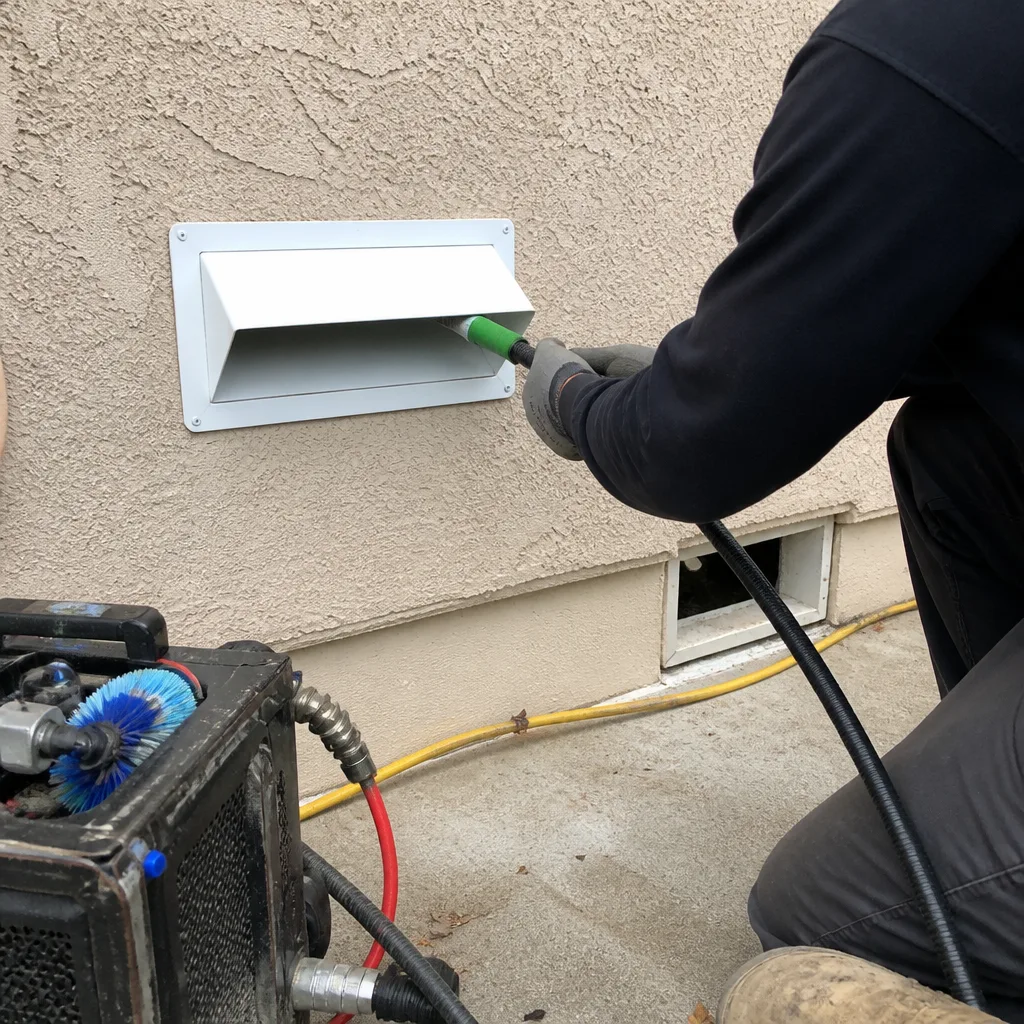
Dryer Vent Cleaning in Oceanside deserves separate mention here. Dryer vents are a fire hazard when clogged, and California’s fire codes require proper vent termination and condition. If your dryer takes longer than one cycle to dry a load, or if the vent flap doesn’t open properly during operation, the lint accumulation is a documented fire risk that should be addressed promptly. Duct Cleaning Oceanside offers free estimates in Oceanside, call (855) 382-4811.
Frequently Asked Questions
No, routine air duct cleaning does not require a permit anywhere in California. Cleaning restores the system to original operating condition without changing its configuration, so it falls under maintenance rather than modification. Permits enter the conversation only when the physical duct system is altered, such as cutting access panels, replacing duct sections, or reconfiguring connections.
In Oceanside, a mechanical permit is typically required when the duct system configuration changes. This includes replacing duct sections, cutting new access panels, relocating register openings, or resealing connections as part of a larger alteration. Minor repairs that don’t alter the system configuration may not require a permit, but the determination should be made by the Oceanside building division based on the specific scope of work.
Verify the contractor’s license through the California Contractors State License Board (CSLB) website by searching the company name or license number. For duct repair work, confirm the license classification authorizes the scope of work. A C-20 Warm-Air Heating, Ventilating and Air-Conditioning license covers duct modifications and repairs. Ask directly whether the company is authorized to perform permitted duct work, not just cleaning.
Ask for written documentation of the findings, including photos and the specific location of the mold. The underlying moisture issue that’s feeding the mold must be identified and addressed, otherwise the mold will return. For larger remediation projects, California Department of Public Health requirements may apply, including certification and clearance testing requirements. Always retain documentation of mold findings and remediation for real estate disclosure purposes.
A permit triggers a third-party inspection by a city inspector who verifies the work meets code. Without that inspection, you’re relying entirely on the contractor’s word that the work was done correctly. Uninspected duct repairs can leak, separate, and introduce attic particulate into your living space. The permitting process is protection for you as the homeowner, not just paperwork.
Most Oceanside homes benefit from professional duct cleaning every 3 to 5 years, though factors like pets, recent renovation work, coastal dust exposure, and the age of the home can change that timeline. A thorough cleaning using contact-cleaning equipment like Rotobrush removes compacted debris that air-only systems leave behind, so the cleaning lasts longer than a basic vacuum pass. Call (855) 382-4811 for an assessment of your specific system.
The Bottom Line
Air duct cleaning in California requires no permit, but the moment your technician modifies the duct system, California Mechanical Code Section 604 and Title 24 energy standards may apply. The line between maintenance and modification is specific and knowable. Cutting access panels, replacing duct sections, resealing plenum connections, and altering airflow design all cross into territory where permits, inspections, and proper materials matter. Oceanside homeowners should ask direct questions about licensing, documentation, and permit requirements before authorizing any work. For Air Duct Cleaning Troubleshooting: Common Problems and How to Fix Them and other resources, visit our blog. Keep a documentation file. It protects you during resale and ensures your duct system meets the standard it was built to.
Written by the team at Duct Cleaning Oceanside, serving Oceanside since 2011. Find more guides & resources on our blog.
See the difference
 Before
 After
 Before
 After
 Before
 After