
Last updated November 2, 2026
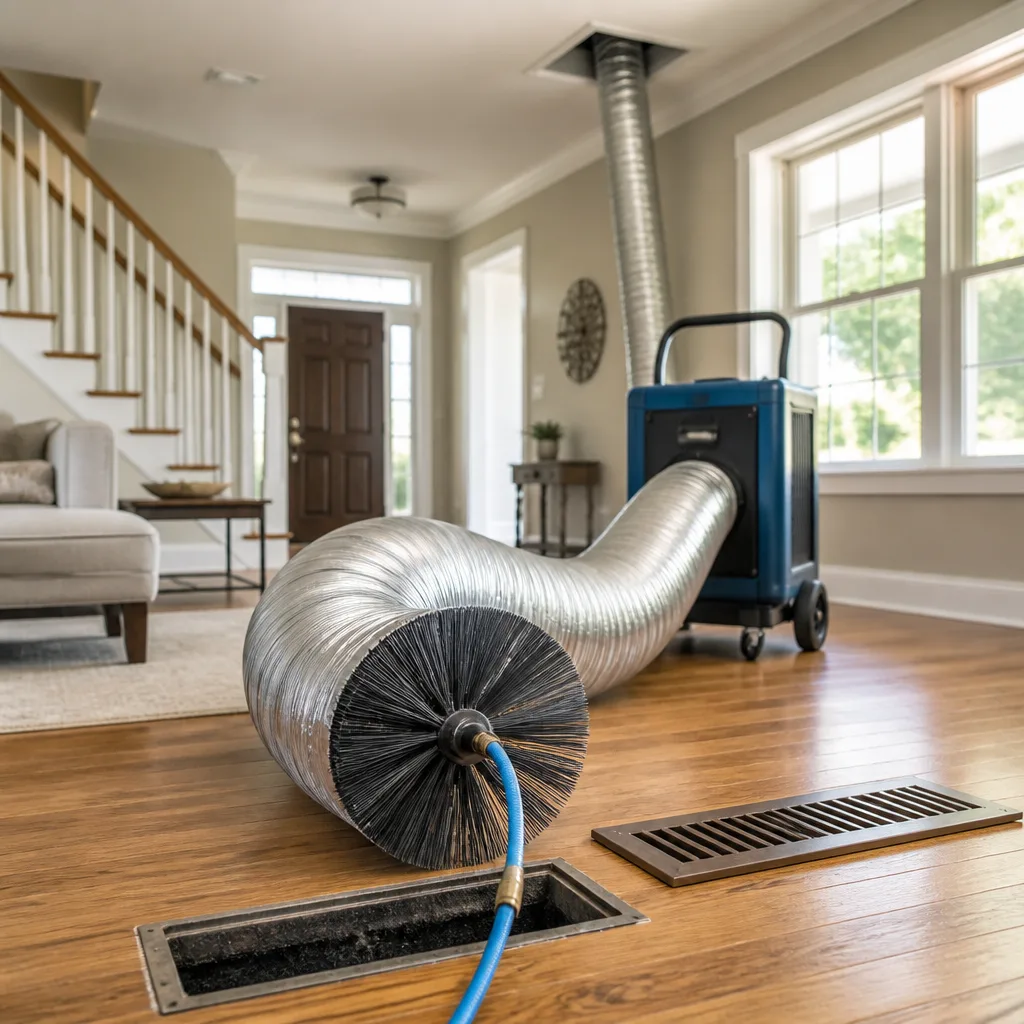 Whole-home duct cleaning
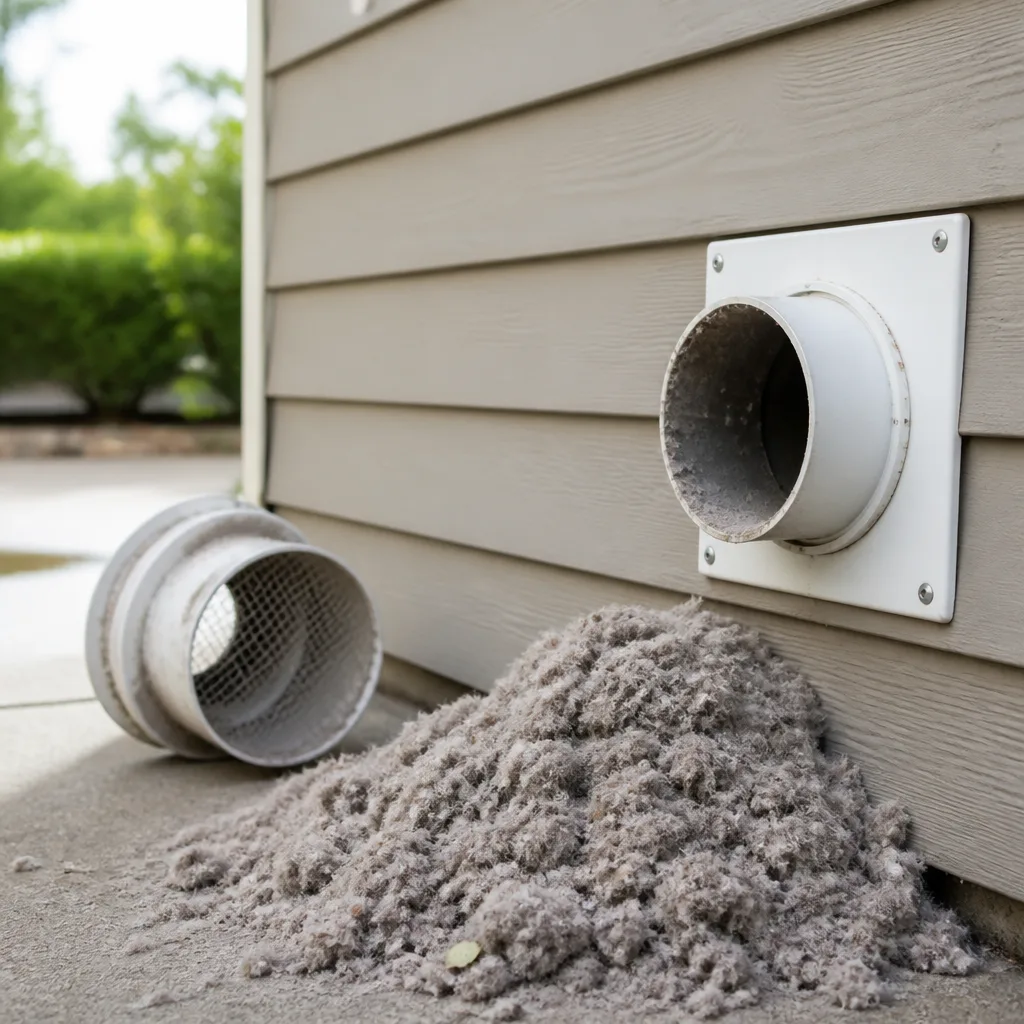 Dryer vent cleaning
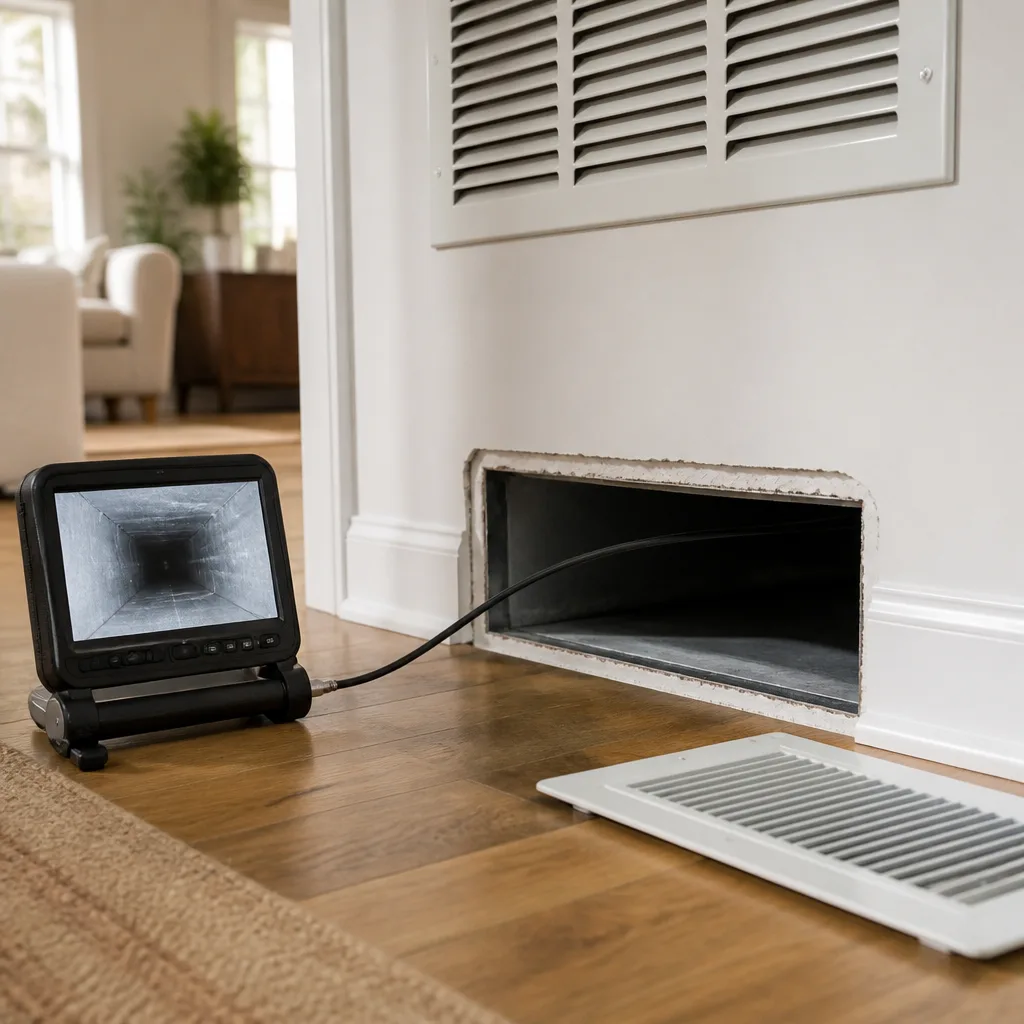 Camera inspection
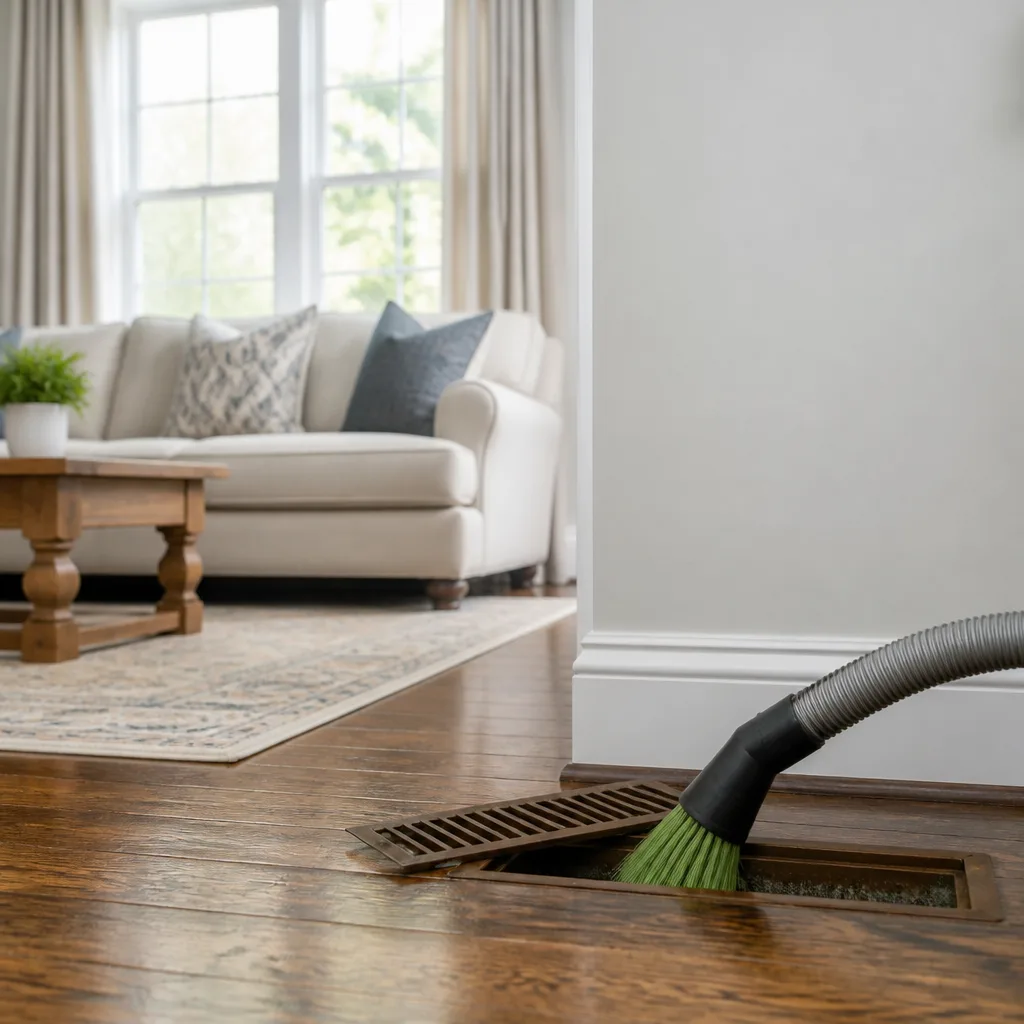 Sanitizing & deodorizing
Whole-system duct and dryer vent check with before-and-after photos - you see exactly what came out of your vents
That "$99 whole-house special" is a bait ad - the real number appears once they are in your hallway, or the "clean" is a shop-vac at the register. We photograph the inside of your ducts before and after instead.
Seasonal Air Duct Cleaning Care for Oceanside: Year-Round Homeowner’s Guide
Oceanside averages over 260 days of onshore marine influence per year, yet most duct maintenance advice is written for dry inland climates. That mismatch is exactly why mold colonization at return vents gets undercounted by coastal homeowners, and why dust behaves differently in a Fire Mountain home than it does in a Carlsbad tract house three miles inland. This guide maps Oceanside’s actual weather cycles to a practical duct maintenance plan, so you’re not cleaning on a generic calendar schedule but on the schedule your house actually demands.
Quick Answer
Most Oceanside homes need our Air Duct Cleaning services every two to three years, but the timing matters more than the interval. Schedule cleanings after spring rain recovery (April-May) and after Santa Ana wind events (October-November), not on a fixed annual date. Homes within two miles of the coast or with uninsulated duct runs in attics should lean toward the shorter end of that range because of persistent condensation risk.
Styles & brands we work with
- Whole-home duct cleaning
- Dryer vent cleaning
- Camera inspection
- Sanitizing & deodorizing
Table of Contents
- Spring (March-May): Post-Rain Mold Assessment and High-Humidity Recovery
- Summer (June-August): June Gloom Condensation and What It Does Inside Duct Runs
- Fall (September-November): Santa Ana Pre-Season Prep and Post-Event Inspection
- Winter (December-February): Wildfire Smoke Infiltration and HEPA Realities
- Building a Rolling Two-Year Cleaning Cycle That Matches Environmental Load
- Why Equipment Matters: Contact Cleaning vs. Air-Only Methods
- The Repair Side: What Cleaning Reveals and Why It Changes the Math
- Common Mistakes to Avoid
Spring (March-May): Post-Rain Mold Assessment and High-Humidity Recovery
Spring in Oceanside isn’t the dry, warming season it is in Escondido or Temecula. Marine layer mornings persist well into May, and the rain that falls between January and March leaves behind a specific problem: elevated indoor humidity that settles inside ductwork. When outside air is damp and ducts are cool, moisture condenses on interior surfaces, especially at return vents where warmer indoor air meets cooler metal. That moisture is the starting condition for mold colonization, and it doesn’t take much time to establish.
The critical window is late March through May, after the last significant rain and before the marine layer settles into its summer pattern. This is the highest-value time to schedule an Air Duct Cleaning in Oceanside, because the cleaning addresses what the wet season left behind before summer heat bakes it into place. Mold spores that get a foothold in April don’t disappear in August; they go dormant and recirculate when the system pushes dry, warm air through in fall.
What to check at each return vent during spring:
- Dark spotting or speckling on the vent grille edges, particularly in rooms where doors stay closed
- A musty or earthy smell that’s stronger when the HVAC fan first kicks on
- Visible dust accumulation that returns within days of wiping the grille clean
- Condensation beading on the grille itself during morning hours
If any of these show up, that’s not a “wait and see” situation. The return side of the system is under negative pressure, which means whatever is growing there gets pulled through the air handler and distributed to every supply register in the house. A spring cleaning with contractor-grade contact equipment removes the colonization site rather than masking the odor.
Summer (June-August): June Gloom Condensation and What It Does Inside Duct Runs
Oceanside’s June Gloom is famous, but what’s less discussed is what it does to ductwork that runs through unconditioned attic space. When the marine layer sits over the coast for weeks, the air outside is cool and saturated. The attic, however, still heats up under direct sun exposure. The result is a temperature differential across the duct wall: cool, damp air moving inside the duct and warm, humid attic air pressing against the outside of it. Condensation forms on the exterior of uninsulated or under-insulated duct runs, and if the duct material has any gaps, tears, or loose connections, that moisture finds its way inside.
This is why June and July are when we see a spike in what looks like “sudden” mold or mildew complaints from Oceanside homeowners. It’s not sudden. It’s the cumulative effect of weeks of condensation cycling. The worst cases are always in homes where the duct insulation was installed decades ago and has compressed, torn, or separated at the joints.
Signs that June Gloom is getting into your duct runs:
- Musty odor that appears only when the AC is cooling, not when the fan runs alone
- Visible water staining on ceiling drywall near supply registers
- Increased dust on surfaces directly under supply vents during humid weeks
- A noticeable temperature difference between rooms, indicating airflow restriction from duct damage or blockage
When condensation is the culprit, cleaning alone isn’t the full fix. The underlying insulation or connection problem has to be addressed, which is where in-house Air Duct Repair in Oceanside matters. A company that cleans but can’t repair will leave you with the same moisture problem and a temporary fix. A company that repairs what it finds solves the cause, not just the symptom.
Fall (September-November): Santa Ana Pre-Season Prep and Post-Event Inspection
Santa Ana winds are Oceanside’s dust delivery system. When high pressure builds over the Great Basin and pushes dry air toward the coast, it carries fine particulate from the inland deserts and foothills directly into coastal neighborhoods. Windows that have been open all summer let that dust in, and the HVAC system does the rest, pulling airborne particles into return ducts where they deposit along duct walls, especially at elbows and transition points where airflow changes direction.
The practical window is mid-September, before the first significant Santa Ana event. If your filter is rated below MERV 11, this is the time to upgrade it. A MERV 11 or MERV 13 filter, when the system’s blower can handle the added resistance, captures significantly more of the fine particulate that Santa Ana winds introduce. This is also the window to have a pre-season inspection if you’re in a neighborhood with older construction, like the homes east of I-5 where original ductwork from the 1970s and 1980s is still common.
Post-event protocol after a major Santa Ana:
- Change or upgrade the filter even if it doesn’t look clogged, fine particulate loads filters quickly
- Check supply registers for visible dust accumulation within 48 hours of the event
- Listen for whistling or airflow changes at registers, which indicate filter loading or new duct restrictions
- If dust appeared on surfaces across multiple rooms, schedule a duct inspection rather than assuming the filter handled it
The homeowners who do best in fall are the ones who treat Santa Ana season the way Midwest homeowners treat snow season. It’s a predictable environmental event with predictable consequences for the system. Preparing for it is just good stewardship.
Winter (December-February): Wildfire Smoke Infiltration and HEPA Realities
Wildfire smoke is no longer a once-in-a-decade event for Oceanside. Regional fires push smoke plumes toward the coast with enough regularity that winter air quality alerts are now a standard part of the seasonal landscape. What many homeowners don’t understand is what their HVAC system actually does with smoke particulate, and what it doesn’t do.
A standard 1-inch filter, even at MERV 13, captures particles before they reach the coils, but it doesn’t capture everything. The smallest smoke particles, the PM2.5 and smaller fraction, can slip past and deposit inside the supply ductwork. Once deposited, they don’t stay put. They re-entrain into the airstream when the system cycles on, especially in winter when the furnace is running more frequently and the air is drier. This is why a house can still smell faintly of smoke weeks after the outdoor air has cleared.
HEPA filtration inside the air handler is effective, but it’s a point solution. A Nikro HEPA negative-air machine used during cleaning captures dislodged particulates at the source, preventing them from recirculating into the living space during the cleaning process. That’s the distinction that matters: HEPA in the machine versus HEPA in the system. A portable HEPA filter in a bedroom helps that room. A HEPA negative-air setup during a duct cleaning protects the entire house while the work is happening. After a winter with significant smoke exposure, the duct system itself needs attention. The particulate load is real, not theoretical, and a filter swap at the return doesn’t address what’s already deposited downstream.
Building a Rolling Two-Year Cleaning Cycle That Matches Environmental Load
The standard advice is to clean ducts every three to five years, but that’s a national average that ignores local environmental loading. Oceanside’s specific stressors are marine-layer humidity, Santa Ana particulate events, and periodic wildfire smoke. A home three miles inland from the pier in the San Luis Rey area experiences a different loading profile than a beachfront condo on the Strand, but both experience more environmental stress than a home in central San Diego.
A rolling two-year cycle means this: instead of counting calendar months, you count environmental events and schedule around them.
Here’s a practical framework:
- Year One Spring: Full contact cleaning, prioritizing post-rain moisture assessment and return vent remediation.
- Year One Fall: Filter upgrade before Santa Ana season, plus visual inspection of visible duct runs, connections, and registers.
- Year Two Spring: Lighter inspection, focusing on return vents and condensation signs. Only clean if evidence demands it.
- Year Two Fall: Full contact cleaning again, addressing the cumulative load from two Santa Ana seasons, summer marine layer, and any wildfire smoke events.
This creates a pattern where full cleanings happen every two years by default, but the timing is driven by what actually happened in and around the house, not by a coupon that arrived in the mail. Homes with pets that shed heavily, homes with occupants who have respiratory conditions, and homes that underwent renovation get moved to a shorter interval based on need rather than calendar.
Why Equipment Matters: Contact Cleaning vs. Air-Only Methods
Not all duct cleaning is the same, and the difference is visible in the result. Most duct cleaning companies in the Oceanside market use a variation of the same approach: a high-volume vacuum attached to the system, with air agitation to dislodge debris. That works for loose dust and light particulate. It does not work for the kind of compacted debris that forms in coastal duct systems, where humidity has turned dust into a paste that adheres to duct walls.
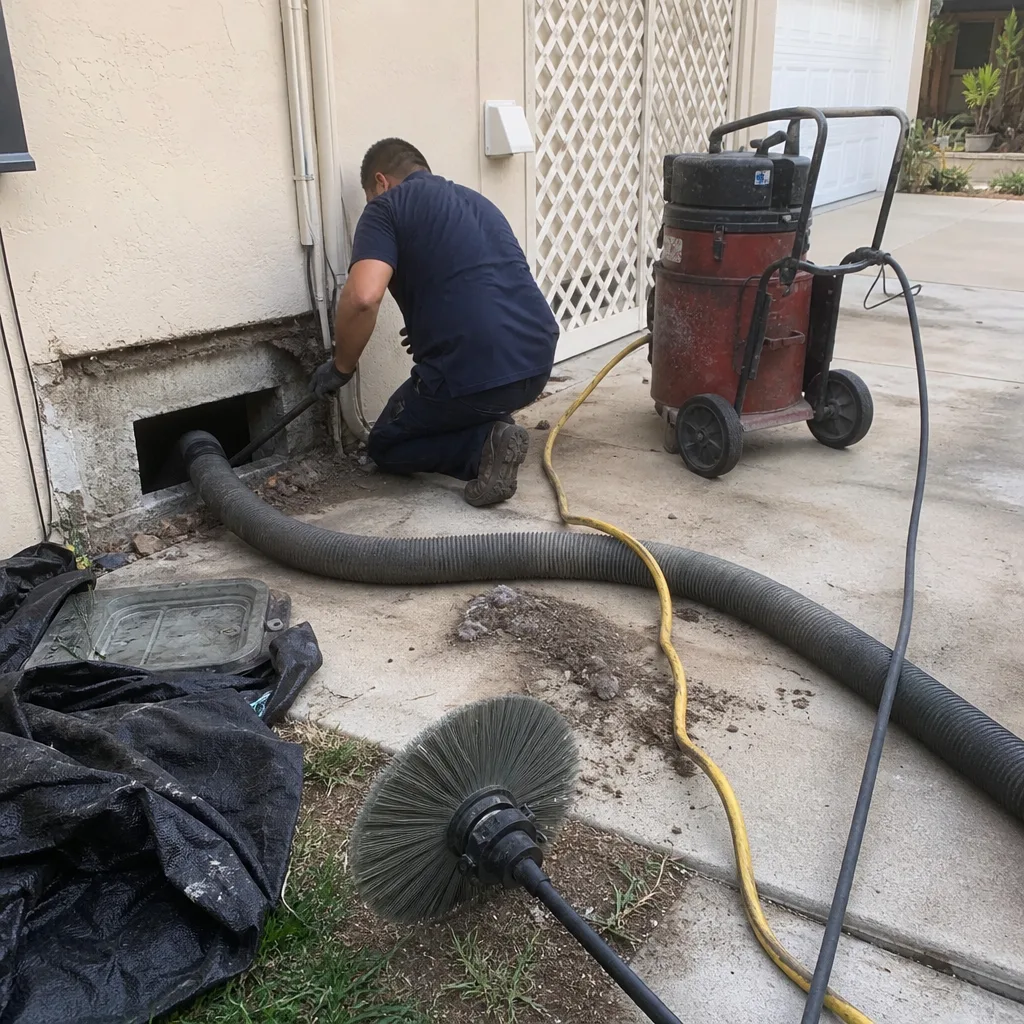
Rotobrush contact cleaning uses rotating brushes that physically scrub the interior surface of the duct. The distinction matters because the debris profile in Oceanside is different from the debris profile in Phoenix or Las Vegas. Coastal dust is denser, sometimes slightly tacky from humidity, and it doesn’t always respond to air-only agitation. Contact cleaning removes it by mechanical action.
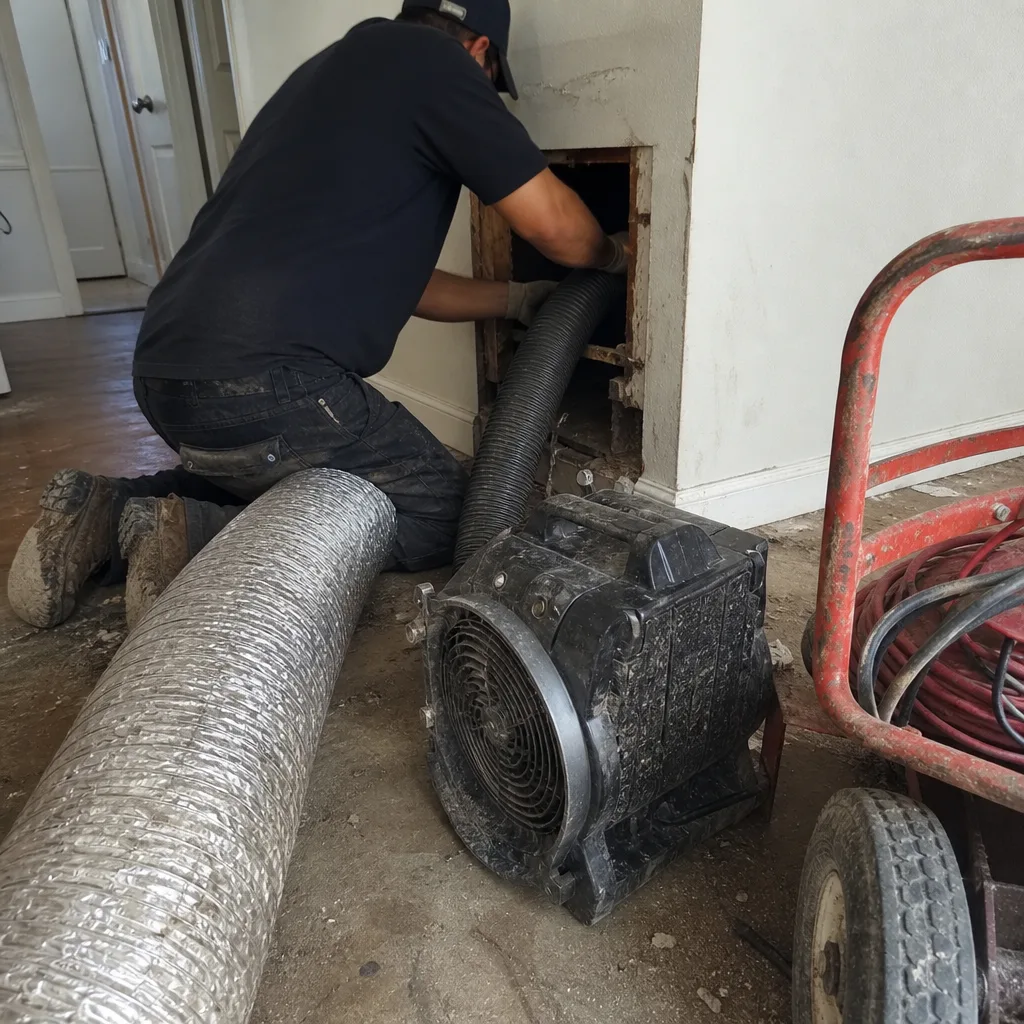
Equally important is containment. A Nikro HEPA negative-air system maintains negative pressure inside the duct during cleaning, which means dislodged particulates get pulled into the capture system rather than drifting into the living room. Without that containment, a cleaning can actually make the air in your home temporarily worse, as decades of settled dust gets knocked loose and recirculated. That’s the difference between cleaning the ducts and cleaning the air in your home.
The Repair Side: What Cleaning Reveals and Why It Changes the Math
Every thorough duct cleaning in an Oceanside home reveals something. Sometimes it’s minor, like loose tape at a connection joint or a register that was never properly sealed against the drywall. Sometimes it’s significant, like a duct run that has collapsed under its own weight in an attic, or a return that’s disconnected entirely, pulling fiberglass insulation and attic dust directly into the system.
The problem with most duct cleaning companies is that cleaning is where their capability ends. They report what they find, hand you a note, and tell you to call an HVAC contractor. That means a second appointment, a second diagnostic, and often a second opinion. When the company doing the cleaning also does Air Duct Repair in Oceanside, the fix happens in the same visit. The system gets cleaned and made whole in one pass.
This changes the math on a seasonal cleaning in a meaningful way. If you’re paying to have ducts cleaned but the system has a disconnected return, you’re paying to clean ducts that will be dirty again within months, because the source of contamination is still open. A repair-capable cleaning closes that loop. You’re not renting a cleaner system; you’re buying one.
This also matters for compatibility with premium filtration. Homes with Honeywell media cabinets or Aprilaire whole-home filtration systems have a specific airflow profile. A cleaning company that understands those systems knows when a filter replacement is actually needed and when it’s simply loaded with particulate from a duct system that was the real problem. Cleaning around that equipment properly means the filtration system works as designed rather than being blamed for a duct problem it didn’t create.
Common Mistakes to Avoid
- Cleaning on a fixed annual schedule regardless of conditions. Oceanside’s environmental load varies dramatically year to year. A year with heavy Santa Ana activity and wildfire smoke demands more attention than a mild year. Fixed intervals ignore what actually happened to your house.
- Assuming a MERV 13 filter eliminates the need for duct cleaning. Better filters capture more at the return, but they don’t address what’s already deposited downstream, and they don’t remove compacted debris that predates the filter upgrade.
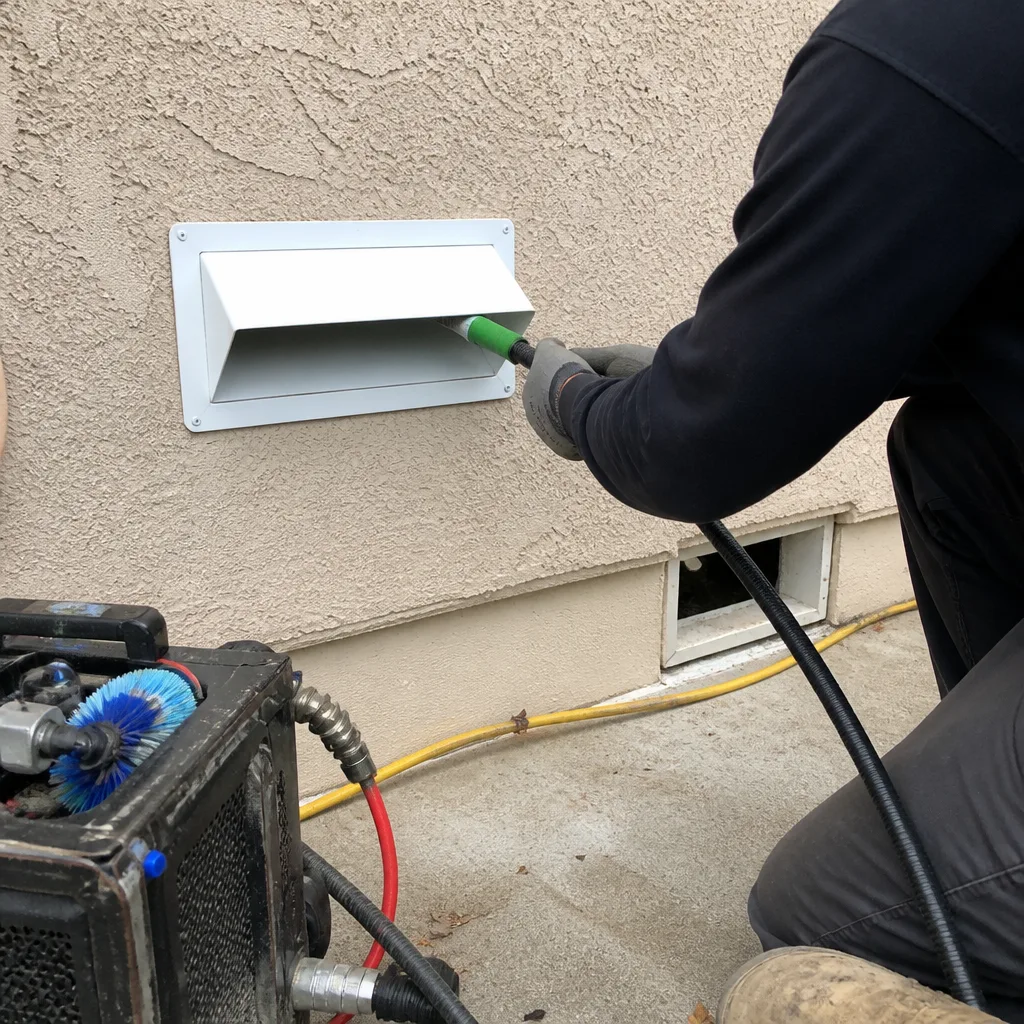
- Skipping dryer vent cleaning while addressing HVAC ducts. Lint accumulation in dryer vents is a documented fire risk, and it’s completely separate from HVAC duct cleaning. A home can have clean HVAC ducts and a dangerously full dryer vent. Dryer Vent Cleaning in Oceanside is a distinct service that should be on every coastal homeowner’s radar.
- Cleaning without repairing. If the cleaning reveals damaged or disconnected ductwork and it doesn’t get fixed, the cleaning was an expensive temporary measure. The contamination source is still there, and the system will re-soil quickly.
- Waiting for visible mold to act. By the time mold is visible on a return grille, the colonization is established. The time to act is when conditions create risk, not when evidence is undeniable. Spring moisture assessment is preventive, not reactive.
- Ignoring June Gloom condensation as a coastal quirk. Persistent condensation inside duct runs is a system problem, not a weather curiosity. It accelerates debris adhesion, mold growth, and duct material degradation. Uninsulated or under-insulated runs need attention, not acceptance.
See the difference
 Before
 After
 Before
 After
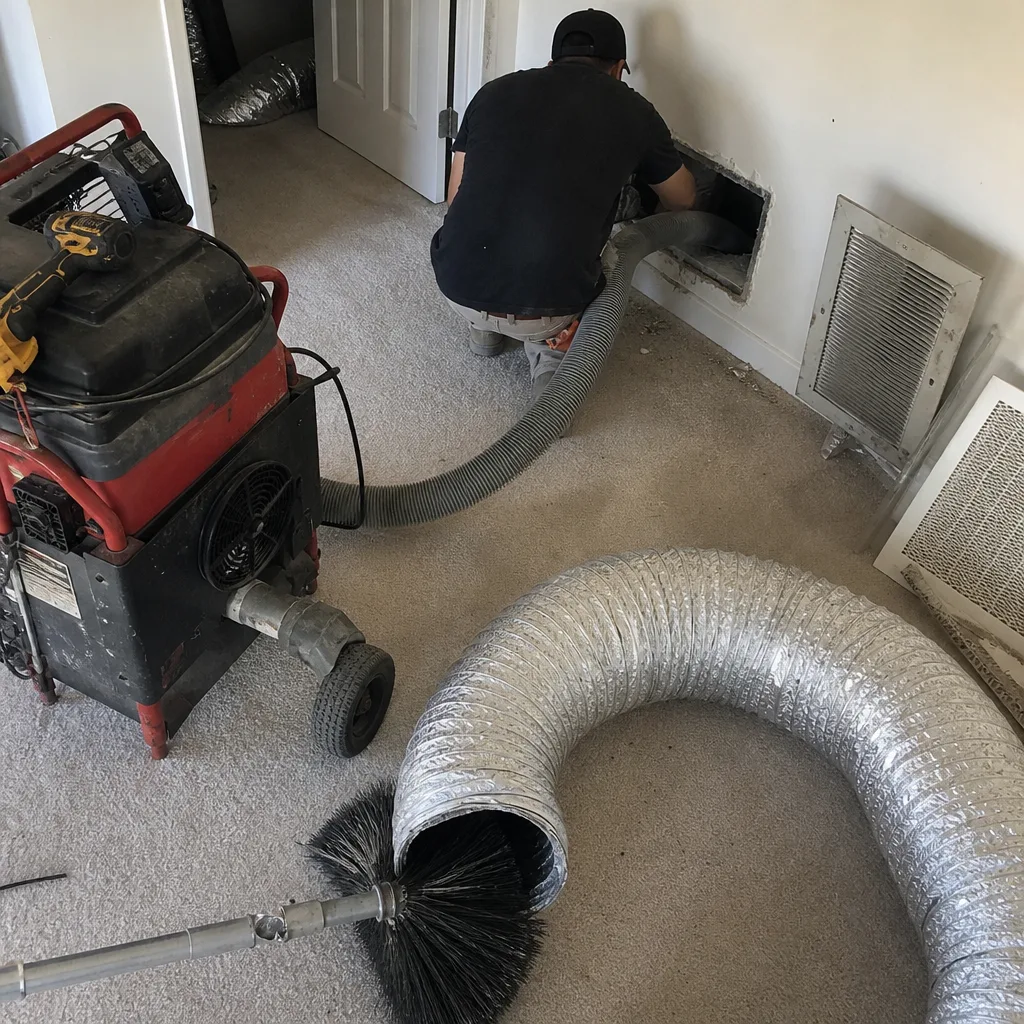 Before
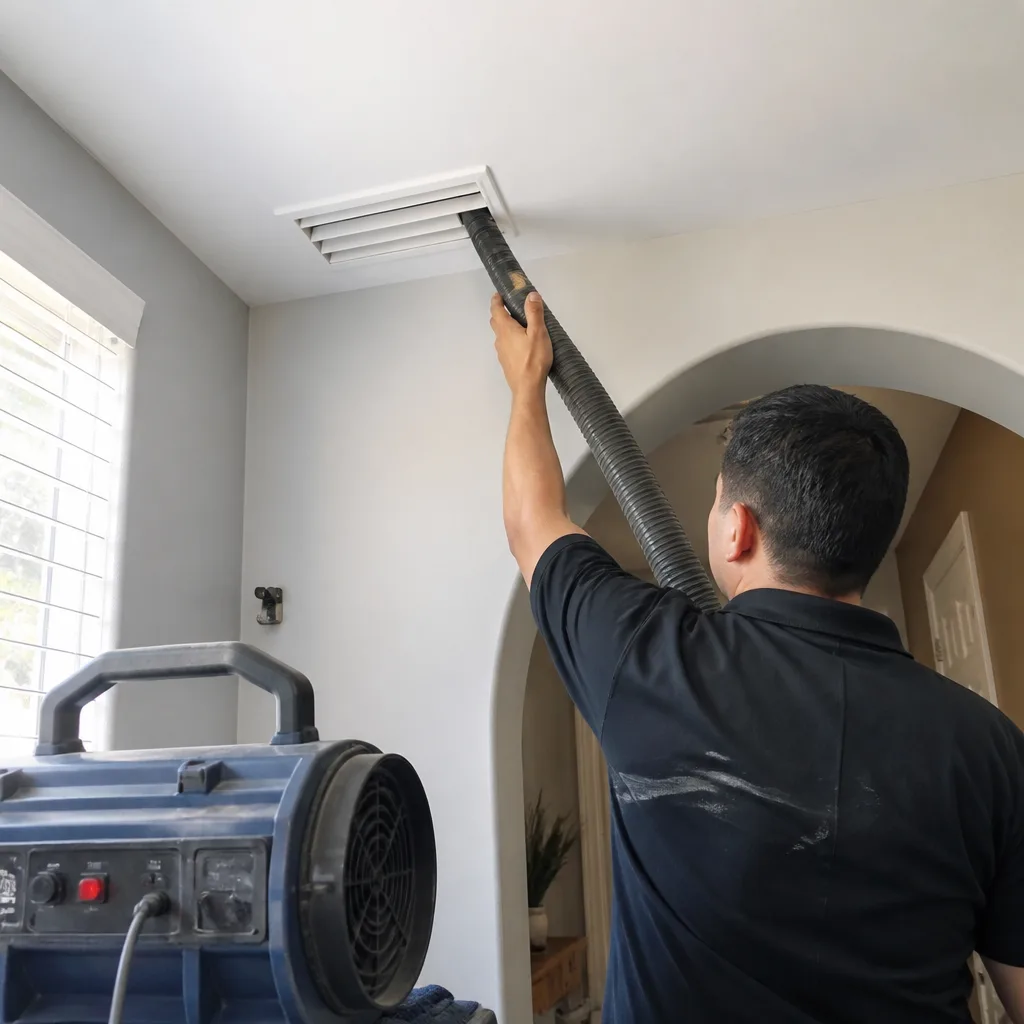 After
When to Call a Professional
Call when the evidence is stacking up: musty odors tied to the HVAC system, dust returning to surfaces within days of cleaning, visible mold on return grilles, condensation staining near registers, or a home that’s been through a heavy Santa Ana season or wildfire smoke event without a subsequent duct inspection. If you’ve inherited a home from previous owners and have no record of duct cleaning, that’s also a clear signal. Older Oceanside homes with original ductwork are nearly always overdue. Duct Cleaning Oceanside home services include free estimates in Oceanside – call (855) 382-4811 to schedule an inspection.
Frequently Asked Questions
Air duct cleaning in Oceanside typically ranges from $400 to $900 for a whole-home system, depending on square footage, number of returns, and how long since the last cleaning. For a detailed look at pricing factors, see our Air Duct Cleaning Cost Breakdown: The Oceanside Homeowner’s Reference for 2026. Homes with significant mold or debris accumulation fall on the higher end. Estimates should be free, and the price should be established before work begins. Call (855) 382-4811 for an exact quote on your home.
Most Oceanside homes need a full contact cleaning every two years, with the timing tied to environmental cycles rather than a fixed calendar date. Coastal homes with persistent condensation or homes with pets and respiratory concerns may need more frequent attention. The two-year rolling cycle described in this guide accounts for marine layer humidity and Santa Ana particulate loading.
Cheaper quotes usually reflect less capable equipment and a shorter scope of work. Air-only methods cost less to run than contact cleaning systems like Rotobrush, but they leave compacted debris behind. A low quote may also omit containment equipment, meaning the cleaning process can recirculate dust into your home. The price difference is often the difference between cleaning the ducts and actually removing what’s in them.
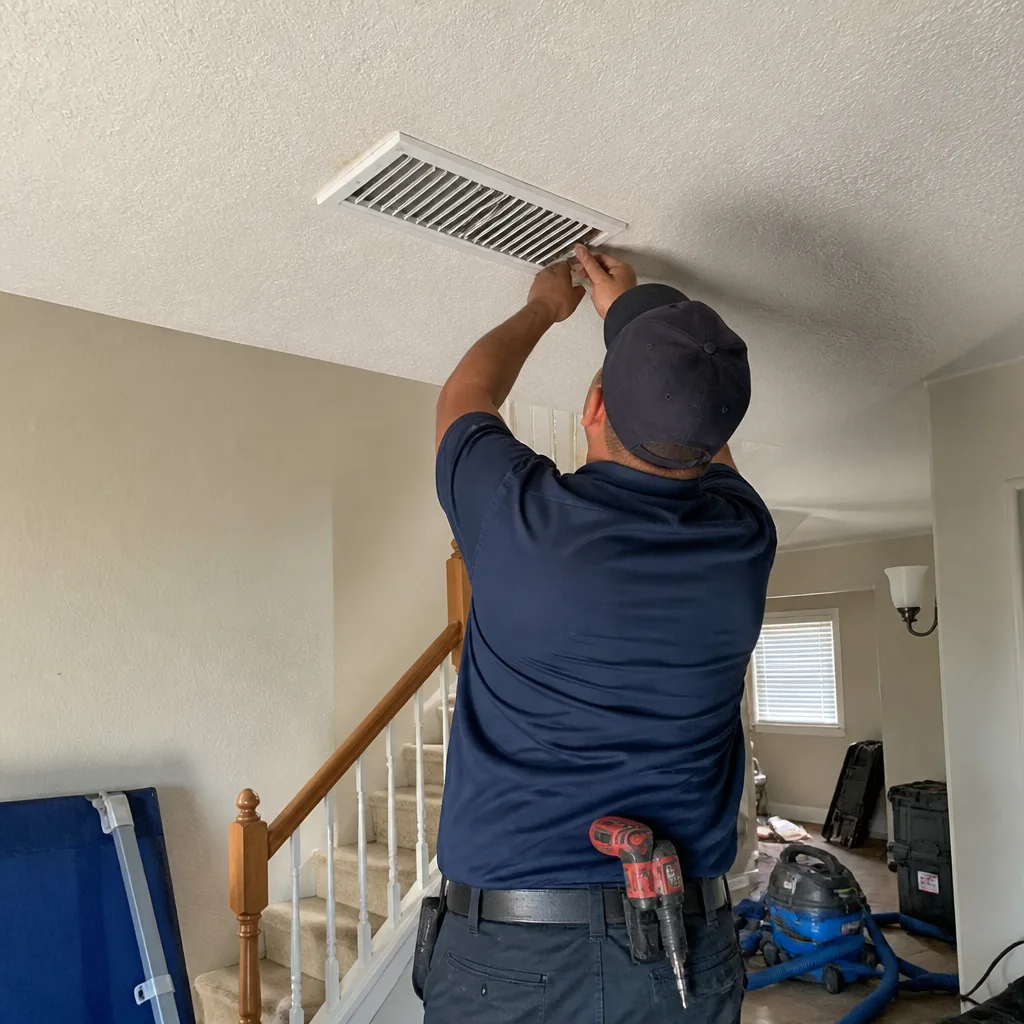
Ask for before-and-after photos of your actual ducts, not stock images. A company using contact cleaning equipment should be able to show you the physical removal of debris from your system. Some companies offer live video inspection during the cleaning. The proof is visual, not verbal.
Wildfire smoke deposits fine particulate throughout the duct system, and that particulate re-entrains into the airstream when the system cycles. It doesn’t damage the duct material itself in most cases, but it creates a persistent air quality problem that standard filtration alone doesn’t solve. After significant smoke exposure, a duct cleaning with HEPA containment is the proper remediation.
Newer homes have tighter building envelopes and often better filtration, but Oceanside’s coastal environment still introduces dust and humidity into the system. A home built in the last five years that has been through multiple marine layer seasons and Santa Ana events can still accumulate significant debris. The condition of the visible register interiors is a good proxy for what the rest of the system looks like.
The Bottom Line
Oceanside’s coastal climate creates a specific kind of duct contamination that generic cleaning advice doesn’t address. The marine layer adds humidity that turns dust into adhesive debris. Santa Ana winds deliver fine particulate in concentrated doses. Wildfire smoke adds a contaminant that standard filtration doesn’t fully capture. The answer isn’t cleaning more often; it’s cleaning with better equipment at the right moments in the seasonal cycle. A two-year rolling schedule built around spring moisture recovery and fall wind events, using contact cleaning with HEPA containment, and paired with repair capability, is the practical plan for this city. For more guides & resources on coastal home maintenance, explore our blog. That’s the difference between maintaining a system and actually improving the air in the rooms where your family spends its time.
Written by the team at Duct Cleaning Oceanside, serving Oceanside since 2011.