
Last updated November 2, 2026
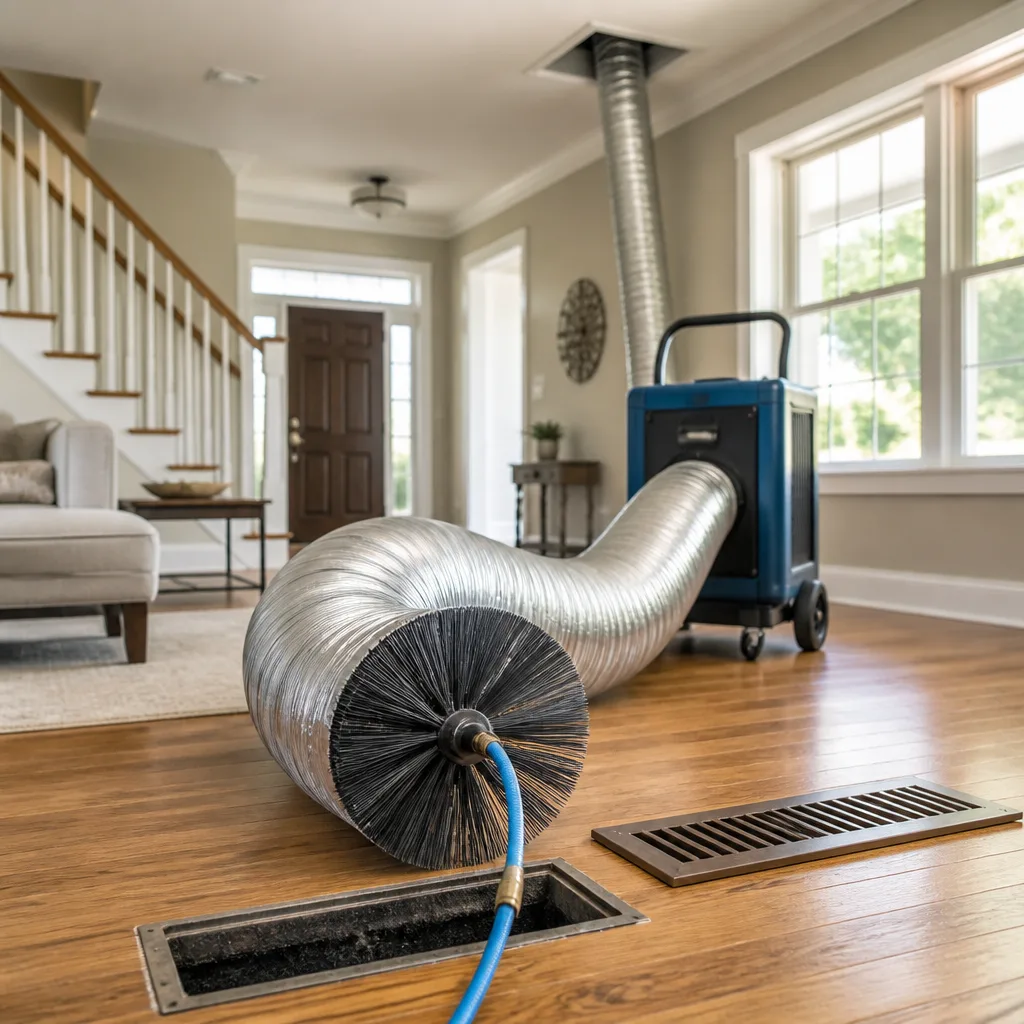 Whole-home duct cleaning
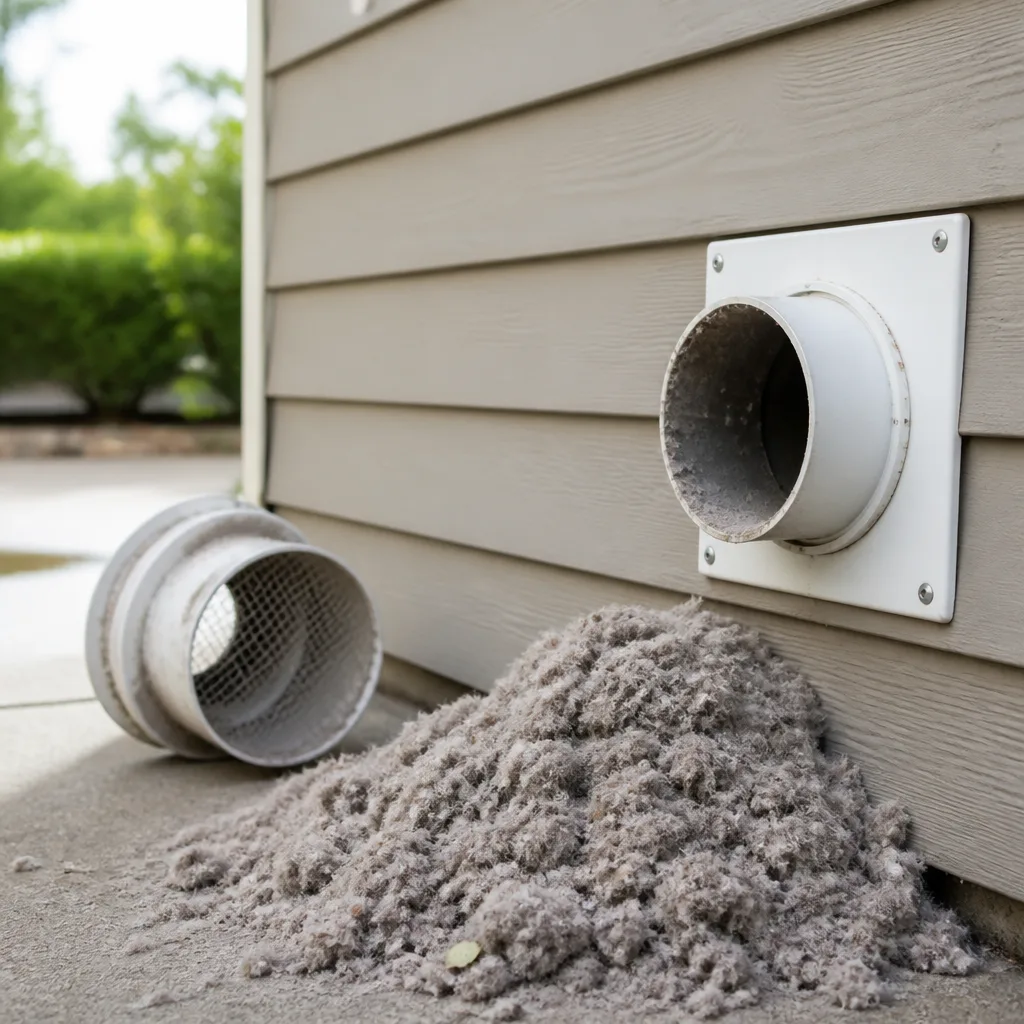 Dryer vent cleaning
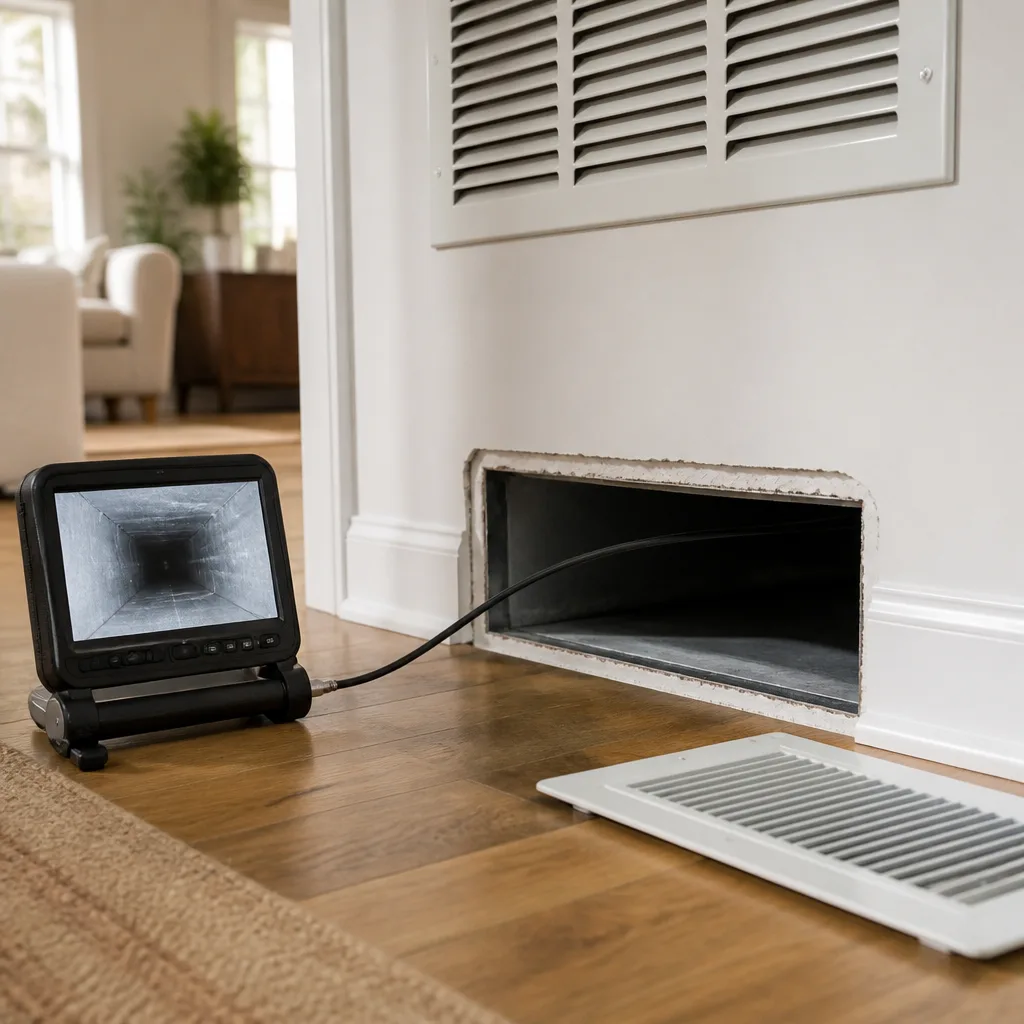 Camera inspection
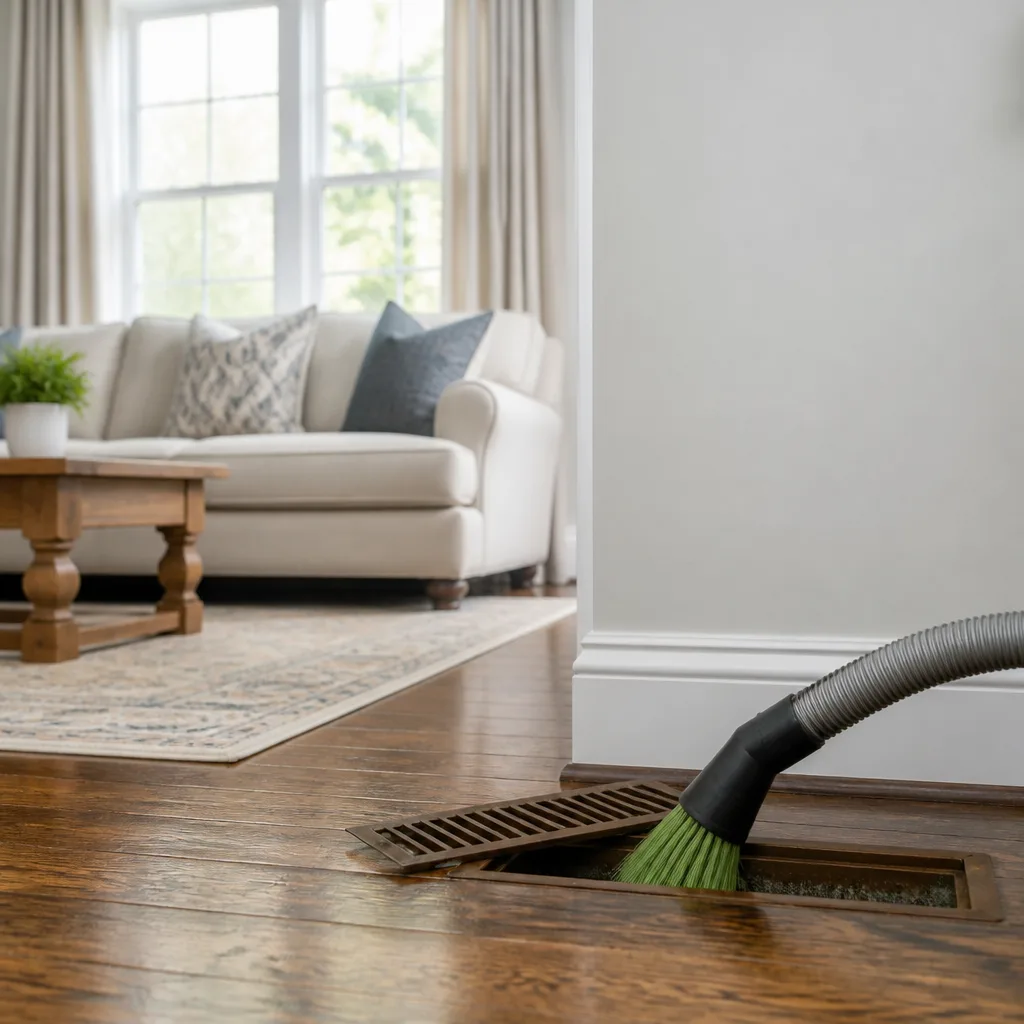 Sanitizing & deodorizing
Whole-system duct and dryer vent check with before-and-after photos - you see exactly what came out of your vents
That "$99 whole-house special" is a bait ad - the real number appears once they are in your hallway, or the "clean" is a shop-vac at the register. We photograph the inside of your ducts before and after instead.
Air Duct Cleaning Troubleshooting: Common Problems and How to Fix Them
If your ducts were cleaned six months ago and you’re already wiping dust off the coffee table, the problem almost certainly isn’t that the cleaning didn’t work. It’s that something upstream of the cleaning was never addressed. In Oceanside, where coastal humidity meets desert dust, we see this pattern constantly: homeowners pay for a cleaning, get a few weeks of relief, then watch the same symptoms creep back. This guide walks through the most common duct problems we diagnose in Oceanside homes, how to tell what’s actually causing them, and which fixes last. You’ll learn how to distinguish a real contamination issue from a mechanical failure, what a proper cleaning should actually accomplish, and when re-cleaning is a waste of money versus when repair is the only answer.
Quick Answer
Most recurring duct problems fall into three buckets: mechanical failures (disconnected joints, collapsed flex duct, leaking return plenums), contamination (mold, construction debris, pest waste), and airflow design issues (undersized returns, poorly routed runs). Cleaning alone only addresses contamination. If your symptom is uneven temperatures, musty odor that returns within weeks, or dust that reappears quickly, the underlying cause is almost always mechanical and requires inspection and repair before any cleaning will hold. The fix sequence that actually works: diagnose first, repair what’s broken, then clean what remains.
Styles & brands we work with
- Whole-home duct cleaning
- Dryer vent cleaning
- Camera inspection
- Sanitizing & deodorizing
Table of Contents
- Symptom-to-Cause Mapping: What Your Ducts Are Actually Telling You
- Musty Odor After Cleaning: Why It’s Usually Not the Ducts
- Uneven Room Temperatures: The Disconnected Duct Problem
- Biological vs. Particulate Contamination: Why the Difference Matters
- Did Your Last Cleaning Move Contamination Instead of Removing It?
- Re-Cleaning vs. Repair: How to Know Which One You Need
- What You Can Safely Check Yourself (and What You Shouldn’t Touch)
- How Your Filter and Whole-Home Filtration Fit Into the Picture
Symptom-to-Cause Mapping: What Your Ducts Are Actually Telling You
Every duct problem announces itself through a symptom. The trick is knowing which symptom maps to which cause, because treating the wrong one is how Oceanside homeowners end up paying for cleanings that don’t change anything. Here’s the map we use on service calls, developed from hundreds of homes across Carlsbad, Vista, and Oceanside proper.
- Symptom: Dust reappears on surfaces within days or weeks. Most likely cause: a leak in the return-air side of the system pulling unfiltered air from unconditioned space, or a filter that doesn’t seal properly in its housing. Cleaning the ducts won’t stop dust that’s being pulled in after the filter.
- Symptom: One room is always hot in summer, cold in winter. Most likely cause: a disconnected duct joint, a collapsed section of flex duct, or a damper that was closed years ago and forgotten. This is a mechanical problem, not a cleanliness problem.
- Symptom: Musty or earthy smell that gets stronger when the system runs. Most likely cause: standing water in the condensate drain pan, a clogged condensate line, or microbial growth on the evaporator coil. The ducts themselves are rarely the source.
- Symptom: Whistling or rushing air noise from certain vents. Most likely cause: undersized return ductwork forcing the blower to pull harder than the system was designed for, creating negative pressure and turbulence.
- Symptom: Visible mold or dark staining around vent openings. Most likely cause: condensation forming where conditioned air meets humid coastal air, especially in Oceanside homes without adequate insulation at the boot.
- Symptom: Reduced airflow from every vent in the house. Most likely cause: a severely clogged filter, a failing blower motor, or a collapsed main trunk line. This one gets worse when ignored.
None of these symptoms respond to cleaning alone. Each one points to something specific that has to be found and addressed. In our experience, roughly half of the homes we’re called to re-clean in Oceanside have an underlying mechanical issue the previous cleaning never touched. That’s not a criticism of the previous service; it’s what happens when a cleaning-only company doesn’t carry inspection cameras or repair capabilities. Our Air Duct Repair in Oceanside service exists precisely because we kept finding damage during cleanings that homeowners had no one to call for.
Musty Odor After Cleaning: Why It’s Usually Not the Ducts
Here’s a scenario we see monthly in Oceanside: a homeowner pays for duct cleaning, the musty smell improves for a week or two, then returns. The natural conclusion is that the cleaning failed or the ducts re-contaminated. But the actual source, in the majority of cases we diagnose, is upstream of the ducts entirely.
The most common culprit is the condensate drain system. Your air conditioner pulls moisture out of the air as it cools. That moisture collects in a drain pan under the evaporator coil and is supposed to flow out through a condensate line. When that line clogs or the pan doesn’t drain properly, you get standing water sitting in a dark, warm environment. That’s a microbial breeding ground, and the smell it produces gets distributed through the entire duct system every time the blower runs.
The second most common cause is a leaking return-air plenum. The return side of your system pulls air back from the house. If there’s a gap in the return plenum or a disconnected return duct in an attic or crawlspace, the system pulls air from those unconditioned spaces instead. In Oceanside, where attics hold heat and coastal moisture, that means the system is pulling in whatever’s up there: insulation fibers, rodent droppings, dust, and damp air that carries its own odor.
We’ve also found the smell source in the evaporator coil itself. Coils collect organic matter over time. If the coil hasn’t been cleaned in years and the system cycles between hot and cold, that organic matter gets damp, dries out, gets damp again, and eventually supports microbial growth. The air passing over that coil picks up the odor and carries it through every register.
Here’s the troubleshooting sequence we follow on odor calls:
- Check the condensate drain pan and line for standing water or blockage.
- Inspect the return plenum and all return duct connections for gaps or disconnections.
- Visually inspect the evaporator coil for visible growth or heavy debris buildup.
- Run a camera through the supply and return trunk lines to check for moisture, pest activity, or collapsed sections trapping damp material.
- Only after the source is located do we recommend a specific fix, which may be repair, coil cleaning, or duct cleaning, depending on what we found.
If a smell returns within a month of a cleaning, demand a source inspection, not another cleaning. The smell has a mechanical or moisture origin, and that origin will keep producing the odor until it’s fixed. Our camera inspections in Oceanside homes have found everything from disconnected bathroom exhaust vents blowing into the return plenum to a dead rodent in a flex duct, none of which a brush cleaning would have resolved.
Uneven Room Temperatures: The Disconnected Duct Problem
Uneven room temperatures after a cleaning are one of the most frustrating complaints we hear. The homeowner expected cleaner air and got a bedroom that’s suddenly ten degrees warmer than the rest of the house. The cleaning didn’t cause it, but it may have revealed it.
Flex duct is the standard material in most Oceanside homes built in the last thirty years. It’s a wire coil wrapped in insulation with a plastic or foil outer jacket. It works well when installed correctly, but it has a weak point: the connections. Each piece of flex duct connects to a metal boot, a trunk line, or another section using zip ties or bands. Over time, especially in attics that hit 130 degrees in an Oceanside summer, those connections fail. The duct slips off the boot. The air that was supposed to reach a bedroom gets dumped into the attic instead.
Collapsed flex duct is another common find. When flex duct isn’t pulled tight or supported properly, it can sag. Sagging leads to pinching. Pinching leads to restriction. In extreme cases, the inner liner separates from the insulation and folds over on itself, choking airflow down to almost nothing. A cleaning brush passing through might push past the collapse, but it won’t fix it.
Here’s what we find in Oceanside homes with uneven temperatures, in order of frequency:
- Disconnected duct joint – the duct has slipped off a metal collar, either at the boot or the trunk line
- Collapsed or pinched flex duct – usually caused by poor support or someone stepping on it in the attic
- Closed or broken damper – a damper that was closed years ago and the handle broke off so no one knows it’s closed
- Undersized return – the system can’t pull enough air back, so supply pressure drops and the rooms farthest from the blower starve
- Leaking supply duct – air escapes into unconditioned space before reaching the register
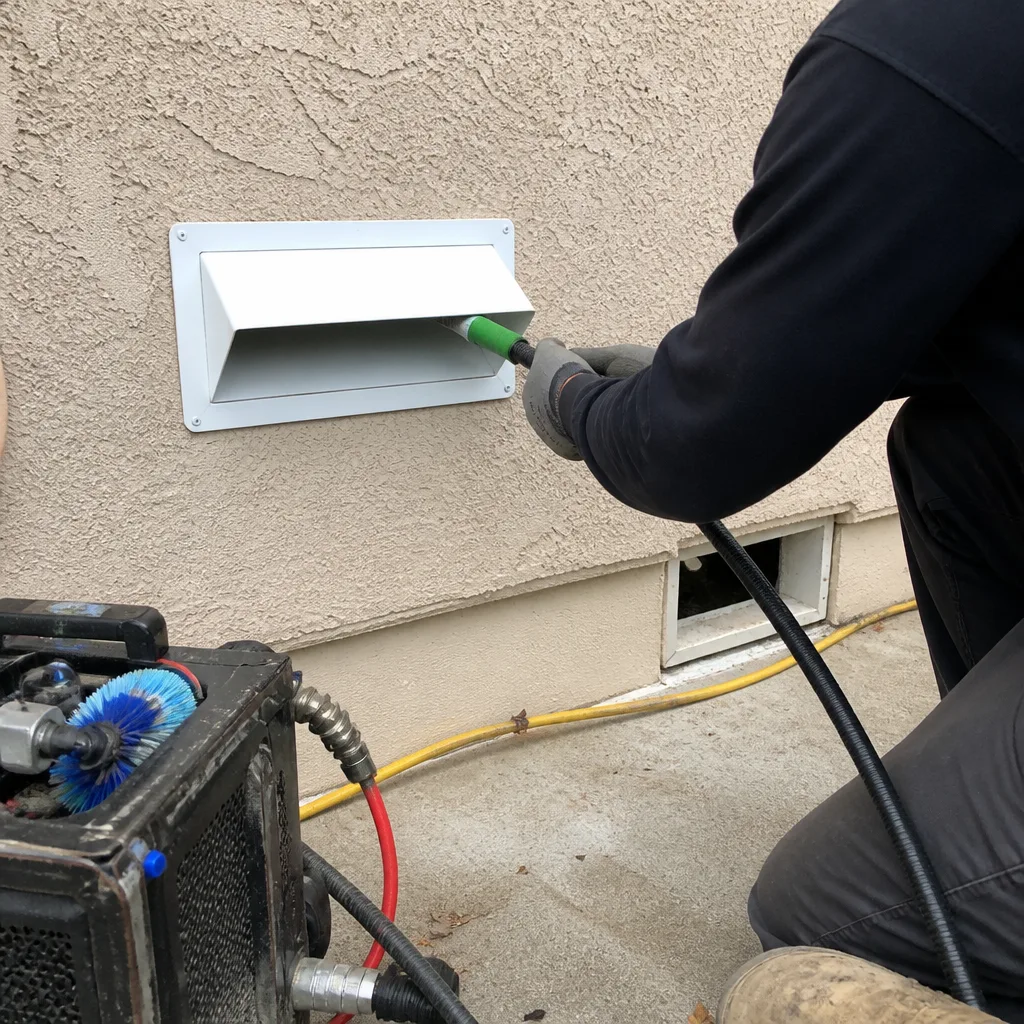
Camera inspection catches all of these in minutes. We run a small camera through the duct, and the homeowner can watch the feed live. When we find a disconnected duct, the fix is often simple: reconnect, reseal, and re-insulate. That’s where our in-house Air Duct Repair in Oceanside capability changes the equation. We don’t tell you there’s a problem and leave you to find someone else. We fix it on the spot.
Biological vs. Particulate Contamination: Why the Difference Matters
Not all duct contamination is the same, and treating it as if it were is how some cleaning jobs go wrong. There’s a real distinction between biological contamination and particulate contamination, and each requires a different remediation approach.
Particulate contamination is the stuff most people picture when they think about dirty ducts: dust, pet dander, pollen, construction debris, drywall dust, insulation fibers. It’s inert. It doesn’t grow or reproduce. Cleaning it out with contact-agitation equipment, the kind that physically scrubs duct walls rather than just blowing air through them, resolves the problem completely. Once the particulate is removed and the source is contained, it’s done.
Biological contamination is different. Mold, mildew, bacteria, and pest waste all fall into this category. These aren’t just removed; they have to be removed with proper containment so that the process doesn’t spread the problem. If you clean a duct system with active mold growth using equipment that recirculates air back into the living space, you’ve turned a localized problem into a housewide one. Spores that were sitting on duct walls are now airborne throughout the home.
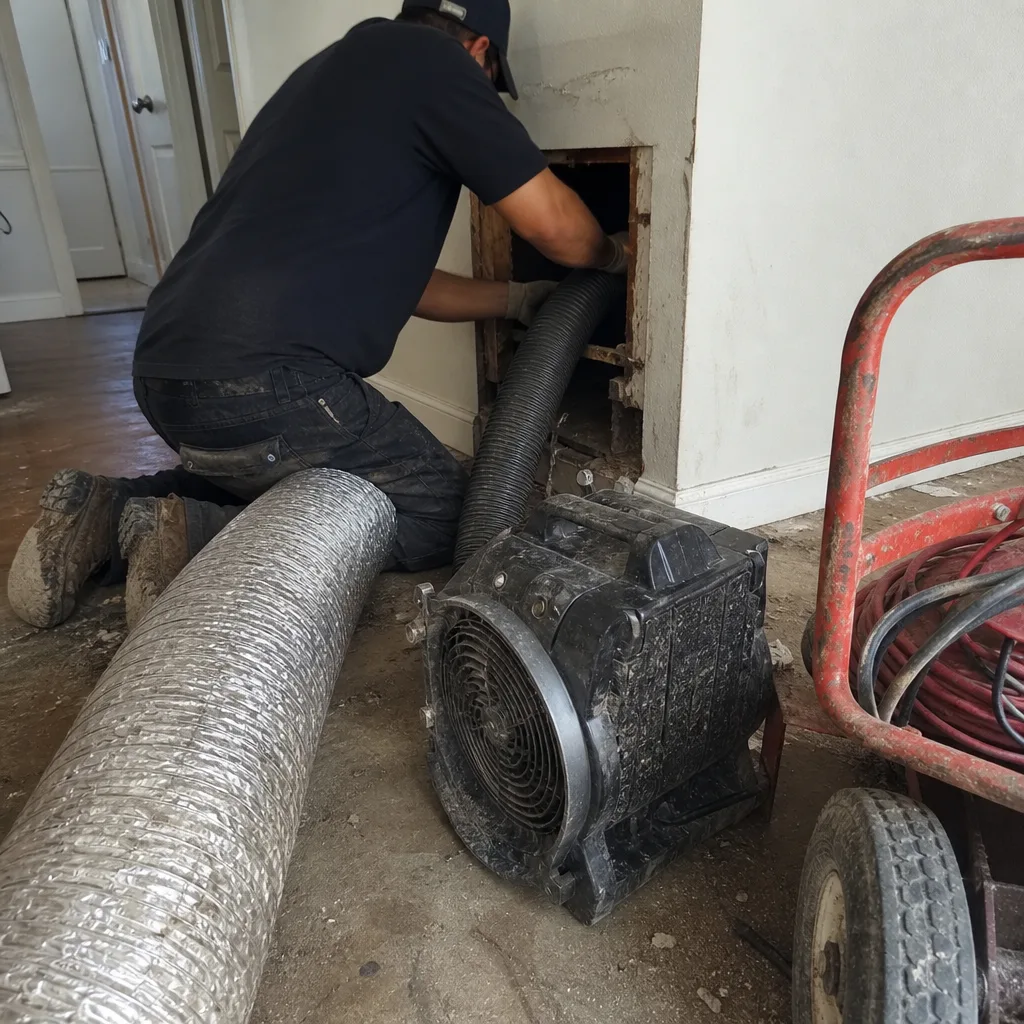
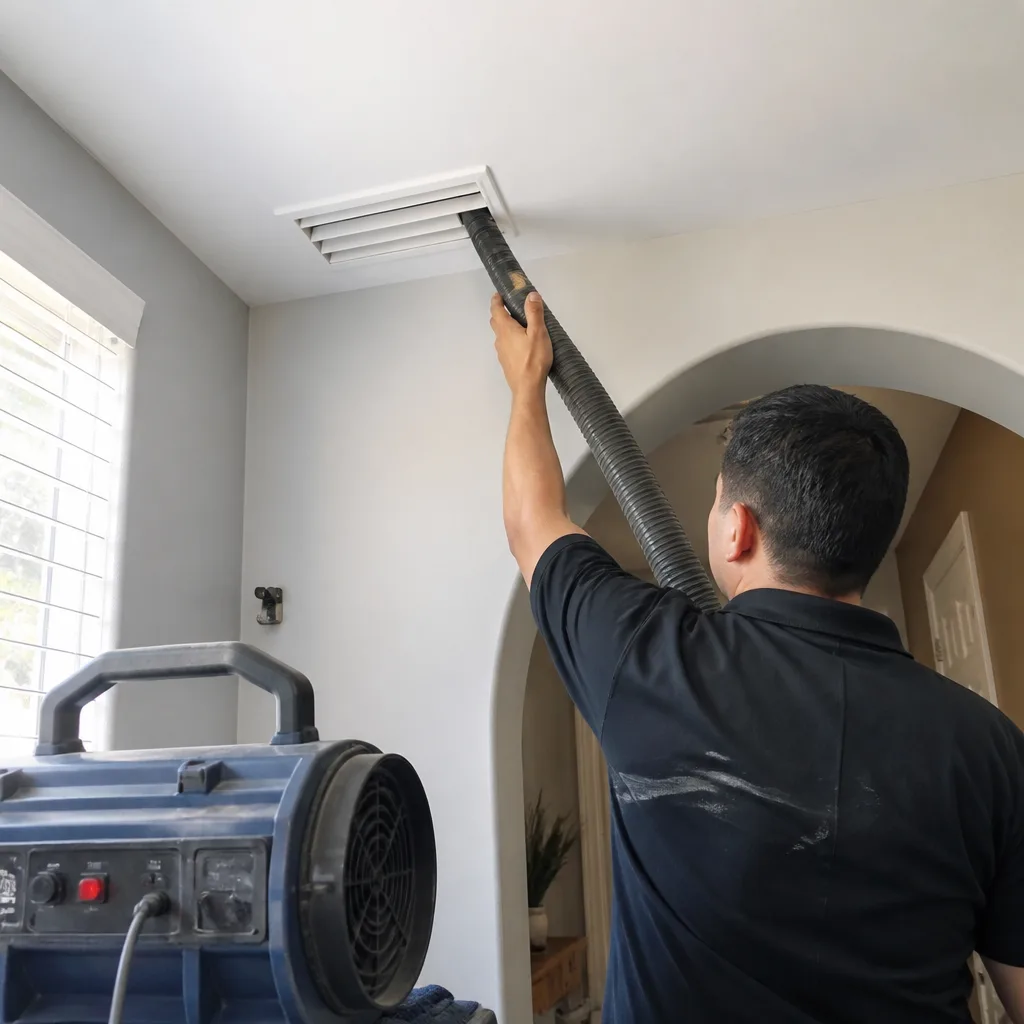
This is where negative-air equipment matters. A Nikro HEPA negative-air machine creates continuous negative pressure inside the duct system during cleaning. Every cubic foot of air pulled into the cleaning process passes through a HEPA filter before it’s released. Dislodged particulates and biological material are captured, not recirculated. In Oceanside, where the marine layer keeps humidity high for much of the year, the conditions that support biological growth in ductwork are present more often than in inland climates. Proper containment during cleaning isn’t a premium feature; it’s the difference between cleaning and spreading.
For biological contamination, the sequence we follow is:
- Identify the source of moisture that allowed the growth in the first place.
- Fix the moisture source. If you don’t, any cleaning result is temporary.
- Contain the affected area and clean with negative-air containment running.
- Treat the affected surfaces with an EPA-registered antimicrobial product appropriate for HVAC use.
- Verify with post-remediation inspection that the growth is gone and the moisture source stays dry.
Our Abatement Technologies equipment extends this capability into remediation-level situations that routine cleaning companies won’t touch. When a Duct Cleaning Oceanside home has had a pest infestation, a water event, or construction contamination, the job moves beyond routine cleaning into something that requires professional-grade containment and removal protocols.
Did Your Last Cleaning Move Contamination Instead of Removing It?
This is the question we ask whenever a homeowner tells us they had their ducts cleaned recently but the dust came back. The honest answer is sometimes uncomfortable: the previous cleaning may have made things worse by dislodging material that wasn’t properly captured.
Here’s what happens with low-powered or improper cleaning. A brush or air wand dislodges debris from the duct walls. That debris becomes airborne inside the duct system. If the cleaning contractor isn’t running proper negative-air containment, some of that airborne debris settles back onto the same surfaces it was removed from, and some of it exits the vents directly into the living space. The homeowner sees a burst of dust in the days after the cleaning, then the same accumulation pattern resumes within a few months. The debris never left the system; it just moved around.
There are specific visual and airflow tests a homeowner can perform to check whether a previous cleaning actually removed material or just redistributed it:
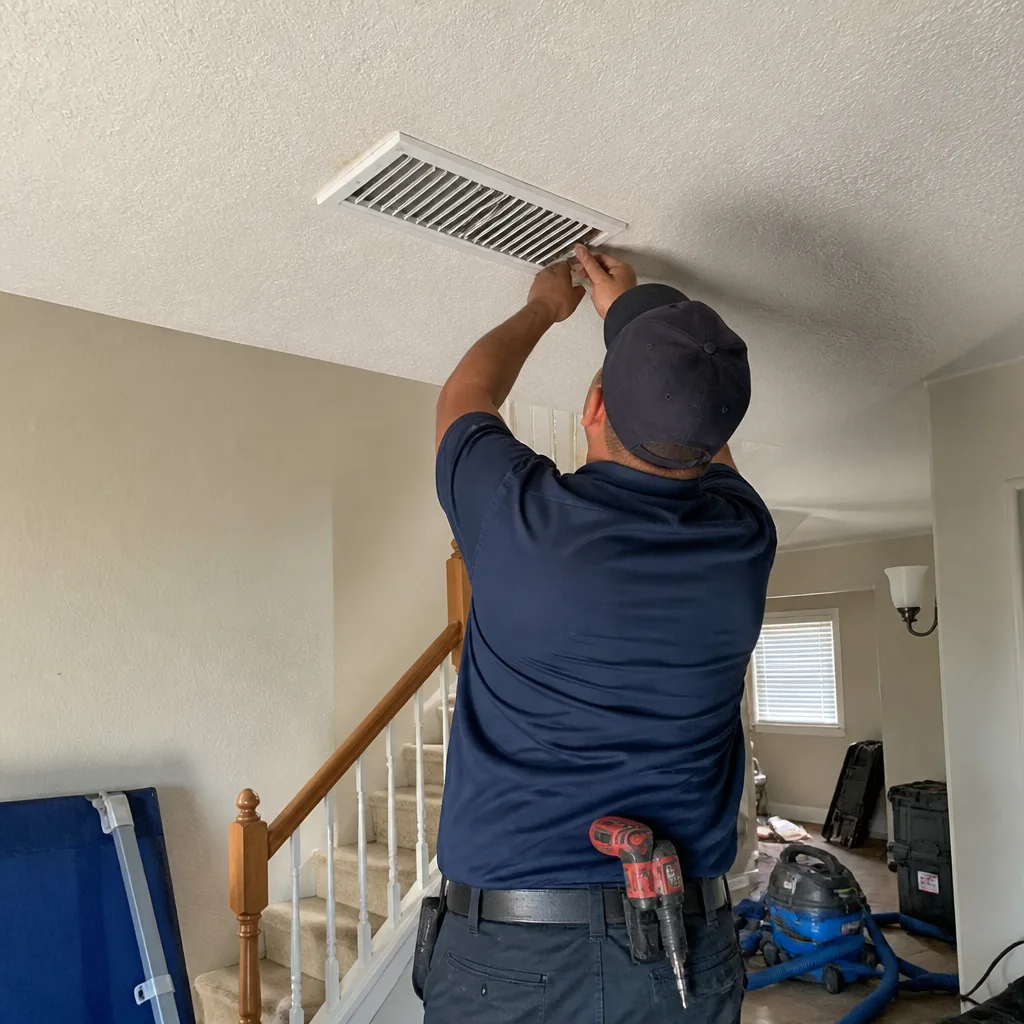
- The white glove test at the register boot: Remove a vent cover and run a clean white cloth along the inside of the metal boot and the first few inches of duct. If you get a layer of fine dust or visible debris, the cleaning didn’t reach that area, or debris settled there after the cleaning finished.
- The filter check: Install a fresh filter, run the system for a week, then inspect the filter. A heavy, even coating of fine dust suggests the system is pulling particulate from somewhere. If the filter is mostly clean but surfaces are dusty, air is bypassing the filter entirely, which points to a sealing problem.
- The supply vs. return comparison: Look at the inside of a supply register and a return grille after a cleaning. Both should be clean. If the return grille is clean but supply registers show dust, the cleaning likely focused on the return side and missed the supply side, or particles were redistributed during the process.
- Post-cleaning inspection photos: A legitimate cleaning contractor should be able to show before-and-after photos from inside the ducts, not just before-and-after of the vent covers. Camera verification is the standard. If the contractor can’t or won’t provide interior photos, that’s a red flag.
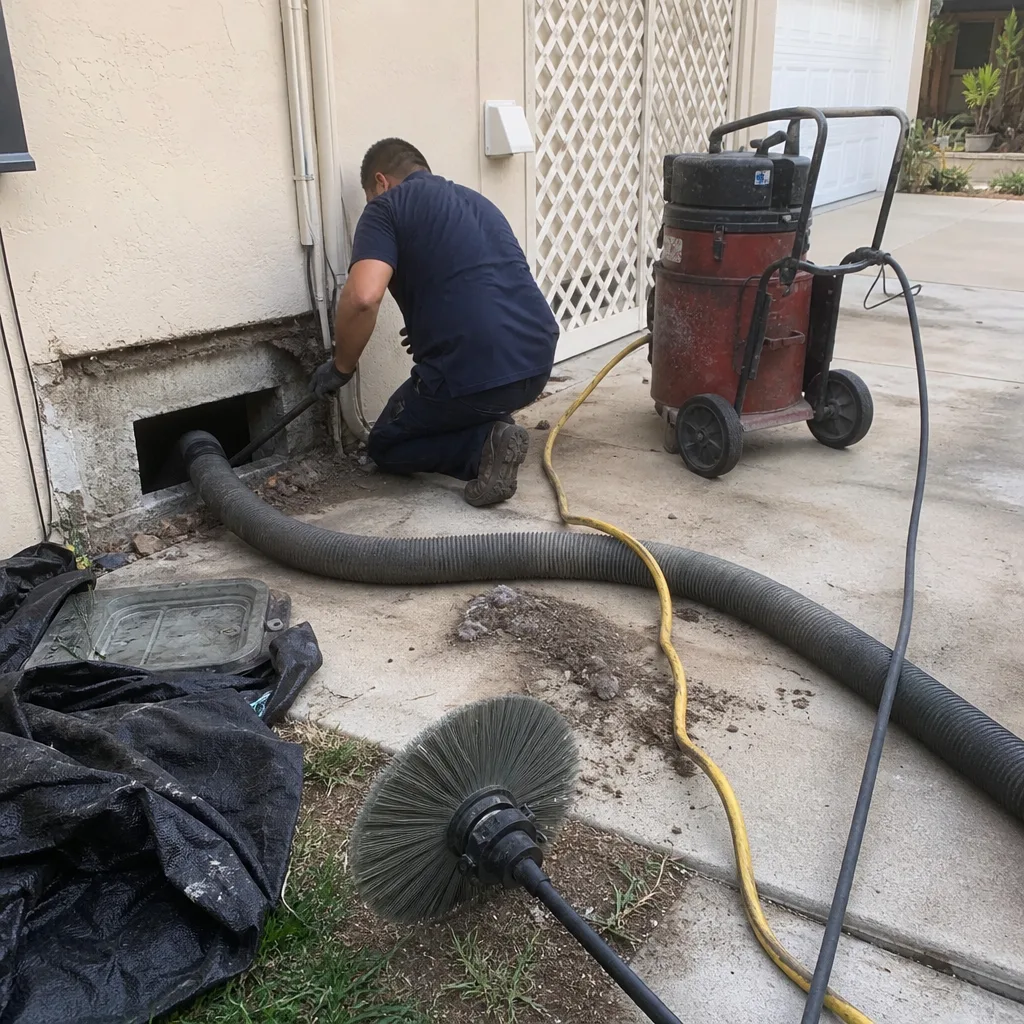
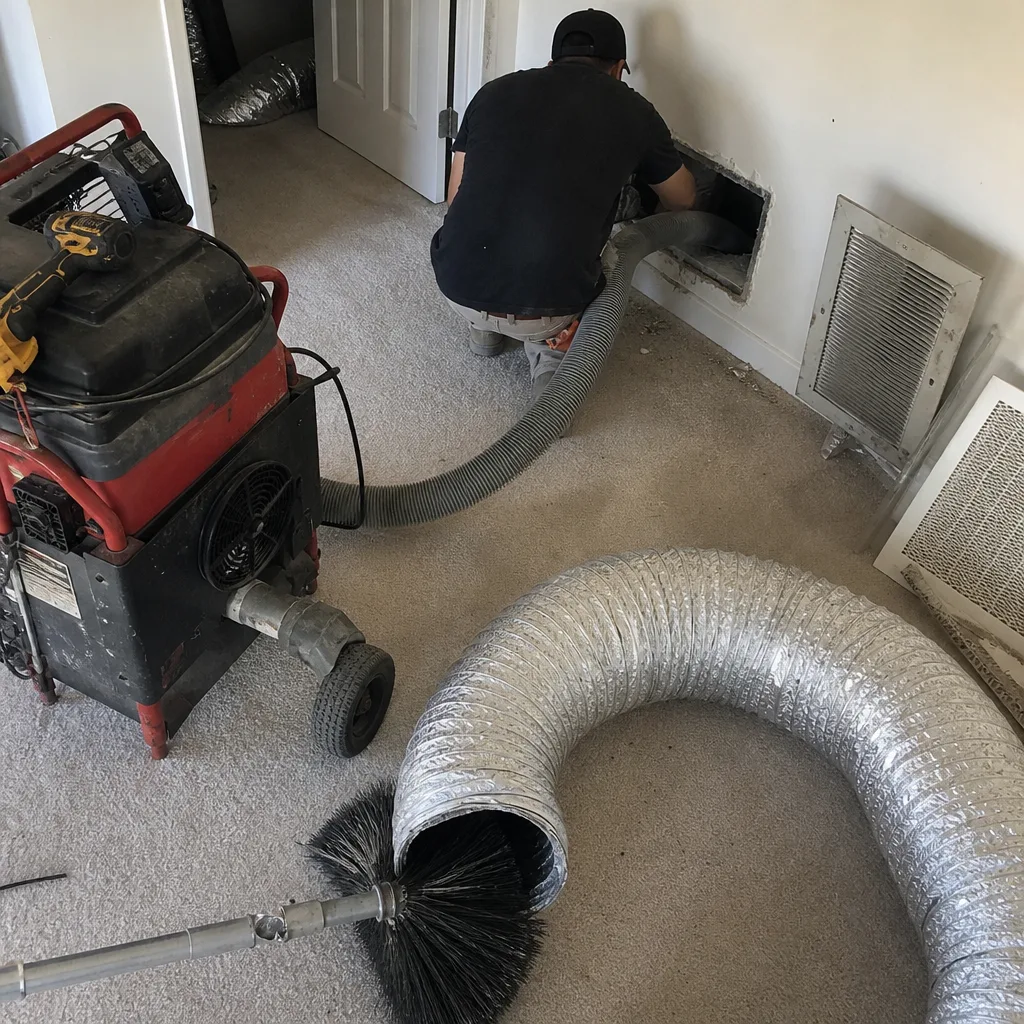
When we clean an Air Duct Cleaning in Oceanside job, the Rotobrush contact-cleaning system physically scrubs the duct walls with rotating brushes that contact the surface, while the Nikro negative-air machine runs continuously to capture everything dislodged. The debris doesn’t get a chance to settle back. It’s pulled out of the airstream and into sealed HEPA filtration. The homeowner sees the inside of their ducts on camera before, during, and after. If the previous contractor can’t show you that, you have reason to ask questions.
Re-Cleaning vs. Repair: How to Know Which One You Need
When symptoms return after a cleaning, the natural instinct is to schedule another cleaning. Sometimes that’s the right call. Other times it’s throwing money at the wrong problem. Here’s how we help Oceanside homeowners tell the difference.
Re-cleaning is the right answer when: the ducts genuinely still contain debris, which we verify by camera before recommending another cleaning; there’s been a new contamination event, like a remodel that generated drywall dust or a pest problem that’s since been resolved; the previous cleaning was demonstrably incomplete, which happens more often than you’d think; or the system hasn’t been cleaned in years and the accumulation is simply beyond what one pass could handle.
Repair is the right answer when: you have uneven room temperatures that point to a disconnected or collapsed duct; you have a musty odor tied to a condensate drain issue or a leaking return plenum; your dust problem is being caused by unfiltered air being pulled in through a leak in the return side; or you can see visible damage, such as a crushed duct in the attic or a gap at a joint.
The rule we give homeowners is simple: if the problem is in the air, clean. If the problem is in the system, repair. A camera inspection determines which one applies, and it takes about fifteen minutes.
For Oceanside specifically, there’s a climate factor worth naming. The marine layer brings humidity that settles into any open duct connection. Salt air accelerates corrosion on metal components. And the seasonal temperature swings mean your ducts expand and contract, which loosens connections over time. Homes within a few miles of the coast, from the streets of Fire Mountain to the developments east of I-5, see these issues more than homes further inland. If your house is close to the water, assume connections need inspection on a regular schedule, not just when you notice a problem.
The sequence we recommend, and the one we follow on every service call, is diagnose, repair, then clean. Cleaning after a repair means the repair debris is captured too. Cleaning before a repair just means you’ll be cleaning again after the repair kicks up debris. The order matters.
What You Can Safely Check Yourself (and What You Shouldn’t Touch)
There’s a lot you can do as a homeowner to narrow down a duct problem before calling anyone. There’s also a short list of things you should leave alone, not because they’re complicated, but because they involve risks that aren’t worth taking in a confined space with moving air.
What you can safely check:
- Your filter. Pull it out and look at it. Is it the right size, or does it sit loose in the housing with gaps around the edges? A filter that doesn’t fit allows unfiltered air to bypass entirely. Is it visibly clogged? A filter loaded with debris restricts airflow and stresses the blower.
- Your vent covers. Walk the house and remove each supply register and return grille. Look inside the boot with a flashlight. You can see the first several inches of duct from most registers. Visible debris there is a clue, not a diagnosis, but it tells you something’s moving through the system.
- Your thermostat fan setting. If your system fan is set to ON instead of AUTO, it’s running constantly. That means more air moving through the system, more dust deposit on duct surfaces, and more wear on the blower. Set it to AUTO and see if your dust accumulation changes.
- Your condensate line. If you can find the drain line near the indoor unit, check whether the area around it is wet. A wet spot or mineral staining around the condensate connection suggests a drainage problem, which is the number one cause of musty odor.
- Visible duct runs. If you have exposed ductwork in a garage, attic access point, or crawlspace, look for obvious gaps, disconnected sections, or crushed areas. A flashlight and a phone camera can document what you find.
What you shouldn’t touch:
- Anything requiring you to enter the attic or crawlspace beyond a quick visual check. Attics in Oceanside are dangerously hot for much of the year, and crawlspaces carry their own risks.
- Electrical components of the HVAC system. The blower, the control board, the disconnect switch. These are not DIY territory.
- The evaporator coil. It’s delicate, it’s often difficult to access, and cleaning it improperly can push debris deeper into the system or damage the fins.
- Condensate drain clearing using chemical products. Some drain cleaners can damage PVC lines or the coil pan. Mechanical clearing is the right approach.
If your check turns up something suspicious, document it with photos and call someone who can inspect the full system with a camera. Free estimates are standard in this industry, and a duct cleaning contractor in Oceanside who carries inspection equipment will be able to tell you quickly whether the issue is worth pursuing.
How Your Filter and Whole-Home Filtration Fit Into the Picture
Your ducts don’t exist in isolation. They’re part of a system that includes the filter, the blower, the coil, and any whole-home filtration equipment. Troubleshooting duct problems without considering the filter and filtration setup is like tuning an engine while ignoring the fuel line.
The filter is the first line of defense, and in many Oceanside homes it’s also the weakest link. A basic fiberglass filter catches large particles and lets everything else through. A pleated filter with a higher MERV rating catches more, but it also restricts airflow, which can starve the system if the ductwork wasn’t designed for it. The right filter is one that balances particle capture with the airflow your system needs. We work with and around Honeywell and Aprilaire filtration systems regularly, and the difference between a well-matched filtration setup and a mismatched one is measurable in both air quality and system performance.
Whole-home filtration systems, like the Aprilaire media cabinets and Honeywell electronic air cleaners we encounter in Oceanside homes, treat the air before it reaches the ducts. That changes the duct cleaning equation. If a whole-home filtration system is doing its job, the ducts stay cleaner longer, which means cleaning intervals stretch out. If the filtration system is installed but not maintained, it can become a restriction point or even a source of contamination if the media is saturated and bypassing.
There’s also the interaction between filtration and leaks. A leak in the return side of the duct system bypasses whatever filter or filtration system you have, no matter how good it is. The best filter in the world can’t clean air that never passes through it. This is why leak detection belongs in every duct troubleshooting process. If you’ve invested in premium filtration and you’re still seeing dust, the problem is almost certainly a leak somewhere in the return path, not the filter’s rating.
The point is this: duct problems are system problems. Air moves from the return grille, through the return ducts, through the filter and blower, across the coil, and out through the supply ducts. A problem anywhere in that chain shows up in your living space. Troubleshooting means looking at the whole chain, not just the section that’s easiest to access.
Common Mistakes to Avoid
- Paying for cleaning without a camera inspection first. If the contractor can’t show you the inside of your ducts before and after, you don’t know what was actually done. In Oceanside, where we see a wide range of duct conditions, camera verification is the minimum standard.
- Ignoring the condensate drain when there’s a musty smell. We’ve watched homeowners pay for repeated cleanings while a clogged drain line sat two feet from the indoor unit, producing the odor every single time. Check the drain before you schedule anything.
- Replacing the filter but never checking the filter housing seal. A high-MERV filter sitting in a loose housing is just air bypassing the filter. The housing matters as much as the media.
- Treating uneven temperatures as a balancing problem. Before you pay for dampers to be adjusted or vents to be partially closed, get the duct runs inspected. A disconnected duct can’t be balanced; it has to be reconnected.
- Assuming a cleaning will fix a repair issue. A collapsed flex duct is still collapsed after cleaning. A leaking return plenum is still leaking. Cleaning is not a repair, and no amount of cleaning resolves a mechanical failure.
- Skipping the dryer vent while thinking about air quality. A clogged dryer vent is a fire risk first and an air quality issue second. In Oceanside homes, Dryer Vent Cleaning in Oceanside should be on the maintenance calendar independent of duct cleaning.
See the difference
 Before
 After
 Before
 After
 Before
 After
When to Call a Professional
Call when you’ve done the basic checks and the problem persists. Call when you see visible mold, when the musty odor returns after a condensate drain inspection, when one room stays hot or cold no matter what you set the thermostat to, or when dust accumulation returns within weeks of a cleaning. Call when you can hear airflow noise that wasn’t there before, which often signals a newly developed leak or restriction. And call before buying a new HVAC system if you’ve been told your ducts need cleaning as part of a replacement quote; a camera inspection first will tell you whether you actually need cleaning, repair, or both. Duct Cleaning Oceanside offers free estimates throughout Oceanside, Carlsbad, and Vista. Call (855) 382-4811 to schedule a camera inspection and get an honest assessment of what your system actually needs.
Frequently Asked Questions
A camera inspection is the only way to know for certain, but the general rule is: particulate accumulation means cleaning, while mechanical symptoms like uneven temperatures, air noise, or recurring dust despite a good filter means repair.
Fast-returning dust almost always means the return-air side of the system is pulling unfiltered air through a leak or gap, or the filter isn’t sealing in its housing. The dust isn’t in the ducts; it’s being introduced after the filter.
Dirty ducts recirculate whatever’s in them, including pollen, dust mite debris, and pet dander. Oceanside’s coastal climate and longer pollen season mean more material is entering homes in the first place, which makes duct cleaning a meaningful part of allergen reduction.
Most Oceanside homes benefit from cleaning every 3 to 5 years, but the right interval depends on filter quality, pets, recent remodeling, and proximity to the coast. Homes near the water with older duct systems and basic filters may need it more often. A camera inspection tells you where your system actually stands.
The equipment and the scope. A Rotobrush contact-cleaning system physically scrubs duct walls; a shop vac and brush can’t reach most of the system. Nikro HEPA negative-air containment keeps dislodged debris from recirculating into the house. A camera inspection documents the result. If any of those three is missing, the job is incomplete.
Only if the musty smell is actually coming from the ducts, which is less common than homeowners assume. The source is usually standing water in the condensate system, a leaking return plenum pulling from unconditioned space, or microbial growth on the evaporator coil. Those require repair or component cleaning, not duct cleaning.
The Bottom Line
Duct problems are symptoms of system problems, and the skill lies in matching the right fix to the actual cause. Dust that returns quickly points to leaks and filtration issues, not dirty ducts. Musty odor points to moisture, not debris. Uneven temperatures point to mechanical failure, not buildup. In Oceanside, where coastal humidity and salt air accelerate every one of these issues, the sequence that works is diagnose, repair, then clean. A camera inspection costs you nothing and prevents you from paying for a cleaning that won’t change anything. If you suspect your ducts were cleaned but the problem wasn’t solved, get the inspection. The answer is in the system, not in another pass with a brush. Call (855) 382-4811 to schedule your free estimate and see the inside of your ducts before you spend another dollar trying to fix what you can’t see.
Written by the team at Duct Cleaning Oceanside, serving Oceanside since 2011.